
Related videos:
The parody account of the Unión Eléctrica on X has once again sparked laughter while simultaneously reflecting the deep discontent that Cubans feel regarding the energy crisis.
This time, the mockery took the form of a supposed "National Blackout Championship," in which "teams" like Los Veleros de Pinar, Los Toros de las Roturas, Los Aborígenes Apagados, and Los Cocodrilos Desenchufados compete for a spot in a final narrated, according to the satire, by Tele Rebelde "when there is no electricity."
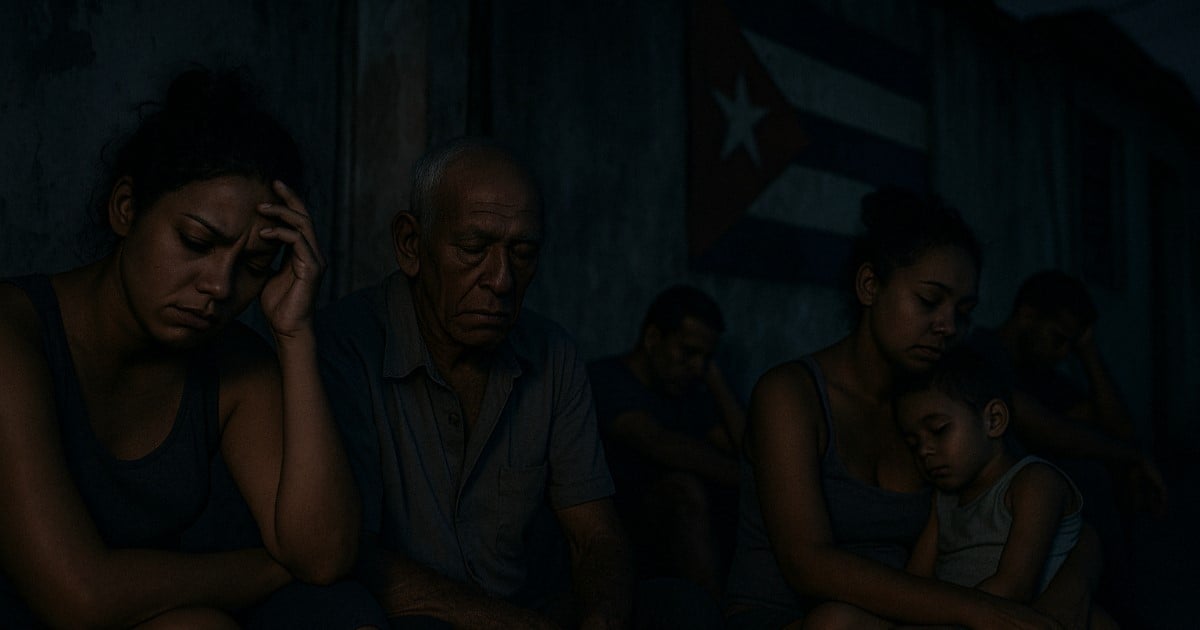
Popular humor, transformed into an escape from desperation, shows just how much power outages have become a part of daily life on the island. However, behind the joke lies a much harsher reality: Cuba is experiencing one of its worst energy crises in decades.
Protests in the streets of Havana and Matanzas
On the night of September 21, neighbors from several municipalities in Havana took to the streets to protest against the prolonged power outages. In San Miguel del Padrón and Calabazar, residents blocked streets, beat pots, and shouted slogans condemning the regime and the crisis that leaves them without electricity, without water, and with spoiled food in their refrigerators.
In the Versalles neighborhood of Matanzas, there were also demonstrations, according to reports on social media. Many of the shared videos show complete darkness and a visible absence of law enforcement, while residents expressed their frustration.
Massive blackouts continue just a week after the fifth nationwide collapse of the Electrical System this year. The unexpected shutdown of key plants, such as the Antonio Guiteras thermoelectric plant, has resulted in generation deficits exceeding 1,900 MW during peak demand hours.
The situation in Havana is particularly critical: power outages last more than 12 hours, and the Electric Company has been unable to provide a reliable rotation plan.
The official discourse and the critiques
While Cubans turn to humor to cope with the darkness, the regime once again targets the United States embargo. Leaders like Roberto Morales Ojeda claim that the sanctions prevent access to parts and credit needed to maintain the plants. However, independent economists point to other causes: corruption, mismanagement, and lack of investment in infrastructure.
The contrast between official justifications and the everyday experience of citizens fuels discontent. On social media, many recall that military conglomerates like GAESA concentrate billions of dollars while the people endure endless blackouts.
The satire of the "National Blackouts Championship" encapsulates the duality of present-day Cuba: a country where popular ingenuity turns tragedy into humor, yet also where fatigue manifests in increasingly frequent protests.
Cuba remains in the shadows and protests, with a people asking the same question on social media, in neighborhoods, and on the streets: how long?
Frequently Asked Questions about the Energy Crisis in Cuba
What is the "National Blackouts Championship" in Cuba?
The “National Blackouts Championship” is a parody created by the humorous account of the Electric Union on social media, which uses humor to criticize the serious energy crisis in Cuba. The satire showcases fictional teams competing in a tournament narrated by Tele Rebelde, reflecting the discontent of Cubans regarding the frequent blackouts.
What is the current situation of blackouts in Cuba?
Cuba is experiencing massive and prolonged blackouts due to a collapse of the National Electric System (SEN). The generation deficit frequently exceeds 1,900 MW, severely impacting the daily lives of Cubans, who endure power outages of more than 12 hours a day without a reliable rotation plan.
Why are Cubans protesting over the energy crisis?
Cubans are protesting due to the desperation caused by prolonged power outages affecting their quality of life. The demonstrations include pot-banging and street blockades, expressing their discontent with the regime over the lack of electricity, water, and refrigerated food, as well as the absence of effective solutions.
How is the Cuban government responding to the energy crisis?
The Cuban government attributes the energy crisis to the United States embargo and the aging of power plants. However, independent economists criticize corruption and mismanagement as the main causes. The solutions proposed by the regime are seen as insufficient and generate discontent among the population.
Filed under: