
Related videos:
The official newspaper Granma reproduced in its Hilo Directo section a study conducted in the United Kingdom and published by the magazine Muy Interesante, which claims that delaying meals is associated with health problems and increased mortality.
According to that research, over the years, people tend to have breakfast and dinner later, reducing the daily eating window, a detail that, while it may seem trivial, “turns out to have profound connections with physical health, genetics, and survival.”
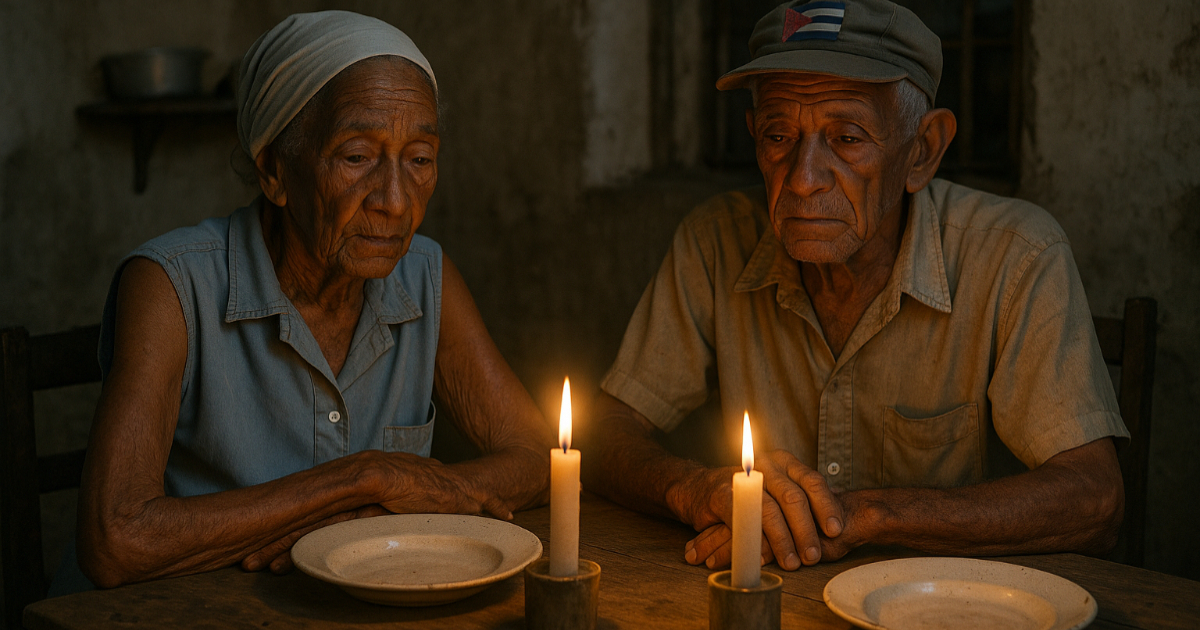
The message, which in another context might seem like a health advice, was published while millions of Cubans struggle to obtain food and consider it an achievement to eat even once a day.
The contradiction between the recommendation of the official newspaper of the only permitted Communist Party of Cuba and the reality of the country prompted immediate criticism.
The former director of programs for Cuban Television, Eugenio Antonio (Yin) Pedraza Ginori, described the note as "an intolerable mockery" and stated that giving advice to residents on the island about breakfast and dinner times is "going too far."
“Please, someone tell the official organ of the Castro dictatorship that today's Cubans, crushed by hunger and scarcity, consider themselves fortunate if they manage to find any food for a single meager daily meal,” he emphasized on his Facebook profile.
Ginori's statements reflect the feelings of many Cubans who have been facing months of blackouts, gas supply failures —available only when a ship arrives— and millions of people without water service.
In light of this situation, discussing longevity at breakfast time feels like an insult, as for the majority of Cubans, a dignified diet remains a distant dream.
Only in the case of breakfast, the government is unable to guarantee a stable production of bread and of quality due to the shortage of wheat flour supply.
Furthermore, the phrase from Raúl Castro is recalled with irony, from July 2007, when he urged to “produce milk so that anyone who wants a glass can have it,” while nearly two decades later, the shortage of the product continues.
Every day, images of elderly people searching through the trash for something to eat become more common, while independent organizations are warning of the .
At the end of April, a report from the official newspaper Girón, in Matanzas, revealed the misery in which thousands of retirees live who, after decades of work, are forced to survive on the streets.
Recently, it was revealed that the dining halls of the Family Care System (SAF) in Holguín, intended to feed impoverished individuals, offer rice and peas almost daily, with scant portions and nearly nonexistent main dishes, while the supply distribution fails and diners endure constant hunger.
A national survey conducted by the Food Monitor Program (FMP) revealed that 94% of Cuban households believe that the government is not interested in reversing the food crisis affecting the country, or, if it has tried, it has not achieved results.
One of their most recent investigations indicated that more and more Cubans are only eating once a day, a pattern that highlights the extreme precariousness of their daily diet and the collapse of the food distribution system.
In addition to hunger, there have been reports of the undignified conditions in which many people prepare their food. About 9 million Cubans cook in precarious conditions, without stable access to gas, electricity, or drinking water, which increases health risks and reflects the deterioration of domestic infrastructure.
Frequently Asked Questions about the Food and Energy Crisis in Cuba
What is the current situation of food in Cuba?
The food situation in Cuba is critical, with an increasing number of people only able to have one meal a day. This is due to the shortage of basic foods such as bread, milk, and proteins, as well as the lack of economic resources among the population. The difficulties in accessing essential foods and the precariousness of energy and gas supply worsen this crisis.
How do power outages affect the daily lives of Cubans?
Prolonged blackouts are a constant in the daily life of Cubans, severely affecting food preservation and the ability to cook. Many people are forced to cook with firewood or charcoal due to the lack of gas. These power outages also impact health, rest, and home organization, increasing stress and frustration among the population.
What measures has the Cuban government taken in response to the food and energy crisis?
The Cuban government has implemented measures such as rationing of basic foods and the organization of food fairs to alleviate public discontent. However, these actions are deemed insufficient by a significant portion of the population, who criticize the lack of structural solutions to address the food and energy crisis.
How has the Cuban population reacted to the recommendations of the state media?
Official media recommendations, such as maintaining a positive mindset or establishing sleep routines amidst power outages, have been met with criticism and outrage from the public. Many view these suggestions as mocking the reality they face, as they ignore the precarious conditions and lack of basic resources on the island.
Filed under: