
Related videos:
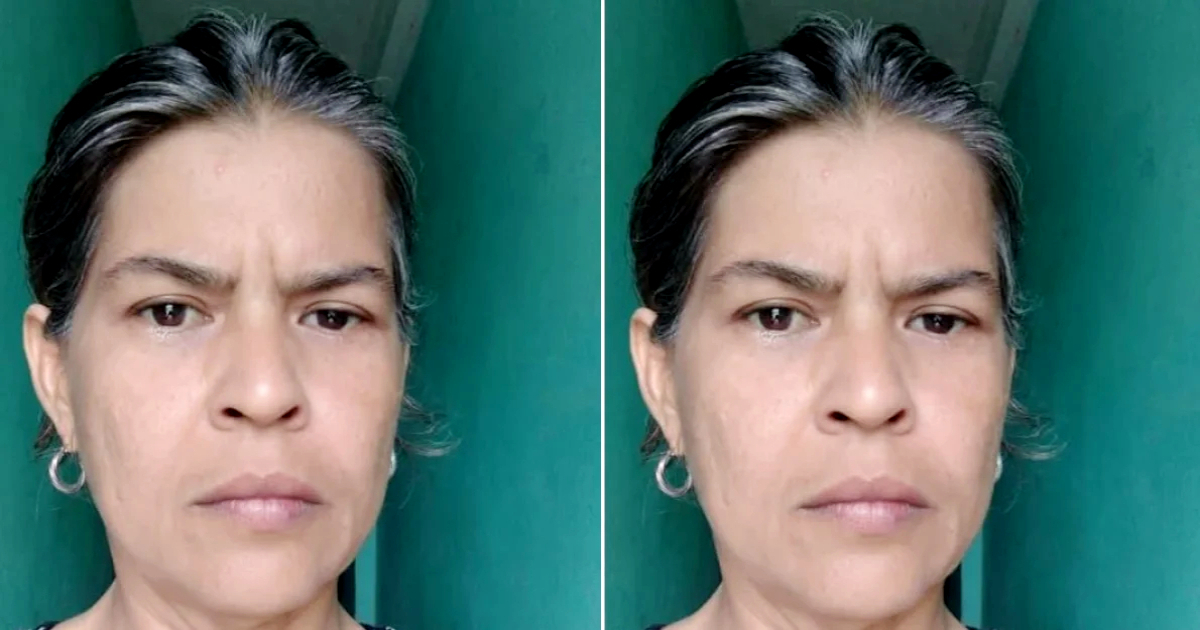
The alert for the disappearance of the Cuban Alicia María Montes de Oca Pérez, known as La China, was mistakenly called off this Friday.
In the last few hours, a family member communicated that the woman had been found alive, but the Gender Observatory Alas Tensas (OGAT) clarified later on Facebook that the information was false and that the search remains active.
The case, which has been open since August 24, again reflects the confusion that can arise due to the neglect and lack of official protocols for addressing disappearances in Cuba.
Unfortunately, the absence of Alicia, 45 years old, has kept her family and neighbors in Guantánamo on edge for over a month.
Distinctive signs and appearance of the missing person
At 45 years old, with a tanned complexion, slender build, graying hair, and brown eyes, she was last seen wearing a white skirt and a pink blouse. Since then, there has been no news of her.
"He has no visible tattoos or moles, but he does have prominent teeth," a relative detailed to OGAT.
Her case is truly serious, as the woman was diagnosed with depressive neurosis, but she stopped her treatment more than a year ago.
Regarding the false information, Alas Tensas reminded that in Cuba, authorities do not cooperate in cases of missing persons; the only response comes from independent media, activists, and the citizens themselves, who take on the task of disseminating information and coordinating efforts.
Disempowerment and abandonment of individuals with mental illnesses
The case of Alicia María reveals a dual crisis: the increasing insecurity and the lack of protection for individuals with mental illnesses in Cuba, where the shortage of medications is chronic.
Without access to medications or state support programs, patients relapse more frequently, and it is their families—already overwhelmed and lacking resources—who bear all the responsibility.
The absence of a minimally functional mental health system turns every relapse into a risk of disappearance, violence, or complete abandonment.
Police inaction in the face of disappearances on the Island
Meanwhile, the police display the same inaction as in so many other cases of disappearances. There are no immediate alert mechanisms or public coordination for searches.
Rather than mobilizing effectively, the authorities tend to act late and in a disorganized manner, leaving families to turn to Facebook, WhatsApp, and community networks to organize themselves.
This lack of institutional responses exacerbates a climate of insecurity that is already felt throughout the Island.
The case of Alicia Montes de Oca is, therefore, a reflection of a country where daily life unfolds amid the uncertainty of violent streets and the collapse of a healthcare system unable to serve the most vulnerable.
While the regime invests in political propaganda, thousands of Cuban families live in anguish as they search for their loved ones without any real support, placing their hopes solely on citizen solidarity.
Filed under: