
Related videos:
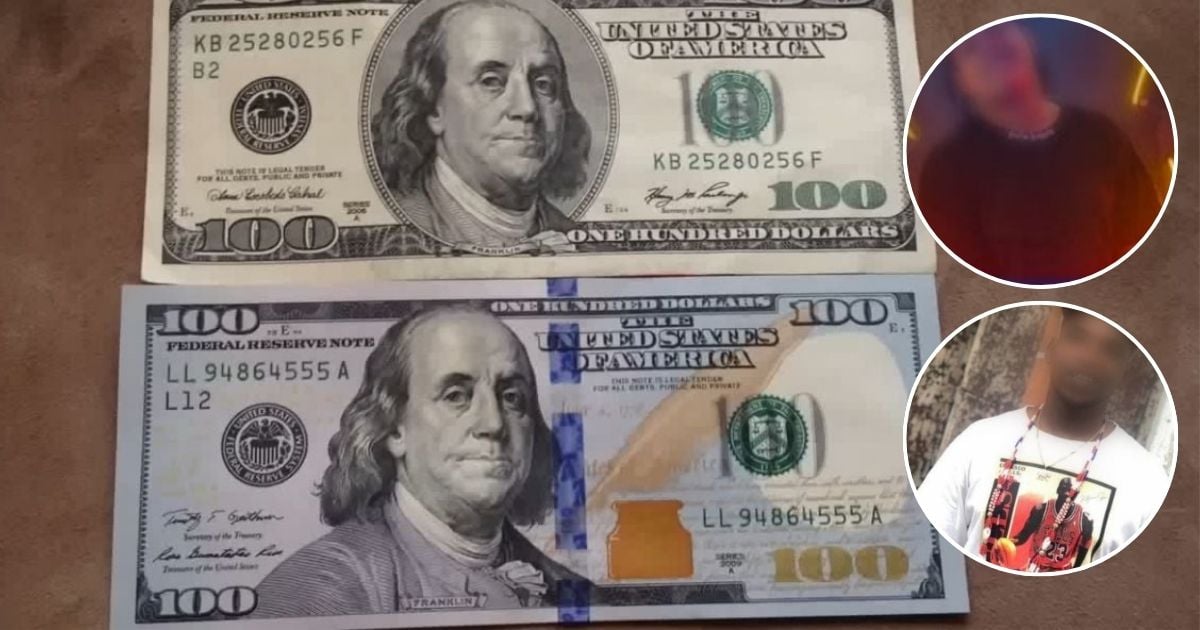
The authorities in Sancti Spíritus arrested two Cubans who were carrying several counterfeit 100-dollar bills in the city of Trinidad, according to the official profile “Mi Lealtad Acrisolada”, which celebrated the capture as a "quick and precise operation" against alleged scammers.
According to the social media post, the young individuals were riding a motorcycle and intended to introduce the counterfeit bills into the local circulation. "Zero tolerance for scammers," stated the spokesperson, who accompanied the message with blurry images of the detainees and the supposed confiscated bills.
The arrest adds to a series of recent episodes that have highlighted the frequency of crimes related to counterfeiting in Cuba, as well as the lack of transparency and solid evidence in how the regime presents these cases.
In July, a man was arrested in Colón, Matanzas for attempting to pay with a counterfeit 100-dollar bill at a private tent. The case, also reported by an official profile, was presented in a condemning tone despite no evidence of the forgery or proof that the individual was aware of the bill's origin.
Similarly, in March, the General Customs of the Republic confiscated 30,000 dollars in props used for films and music videos in Varadero, presenting the operation as a significant seizure of counterfeit money. This measure generated criticism on social media, where many Cubans argued that the confiscated items did not constitute a crime.
These events illustrate a pattern in which the regime showcases arrests and seizures as police successes, but without providing due process guarantees or credible evidence to support the accusations.
A risk to daily life in Cuba
In a country where the dollar has become the reference currency for purchasing basic goods in the informal market and in MLC stores, the circulation of counterfeit bills poses a direct risk to citizens. Each transaction becomes a gamble: accepting a bill could mean losing an entire month's salary in an instant.
The Federal Reserve of the United States has developed multiple security mechanisms for one hundred dollar bills —such as watermarks, security threads, and 3D ribbons— but most Cubans lack access to reliable tools to verify their authenticity. In practice, the burden of distrust falls on the buyer or the seller in a market already characterized by precariousness and scarcity.
Frequently Asked Questions About Dollar Counterfeiting in Cuba
Why is dollar counterfeiting common in Cuba?
The counterfeiting of dollars in Cuba is a recurring issue due to the high demand for this currency to purchase basic products in the informal market. In a context of scarcity and economic hardship, some individuals attempt to introduce counterfeit bills as a way to gain illicit profits.
How do counterfeit bills affect the Cuban economy?
The circulation of counterfeit bills poses a direct risk to citizens, as each transaction becomes a gamble that could result in the loss of an entire salary. Furthermore, it creates distrust in the market and impacts the economic stability of those who rely on the dollar for their daily transactions.
What security features do 100 dollar bills have?
One hundred dollar bills feature multiple security mechanisms such as watermarks, security threads, and 3D ribbons. However, most Cubans lack access to reliable tools to verify their authenticity, making it difficult to detect counterfeits.
What actions does the Cuban government take against currency counterfeiting?
The Cuban government conducts operations to apprehend those involved in counterfeiting, such as the recent case in Sancti Spíritus. However, the lack of transparency and solid evidence in presenting these cases has sparked criticism regarding the effectiveness and legality of government actions.
Filed under: