
Related videos:
The energy deficit in Cuba showed a slight decrease this Thursday, according to the latest report from the Electric Union (UNE), although power outages continue to impact thousands of households across the country.
The state-owned company confirmed that the service was disrupted for 24 hours the previous day, and interruptions continued into the early morning today. The maximum recorded impact due to a generation capacity deficit was 1,488 megawatts (MW) at 7:50 p.m. on Wednesday.
The UNE reported that the 32 new photovoltaic solar parks provided 1,935 megawatt hours (MWh), with a maximum power of 351 MW, partially helping to reduce the deficit, although still insufficient to meet national demand.
At 6:00 AM, the availability of the SEN was 1,890 MW against a demand of 2,464 MW, resulting in a deficiency of 602 MW. By noon, the company anticipates a deficiency of around 750 MW.
Main incidents of the system
Breakdowns:
- Unit 2 of the CTE Felton.
- Mariel Unit 8.
- Unit 3 of the CTE Renté.
Scheduled maintenance:
- Unit 2 of the CTE Santa Cruz.
- Unit 4 of the CTE Carlos Manuel de Céspedes (Cienfuegos).
Thermal limitations: 460 MW out of service.
Fuel and lubricant shortage:
- 54 distributed generation plants with 463 MW affected.
- 197 MW out of service due to lack of lubricant.
Total affected by this cause: 660 MW.
Forecast for peak hours
For peak consumption hours, UNE estimates the addition of 100 MW from motors currently out of service due to a lack of fuel. A capacity of 1,990 MW is projected against a maximum demand of 3,360 MW, resulting in a deficit of 1,370 MW and an estimated impact of 1,440 MW during the night.
The Electric Company of Havana reported that in the capital, the electrical service was affected for 11 hours and 30 minutes during the previous day. The maximum impact was 190 MW at 1:00 a.m.
During the afternoon and evening, only blocks 1 and 5 were affected, and the deficit was restored by 9:30 p.m., so it was not necessary to impact blocks 4 and 6, which were scheduled between 11:00 p.m. and 2:00 a.m., nor blocks 3, 1, and 5, planned between 2:00 a.m. and 8:00 a.m.
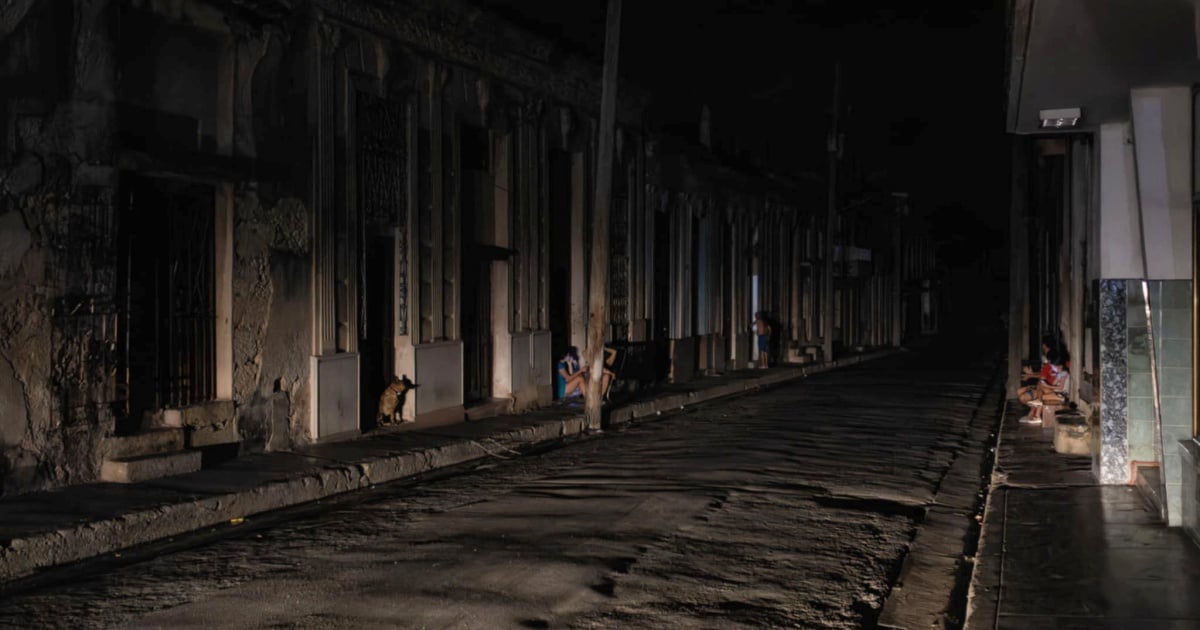
Despite the slight improvement reported, the energy situation on the island remains critical. The recurrent outages, the deterioration of the thermoelectric plant fleet, and fuel shortages keep the country in a structural electrical crisis that the Cuban regime has not managed to resolve after years of unmet promises.
Meanwhile, millions of Cubans continue to suffer from daily blackouts, disruptions in water supply, spoiled food, and a growing social discontent in the face of a collapsed energy system and a government management that does not provide effective solutions.
Frequently Asked Questions about the Energy Crisis in Cuba
Why do blackouts persist in Cuba despite the reduction in the energy deficit?
Despite a slight decrease in the energy deficit, power outages persist in Cuba due to multiple factors, such as recurring breakdowns, maintenance of thermoelectric units, and lack of fuel. The country's energy infrastructure is in a critical state that the government has been unable to resolve, affecting millions of Cubans daily.
What is the impact of photovoltaic solar parks on electricity generation in Cuba?
Photovoltaic solar parks contribute a significant amount of energy, but their contribution remains insufficient to meet national demand. The UNE has reported that the new solar parks have generated thousands of megawatt-hours, but the energy deficit remains high due to the limitations of the thermoelectric system and the lack of fuel.
What are the main causes of the energy deficit in Cuba?
The energy deficit in Cuba is due to a combination of breakdowns in thermal power plants, scheduled maintenance, thermal limitations, and a lack of fuel. These factors keep a significant amount of generation capacity out of service, exacerbating the energy crisis and causing frequent blackouts across the country.
What actions has the Cuban government taken to address the energy crisis?
The Cuban government has repeatedly announced measures to address the energy crisis, such as the installation of solar parks and maintenance of thermoelectric plants. However, these actions have proven insufficient to resolve the structural issues of the electrical system. The lack of effective solutions has led to increasing social discontent due to ongoing blackouts.
Filed under: