
Related videos:
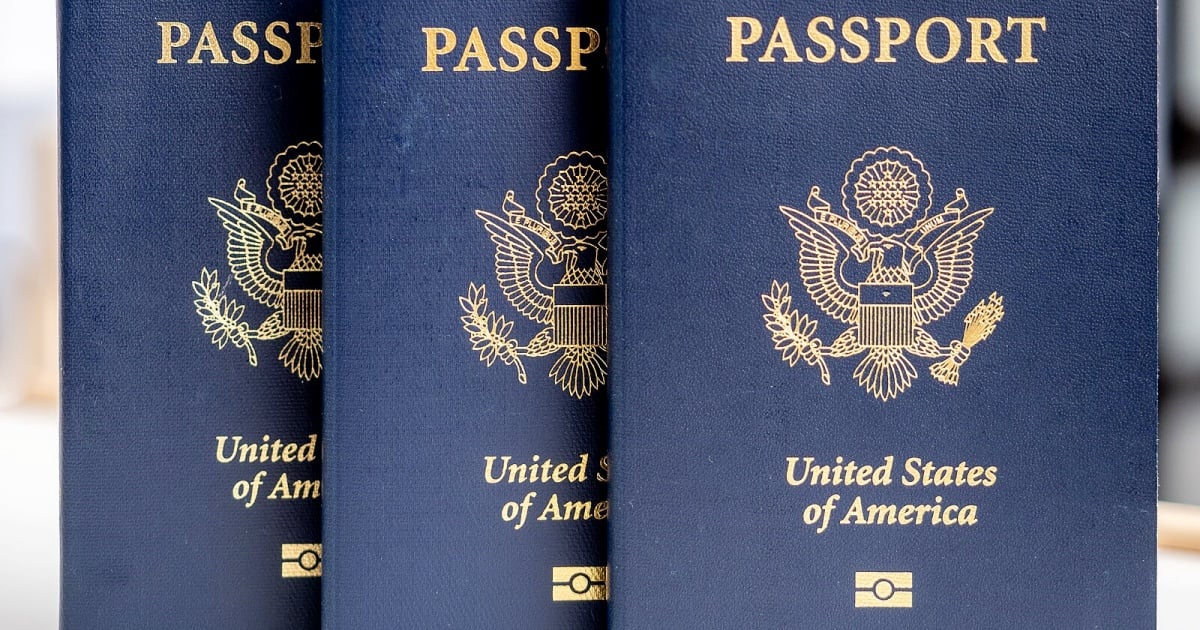
For the first time in the 20-year history of the Henley Passport Index, the United States passport has been pushed out of the top 10 most powerful passports in the world.
In the edition published in October 2025, the country dropped to the 12th position, tied with Malaysia, with visa-free access to 180 out of the 227 evaluated destinations.
Christian H. Kaelin, president of Henley & Partners, was blunt in assessing the setback: “The decline in the strength of the U.S. passport over the last decade is more than just a simple reshuffling of rankings: it indicates a fundamental shift in global mobility and the dynamics of soft power.”
For years, the U.S. passport was synonymous with international privilege.
In 2014, it held the first position in the ranking alongside the United Kingdom.
In 2024, it still held the 7th place, and by mid-2025, it had dropped to 10th place. Today, it ranks 12th.
Reasons for the set-back: Reciprocity and isolation
Press outlets reveal that the decline in power of the U.S. passport is mainly due to a tightening of reciprocal immigration policies.
The United States allows visa-free entry for only 46 nationalities, while its citizens can enter 180 destinations without a visa.
That asymmetry has generated responses from various countries:
Brazil reintroduced the visa requirement for citizens of the United States, Canada, and Australia in April 2025, after years of exemption.
China and Vietnam have recently expanded their lists of countries with visa-free access, but excluded the United States.
Somalia, Papua New Guinea, and Myanmar have implemented new restrictions or electronic visa systems that negatively affect the U.S. score.
Annie Pforzheimer, associate at the Center for Strategic and International Studies, attributes part of the decline to an isolationist foreign policy:
“The isolationist mindset of the United States is now reflected in the loss of power of its passport,” Pforzheimer stated.
Impact on citizens, travelers, and businesses
The drop in the index has immediate practical consequences. For tourists, businesspeople, students, and professionals, these changes mean more paperwork, longer wait times, and potential additional costs.
The increasing complexity has led many Americans to seek alternative mobility strategies, such as dual citizenship.
According to Peter J. Spiro, a law professor at Temple University, “multiple citizenship is becoming normalized in American society.”
The case of Cuba: Getting worse each time
At the opposite end of the spectrum is Cuba, whose passport remains one of the weakest in the world.
In July 2025, the country was in 76th place, but in the latest update it dropped to 83rd place, tied with Togo.
Cubans can only travel visa-free to 59 destinations—one fewer than in July—a figure that reflects not only their limited diplomatic power but also the profound disadvantages faced by Cubans.
This number contrasts with the 193 visa-free destinations available to citizens of Singapore and the 180 for American citizens, despite the decline.
The situation of the Cuban passport highlights the limited reciprocity of bilateral agreements and the heavy reliance on prior authorizations for almost any trip abroad.
The new elite of global mobility
While the United States is losing ground and the Cuban passport is reaffirmed as one of the worst in the world, other nations have capitalized on the opening and bilateral diplomacy:
Singapore tops the ranking with visa-free access to 193 destinations.
South Korea ranks second with 190 destinations.
-Japan, in third place, with 189.
Germany, Italy, Spain, Switzerland, and Luxembourg closely follow with 188 destinations.
In contrast, traditional powers like the United Kingdom have also declined; it currently ranks eighth alongside the United Arab Emirates and other European countries.
China, for its part, has had one of the most remarkable rises: from 94th place in 2015 to 64th in 2025, gaining visa-free access to 37 more destinations in the last decade.
The Henley Passport Index is a global ranking developed by the British firm Henley & Partners, which specializes in consulting on citizenship and international residency.
Based on data from the International Air Transport Association (IATA), the index assesses how many destinations a citizen can visit without the need for a prior visa, and it is periodically updated to reflect changes in immigration policies and bilateral agreements.
Since its creation two decades ago, it has become a key reference for measuring freedom of movement and the diplomatic power of passports worldwide.
Frequently Asked Questions about Passport Power and Travel Restrictions
Why has the power of the U.S. passport decreased in the Henley Passport Index?
The power of the U.S. passport has diminished mainly due to a tightening of reciprocal immigration policies, leading to responses from other countries that have reinstated visa requirements for U.S. citizens. Additionally, the country's isolationist foreign policy has contributed to its decline in ranking.
What is the situation of the Cuban passport in the global ranking?
The Cuban passport is among the weakest in the world, ranking 83rd in the Henley Passport Index. Cubans can travel visa-free to only 59 destinations, which reflects their limited diplomatic power and the lack of reciprocity in bilateral agreements.
Which countries are at the top of the Henley Passport Index in 2025?
Singapore tops the ranking with visa-free access to 193 destinations. It is followed by South Korea and Japan, with 190 and 189 destinations, respectively. These countries have capitalized on openness and bilateral diplomacy to improve their position in the index.
What are the new travel restrictions imposed by the U.S. on Cuba?
The United States has imposed partial restrictions on Cuban citizens, suspending entry under the B-1, B-2, B-1/B-2, F, M, and J visa categories. This is due to Cuba being designated as a "state sponsor of terrorism" and the lack of cooperation in law enforcement and repatriations.
Filed under: