
Related videos:
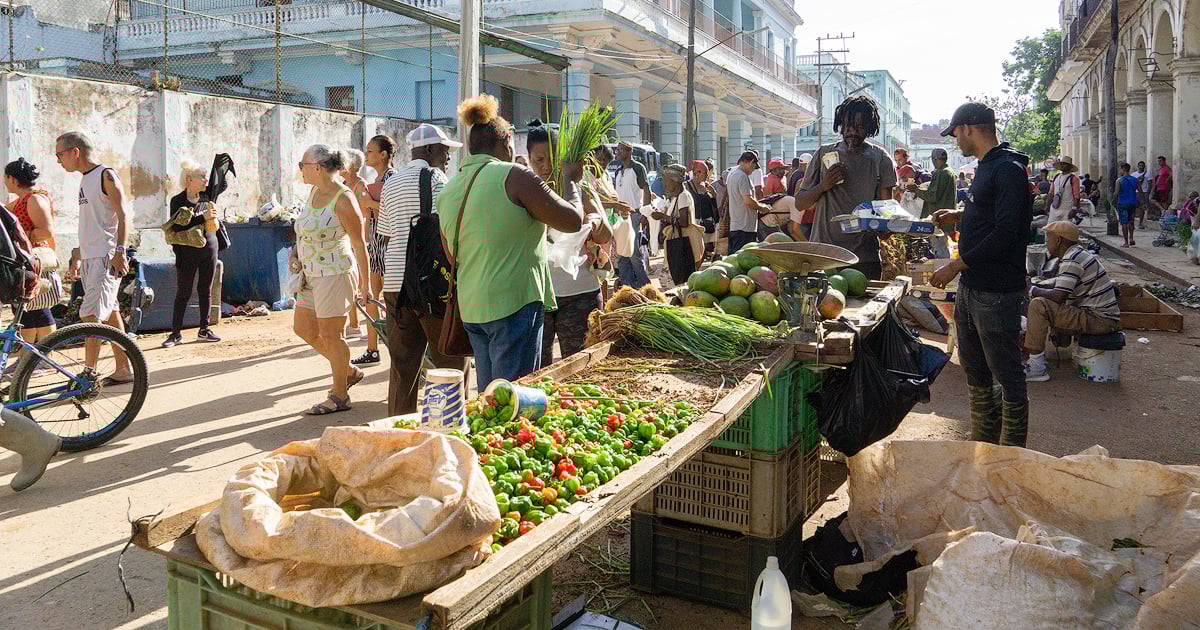
The Government of Havana carried out new control operations in agricultural markets across the capital as part of the implementation of Resolution 148/2025.
The measure establishes price ceilings for purchases from producers, wholesale sales, and retail commercialization, and was accompanied by enforcement actions that included economic sanctions and the confiscation of goods.
According to the official portal of the Government of Havana, cited by Tribuna, a fine of 16,000 Cuban pesos was imposed on an offender in the Plaza de la Revolución municipality for setting prices higher than allowed on nine agricultural products. At the market of 17 and 8, inspectors levied fines of 10,000 pesos for selling peppers at 380 CUP and cucumbers at 70 CUP. Another fine of 7,000 pesos was issued for selling burro bananas without a visible price.
In Arroyo Naranjo, the Municipal Directorate of Finance and Prices reported three fines of 8,000 CUP and one of 5,000, after detecting violations of Decree 30, including the failure to display prices. The total amount of fines in that area reached 29,000 pesos.
Controls were also carried out in Habana del Este, Diez de Octubre, Guanabacoa, and La Lisa, where fines ranging from 2,000 to 16,000 CUP were imposed. According to official information, in cases where speculation was confirmed, confiscation measures were enacted.
Resolution 148/2025 revoked Resolution 69 from April 28 of this year and other previous provisions regarding agricultural prices in the capital. The control measures are part of the government strategy to monitor compliance with the newly established prices and strengthen "commercial discipline," according to the authorities.
These measures follow a series of operations carried out in September during the National Exercise for Crime Prevention and Confrontation, where in the municipality of Guanabacoa, 124 fines were issued totaling 315,120 CUP, 13 forced sales took place, and five confiscations were made, according to official data. In Plaza de la Revolución, over 30 inspectors were deployed and fines exceeded one million pesos. In Centro Habana, a workshop was fined 42,000 CUP for selling expired products.
The new pricing scheme announced on September 30 by the Government of Havana establishes differentiated price caps for agricultural products based on the type of market. In supply and demand points, where many residents of Havana usually shop, prices are allowed to be significantly higher: up to 285 CUP per pound of common beans, 155 for consumer rice, and 250 for dry onions. This model remains in effect today.
Despite the tightening of state control, high prices in the busiest markets and chronic shortages in the state system continue to leave a large part of the population with increasingly limited options for accessing basic products. Meanwhile, those attempting to sell independently to make a living face fines, confiscations, and operations that have defined the rhythm of economic life in the capital in recent weeks.
Frequently Asked Questions about the Strengthening of Controls in Agricultural Markets in Havana
What measures has the Cuban government taken in the agricultural markets of Havana?
The government has implemented Resolution 148/2025, which sets price caps for agricultural products and has conducted control operations that include fines and confiscations of goods. These measures aim to enforce compliance with the established prices and strengthen commercial discipline in the capital.
What are the economic sanctions imposed for violating Resolution 148/2025?
Economic sanctions vary depending on the offense committed. Fines can reach up to 16,000 Cuban pesos, as was the case of an offender in the Plaza de la Revolución municipality who set prices higher for nine agricultural products. Other reported fines include 10,000 pesos for the sale of peppers and cucumbers, and 7,000 pesos for failing to display prices.
How does the new pricing scheme affect consumers in Havana?
The new pricing scheme authorizes higher rates in supply and demand markets, where many residents of Havana usually stock up. For example, the price of common beans can reach 285 CUP per pound, and consumption rice can go up to 155 CUP. This situation, combined with chronic shortages, restricts the population's access to basic products at affordable prices.
What impact do the control operations have on self-employed vendors in Havana?
Control operations have resulted in fines, confiscations, and restrictions for self-employed vendors, who often struggle to comply with government regulations. This situation has sparked public criticism, as many relied on informal sales to survive amid shortages and rising prices of basic goods.
Filed under: