
Related videos:
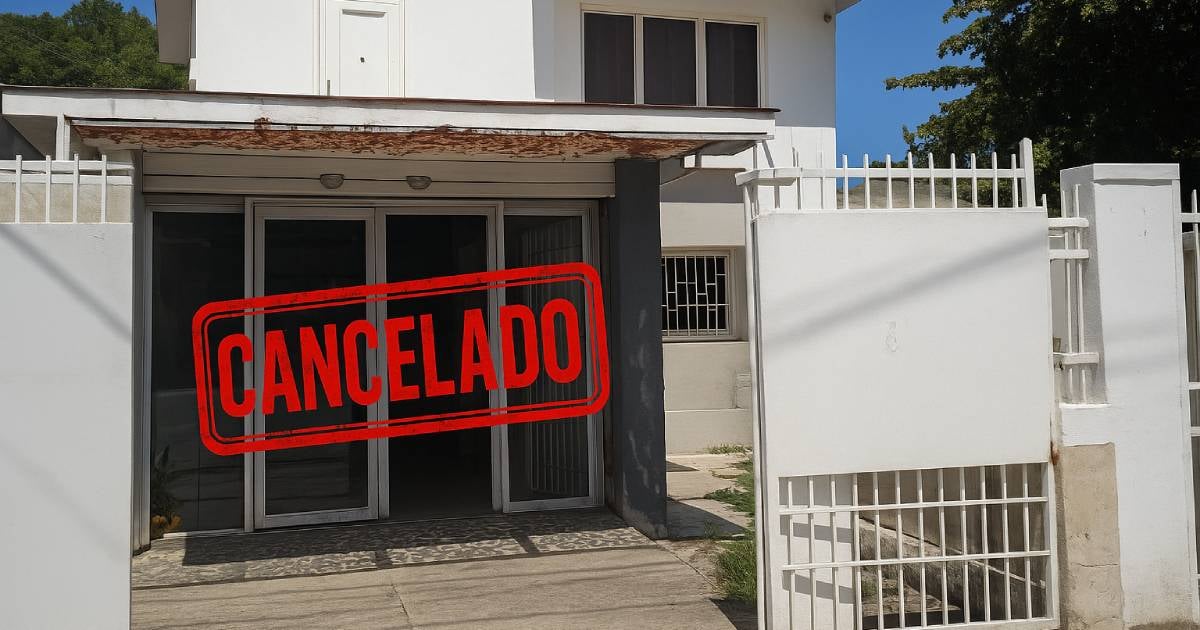
A private store in the Diez de Octubre municipality in Havana was shut down by state inspectors after alleged irregularities were detected, in an operation that underscores the regime's campaign against the non-state sector, which is increasingly besieged by controls, hefty fines, and threats of closure.
According to the official media outlet Tribuna de La Habana, the Provincial Commerce Directorate sent a team of inspectors to the establishment Todotuti, located at 910 Finlay Street between Gestrudis and Lagueruela, after a neighbor reported that the store was not accepting payments by transfer, a common practice among many private businesses due to distrust in the Cuban banking system and the obstacles imposed by the use of the Fiscal Bank Account (CBF).
During the inspection, in addition to the refusal to accept transfers, the authorities reported price violations, for example, chicken pieces were being sold for 350 pesos per pound, when the official price is 312, and the sale of expired products such as jam and sorbets.
A worker was sanctioned with a fine of 30,000 pesos and the closure of the business for seven days was decreed, with the threat of a complaint for "disobedience" if the measure is not followed.
The case gained more notoriety because the owner of the business resides in the United States and, according to the official report, did not present a health license or tax documents.
Tribuna de La Habana.
Carlos Alberto Suárez Leyva, head of Attention to Non-State Management Methods at the Provincial Commerce Directorate, declared to Tribuna de La Habana that inspections will continue "to ensure compliance with the legislation and guidelines," and he assured that actions will be taken "firmly" in response to any violations, in the name of a supposed "fair and transparent trading environment for the benefit of the people."
The closure of Todotuti adds to the wider offensive by the government against private businesses. Just weeks before, the National Office of Tax Administration (ONAT) had issued a public warning stating that establishments evading taxes by using personal accounts or refusing payments by transfer will face closures, fines, and charges for tax evasion, which the regime considers a “crime.”
The crackdown also extends to prices. In 2024, the Cuban government imposed more than 600 million pesos in fines on private businesses accused of violating price caps, in an attempt to control inflation through economic repression.
In all cases, the operations are presented as a defense of consumers, but in practice, they represent a tightening of the restrictions against a private sector that supports a significant portion of daily consumption for Cubans, amid rampant inflation, chronic shortages, and a partial dollarization of the economy.
Frequently Asked Questions About the Closure of Private Stores in Cuba
Why was the Todotuti store in Havana closed?
The Todotuti store was closed by state inspectors due to irregularities such as refusing to accept payments by transfer, price violations, and the sale of expired products. This action is part of a crackdown by the Cuban regime against the private sector, which faces controls, fines, and threats of closure.
What are the implications of the refusal to accept payments by transfer in Cuba?
The refusal to accept payments via transfer has become common in Cuba due to distrust in the banking system and restrictions on the use of the Tax Bank Account. This may result in sanctions and closures of private businesses, as was the case with Todotuti, which was reported for not accepting transfers.
How does the government's crackdown affect the private sector?
The Cuban government's crusade against the private sector is intensifying harassment through controls, fines, and threats of closures. The sanctions include price audits and the imposition of forced sales to prevent speculation and price increases, which suffocates small business owners in an already critical economic environment.
What are the consequences of price control policies in Cuba?
The price control policies in Cuba, such as inspections and forced sales, aim to regulate the market and control inflation. However, these measures also represent a tightening of the restrictions against the private sector, contributing to the shortage of basic products and negatively affecting the country's economy.
Filed under: