
Related videos:
The Cuban sports, once a source of national pride and a propaganda showcase for the communist regime, is experiencing one of its worst moments in decades and is burdened by crumbling facilities, a lack of resources, food shortages in schools, and a constant exodus of athletes.
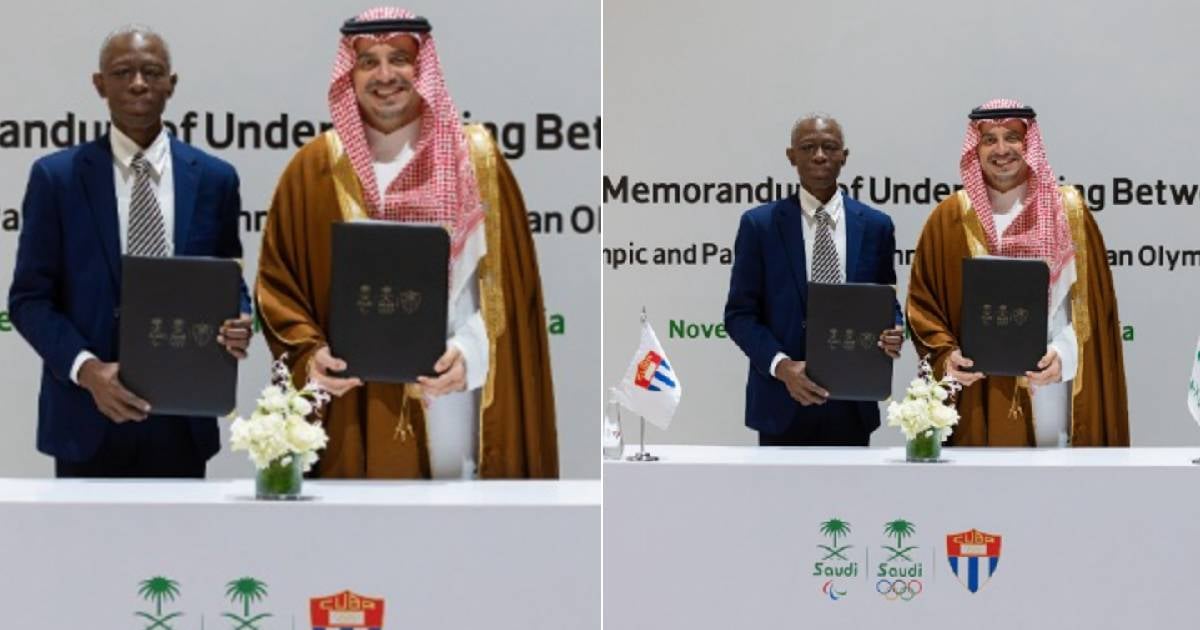
Such details today underscore the reality of a system that was once an example in Latin America; for this reason, amid this structural crisis, the president of the Cuban Olympic Committee (COC), Roberto León Richards, signed a Memorandum of Understanding with the Saudi Arabian Olympic and Paralympic Committee, led by Prince Abdulaziz Bin Turki Alfaisal Al Saud.
According to the site JIT, the agreement was signed in Riyadh, the Saudi capital, during the VI Islamic Solidarity Games, and aims—according to the official statement—“to develop cooperation and promote friendly relations based on the principles of respect and shared interests.”
Cooperation and training... on paper
The memorandum outlines the exchange of sports programs, the training of technical and administrative staff, and the education of coaches, referees, and officials. It also proposes to encourage visits from officials and national teams, and to promote direct contact between federations and athlete committees of both countries.
However, the internal context in Cuba raises serious doubts about the real impact of these types of agreements. High-performance centers are deteriorating, many young athletes train with minimal resources, and basic food items are scarce even in sports schools.
In practice, the Memorandum with Saudi Arabia could represent an economic and symbolic lifeline for the sports apparatus of the regime, rather than a genuine development strategy.
Sports diplomacy and political survival
During his visit, Richards held meetings with international figures such as Robin E. Mitchell, president of the Association of National Olympic Committees (ANOC), and Gunilla Lindberg, the organization's secretary general. These contacts aim to keep Cuba within the influence circles of international Olympic movements, at a time when the country is losing prestige and representation due to a massive brain drain.
The agreement with Saudi Arabia is also part of the pragmatic diplomacy that the Cuban regime has employed in recent years to attract investment or political support from nations with financial resources, regardless of their ideological affinity.
Ultimately, the agreement is yet another attempt to keep afloat a sports model suffocated by the crisis, lack of resources, and the exodus of athletes, who no longer find the future that was promised to them on the Island.
Filed under: