
Related videos:
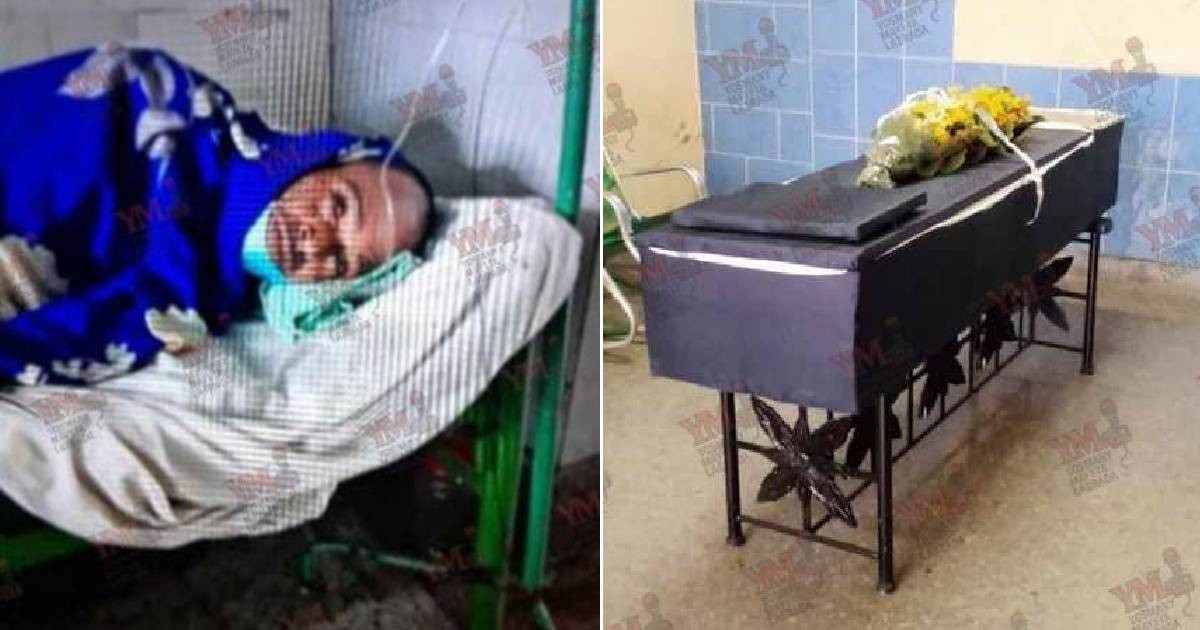
The young Cuban José Bravo Navarro, 33 years old, died on Wednesday, November 19, at the Ambrosio Grillo Hospital, just two days after the regime granted him what is referred to as extrapenal freedom, as reported on his social media by independent journalist Yosmany Mayeta Labrada, who documented the case that occurred in Santiago de Cuba.
Bravo Navarro, a resident of the La Patera area, Boniato district, arrived at the hospital in an extremely deteriorated physical state after months of confinement in the prisons of Marverde and Boniato, where —according to his family— he did not receive adequate medical care despite the evident progression of several illnesses.
A gradual deterioration ignored by the authorities
According to the report from Mayeta, José began to experience accelerated weight loss, frequent diarrhea, dehydration, and exhaustion during his time in Marverde prison.
Later, at the Boniato prison, where there is a hospital ward, his condition worsened as he exhibited symptoms of tuberculosis, kidney complications, and possible heart issues.
Despite these signs, medical attention was said to be limited or delayed, according to those close to the journalist. It was only when his health became critical that he was transferred to Ambrosio Grillo Hospital, where doctors confirmed the severity of his condition. It was then that the penitentiary authorities decided to grant him parole.
But that freedom —Mayeta emphasizes— came when "he could no longer breathe for himself."
He died outside of prison... but too late
Bravo Navarro passed away in the prison ward of the hospital, and hours later, his body was transferred to the funeral home in Santiago de Cuba, where he will be buried this Thursday.
His story highlights a pattern repeatedly reported by activists and families of inmates in Cuba: the release of seriously ill prisoners when their condition is irreversible, with the aim of preventing deaths from occurring officially under state custody.
The family reports abandonment and negligence
José's relatives—cited by Mayeta—maintain that he could have been saved if he had received timely medical attention while in prison.
They claim that they asked for help for months and that their requests were ignored.
Today, they ask: Why were the symptoms not addressed in time? Was there real medical follow-up? Did he have to wait on the brink of death to be freed? For them, the answer is clear: the State came too late.
A case that reflects the country's healthcare and prison crisis
The death of Bravo Navarro occurs amid the worst health crisis in decades in Cuba, characterized by: massive outbreaks of dengue and chikungunya, hospitals lacking supplies, shortages of antibiotics and diagnostics, structural failures in the penitentiary system, and an institutional neglect that becomes increasingly evident each day.
Yosmany Mayeta emphasizes that José's story is not an isolated case, but rather part of a growing trend of inmates whose health deteriorates without receiving timely and adequate care.
"The prison left him lifeless."
The reporter's statement is powerful: "José Bravo Navarro did not die in prison... but prison left him lifeless."
His name joins the ever-growing list of Cubans who die when the State decides to act too late.
While a family cries out for answers in La Patera, institutional silence prevails once again, conveying a painful message:
When prisons, hospitals, and the State fail, the last one to arrive is always the right to live.
Filed under: