
Related videos:
The International Air Transport Association (IATA) came to the defense of airlines that have suspended flights to Venezuela amid the rising military tension in the Caribbean, following President Donald Trump’s over and around that country.
The statement from the organization, which represents more than 80% of global air traffic, comes after the decision by the Venezuelan National Institute of Civil Aeronautics (INAC) to revoke the flight permissions of Iberia, TAP, LATAM, Avianca, GOL, and Turkish Airlines, accusing them of yielding to pressures from Washington to suspend their operations.
IATA: "Safety comes first, and airlines must be able to assess risks."
In a statement quoted by Aviacionline, IATA emphasized that safety is the "number one priority" in aviation and defended each airline's ability to assess risks independently, even if that means suspending services or avoiding flying over a country in response to international alerts.
The statement comes at a time when Trump's military warning is in effect—published in capital letters on his social media—where he indicated that Venezuelan airspace should be "considered completely closed," a message that analysts interpret as a precursor to possible military action or a strategic air blockade.
This alert is accompanied by the recent NOTAM issued by the U.S. FAA, which warns of a "deteriorating security situation" and military activity in the Maiquetía Flight Information Region (FIR).
Spain, for its part, expanded its own recommendation on Monday not to fly to or from Venezuela until December 31 due to the increase in military movements and the presence of anti-aircraft weaponry.
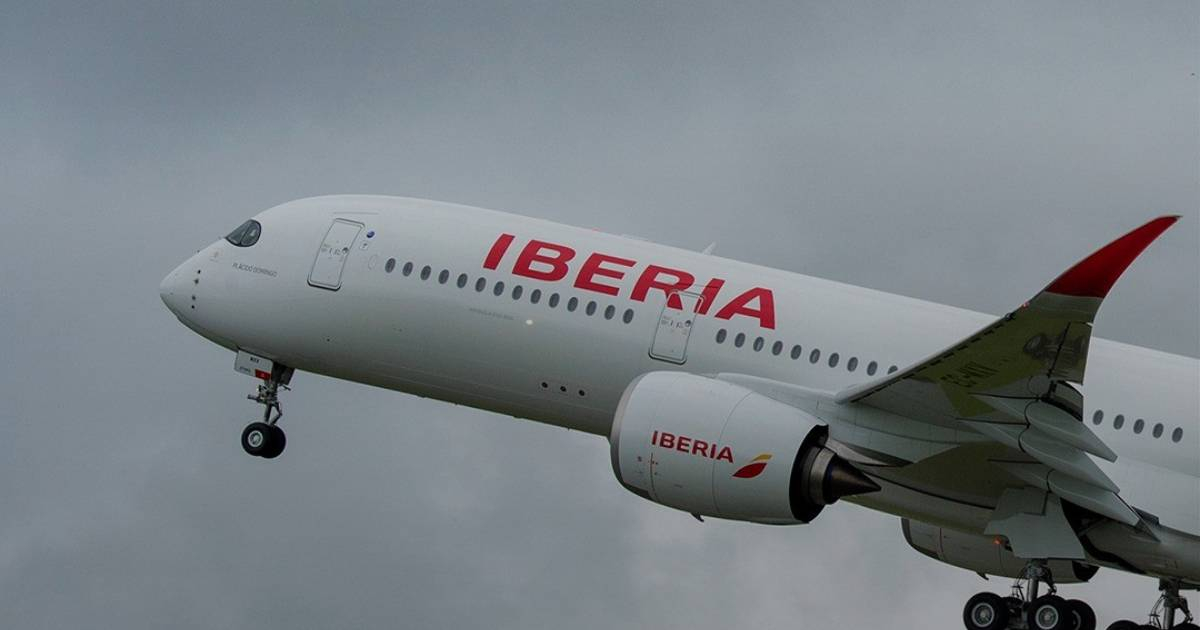
Iberia extends suspension until the end of the year, increasing the impact on thousands of passengers
As a direct consequence of the recommendation from the Spanish Agency for Air Safety (AESA), Iberia announced that it will not resume its flights to Caracas before January, extending the suspension for another month. Air Europa continues to cancel flights based on daily assessments, and Plus Ultra has grounded its planes for this Tuesday and Thursday.
Suspensions have left thousands of Venezuelans and Latin American travelers in a state of uncertainty. Families stranded at airports, tickets that are no longer valid, and the inability to return home or visit loved ones during peak season contribute to an atmosphere of distress that resonates across social media.
Despite this, IATA insisted that airlines should not be penalized for taking precautionary measures and urged governments to respect operational decisions when they are based on safety and compliance with international rules.
Venezuela responds with accusations of aggression; Cuba joins in the condemnation
The regime of Nicolás Maduro reacted by describing Trump's announcement as a “hostile, unilateral, and arbitrary act.” In a statement, its foreign ministry asserted that the U.S. order represents an “explicit threat of the use of force” and accused Washington of implementing a “colonialist” policy against Latin America.
The Venezuelan government called on the international community to reject what it considers an "immoral act of aggression" and promised to respond "with dignity and legality."
From Havana, Cuban Foreign Minister Bruno Rodríguez also condemned the U.S. measure, describing it as a “serious violation of International Law” and noting that it represents a direct threat to regional peace. Cuba, one of Maduro's main allies, warned about the risk of a military escalation with “unquantifiable consequences.”
Despite the tensions, the affected airlines —including Iberia, TAP, Avianca, LATAM, and Turkish Airlines— have reiterated their desire to restore their routes to Caracas as soon as full security guarantees are in place.
Filed under: