
Related videos:
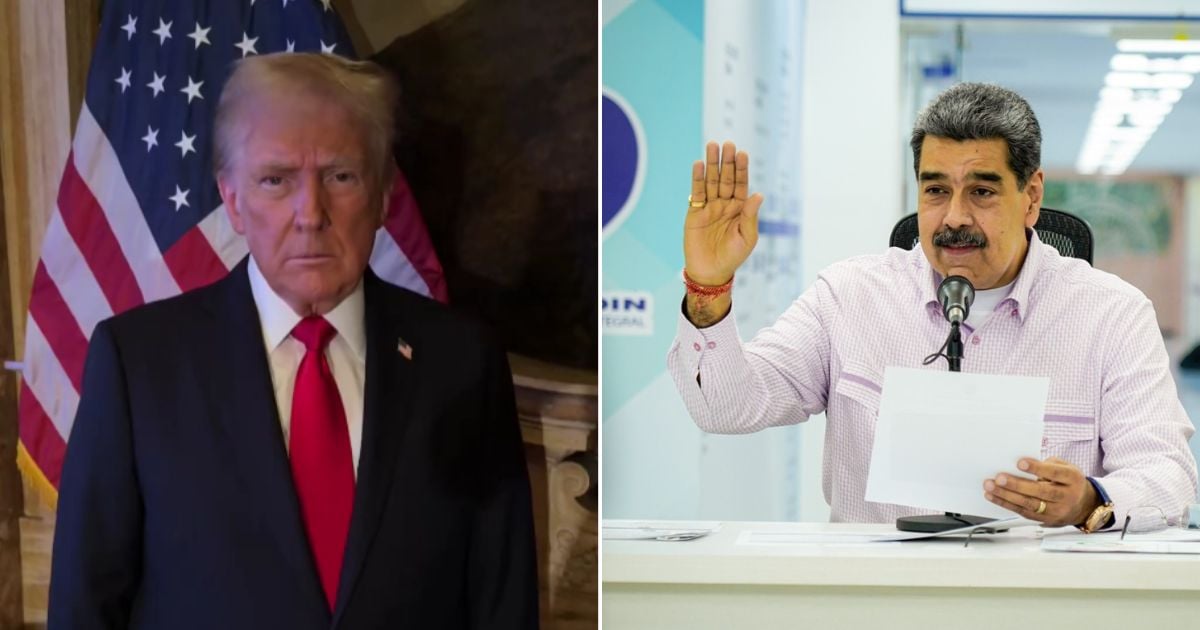
Donald Trump, president of the United States, called an urgent meeting at the White House to outline his administration's next steps regarding Venezuela, amid the intensification of pressure measures against Nicolás Maduro's regime.
According to CNN, the meeting took place on Monday at 5:00 p.m. in the Oval Office and included the participation of high-ranking officials from the administration, among them the Secretary of Defense, Pete Hegseth; the Chairman of the Joint Chiefs of Staff, General Dan Caine; the Secretary of State, Marco Rubio; the Chief of Staff, Susie Wiles; and the Deputy Chief of Staff, Stephen Miller.
The meeting takes place as Washington increases its military presence in the Caribbean and strengthens operations against drug trafficking linked to groups associated with the Venezuelan regime.
During the weekend, Trump also issued a directive regarding aviation networks and navigation, warning airlines and pilots to avoid the airspace of Venezuela, CNN reminded.
The president also confirmed a recent phone conversation with Nicolás Maduro, although he did not disclose the topics discussed.
U.S. lawmakers from both parties have expressed concern over the legality of attacks on vessels suspected of transporting drugs, which have resulted in dozens of deaths in the region.
Despite the criticism, the Trump administration continues its "maximum pressure" strategy on the Venezuelan regime, combining diplomatic, financial, and military actions with the goal of restoring democracy in that country.
The United States has notably intensified its military deployment in the Caribbean as part of the operation “Lanza del Sur”, a strategy that combines combat actions against drug trafficking with increasing pressure on the regime of Nicolás Maduro.
This operation includes maneuvers with live fire from the USS Iwo Jima, attacks on suspicious vessels, and the use of AV-8B Harrier II aircraft and F-35B stealth fighters.
In parallel, the USS Gerald R. Ford aircraft carrier, regarded as the deadliest in the U.S. Navy, was deployed in the area along with a naval strike group that includes destroyers, a nuclear submarine, and over 4,000 personnel.
These actions aim to dismantle transnational criminal networks and reinforce strategic control of the hemisphere.
The atmosphere has become even more tense following a phone call between Trump and Maduro that has not been publicly detailed, which took place just before the military exercises in Trinidad and Tobago and the B-52 bombers' flyover in the Caribbean.
These maneuvers have been interpreted as a direct warning to Caracas.
In response, the Venezuelan regime denounced the presence of U.S. military forces in Caribbean waters as a direct threat to its sovereignty.
The Venezuelan Ministry of Defense accused Washington of laying the groundwork for a covert regional aggression.
This was further compounded by statements from Maduro, who accused Trump of wanting to appropriate Venezuelan oil reserves under the pretext of hemispheric security.
Filed under: