
Related videos:
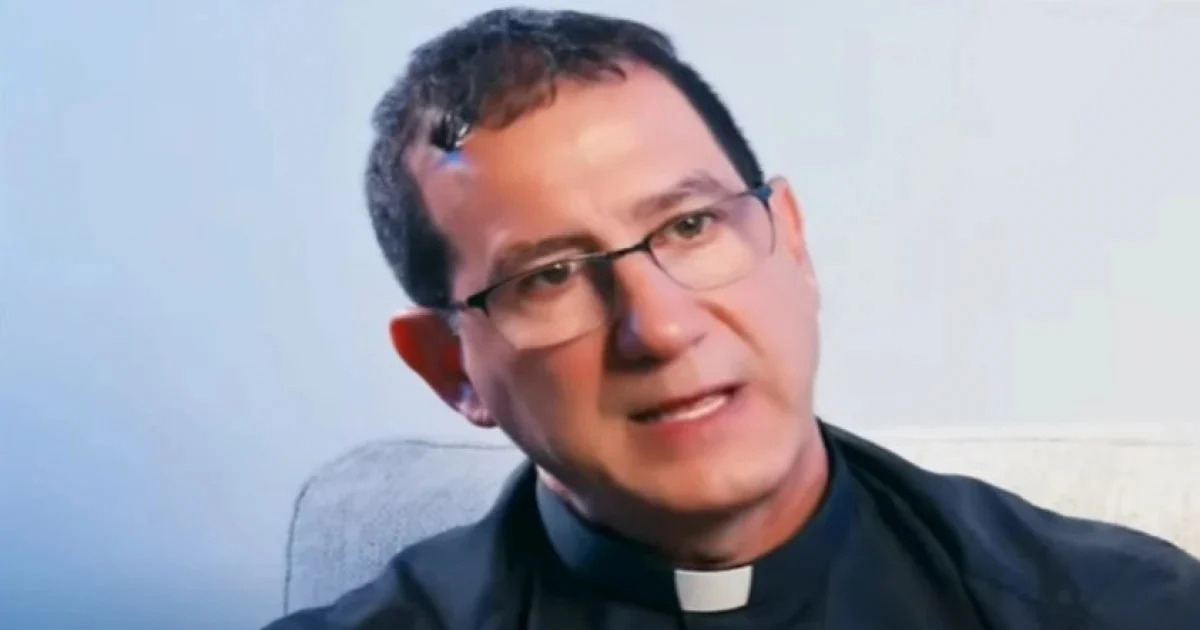
The Cuban priest Alberto Reyes Pías once again launched a strong critique of the political system on the Island, this time reflecting on the weight of time and the devastating effect that the "Revolution" has had on entire generations.
In a text shared on Facebook, he directly addresses the prolonged crisis in the country, the moral and material degradation of the nation, and the historical evidence that, in his view, completely dismantles the foundational myth of Castroism.
Reyes describes life in Cuba as an "endless spiral of darkness, misery, absent freedom, and broken dreams," where decades of suffering lead everyone to the same question: "How much longer?".
The Camagüey parish priest mentions the accumulated exhaustion, but maintains that the duration of this nightmare could ultimately leave a legacy: the conviction that "never again on this land" will an ideology like Marxism be allowed to dominate the country.
Fidel, Che, and the Fall of the Myths
One of the central points of his reflection is the role of time as a historical judge.
Reyes argues that if Fidel Castro had died young, before coming to power, many Cubans would have turned him into an almost sacred symbol and would attribute all the solutions to the country's problems to a hypothetical Revolution.
But that did not happen. Castro had "all the time in the world" to demonstrate his true nature and the real scope of his project, which he summarizes as the total destruction of the country "from its economy to its soul."
In contrast, he mentions the case of Che Guevara, whom he describes as a "textbook psychopath," and whose myth has survived precisely because he died young, leaving reality unable to contradict his heroic image in the eyes of the world.
The 80s: the mirage that time dismantled
Reyes also remembers Cuba in the 1980s, when the fear of dissent was greater than it is now, but there was food, electricity, and economic stability. An illusion that contributed to thousands of citizens fervently defending the system.
However, he knows that "there is no better filter than time," and that filter has already shown that the Revolution "was a great lie."
The priest denounces that the leaders have never cared about the life of the people, that they do not hesitate to repress and imprison, and that Cubans "are dying of hunger and disease before their indifferent eyes."
A moral and political warning for the future
In his conclusion, the Father suggests that the prolongation of the disaster could have a historical significance: to ensure that when Cuba is finally free, no one will allow Marxism—or any repressive system—to take root on the Island again.
It goes even further: it aspires for Cuba to transition from being an exporter of Marxism to becoming an example to help other nations achieve their freedom.
Reyes, one of the strongest and bravest voices within the Cuban Church, insists that time, that same time the authorities have used to entrench their control, has ultimately become their greatest accuser.
Next, CiberCuba reproduces the full content of the text:
I have been thinking… (139) by Alberto Reyes Pías
I have been thinking about the effect of time
The days, months, and years go by, and the relentless passage of time immerses us without pause in an apparently endless spiral. A spiral made of darkness, misery, continuous struggle, absent freedom, and broken dreams. And we sink, unable to silence the eternal question: "How long will this last? How long? How long...?"
It has been a long time: long the suffering, long the destruction, long the fatigue. And yet, the excessive duration of this nightmare may leave us with a great blessing: the blessing of "never again on this earth."
Because there is no better filter than time.
If Fidel Castro had died in the Sierra Maestra, and with him the idea of the "Cuban Revolution" had also perished, we would very likely have emerged from Batista's dictatorship and restored democracy. However, Fidel would remain in our minds as the great promise of a better Cuba. Today, we would venerate him, considering him little less than a saint. And in the face of every social problem, every injustice, and every hint of misery, we would have shaken our heads and said, "If Fidel had not died, this would not have happened," "if Fidel had triumphed, this country would be a marvel."
"But it wasn't like that, and Fidel had all the time in the world to prove that he had the soul of a dictator and that his project would only succeed in destroying his own country down to its foundations, from its economy to its very essence."
It was different with Che Guevara, who was fortunate enough to die young, and although a minimal reading of his own writings is enough to understand that he was a textbook psychopath, the fact that he didn’t have time to demonstrate this a bit more turned him into a myth, to the point that even those who Che would have sent to concentration camps if he were alive rally around him as a symbol.
In the 1980s, freedom was an illusion; we were much more afraid than we are now, dissenting had far more consequences than it does today, but there was food, there was electricity, inflation was not a problem... and the squares were overflowing, with many ordinary citizens fiercely defending this "Revolution," eagerly participating in acts of repudiation. Those were the years when we didn't mind our children shouting at the top of their lungs: "Pioneers for communism…!" Those were the years when exporting the model of the Cuban Revolution was a source of pride.
But there is no better filter than time, and time has spoken, demonstrating that the "Revolution" was a great lie, that the lives of this people never mattered to any of our leaders, that they do not hesitate to repress and imprison, while we are dying of hunger and disease before their indifferent eyes.
That is why perhaps the length of this process has a meaning: that when we are free, the Marxist ideology will never again exist on this land, and that we go from being the promoter of Marxism in the world to being the hand that, from its experience, guides other nations to their freedom, he concludes.
Filed under: