
Related videos:
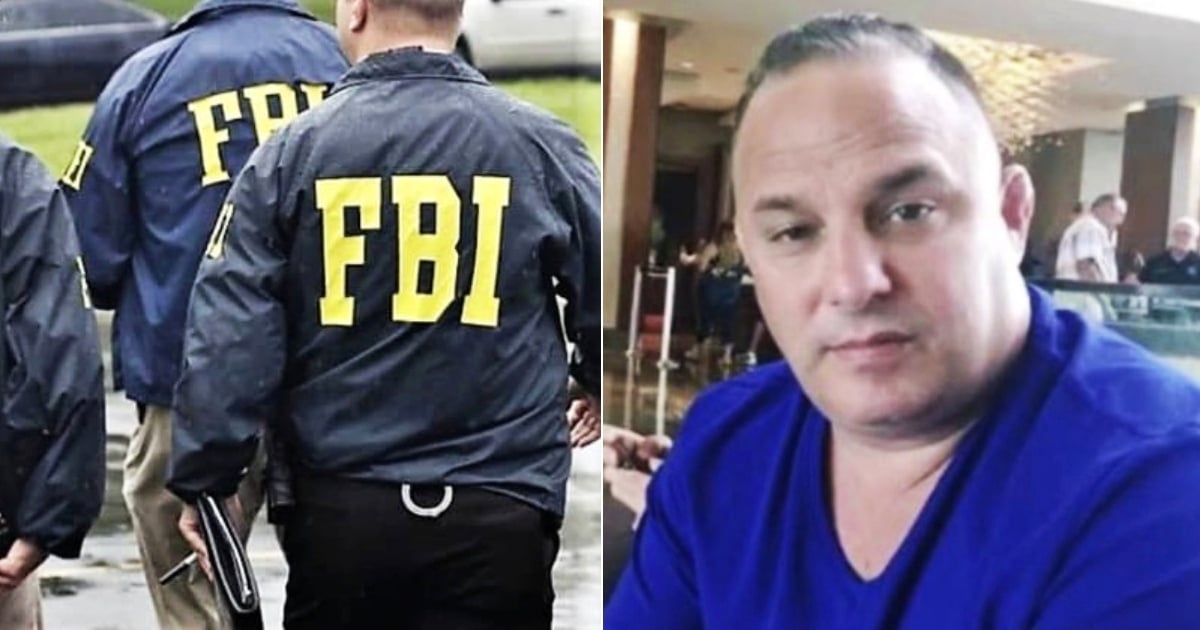
The Cuban businessman and promoter Boris Arencibia, 52 years old, was sentenced to 57 months of federal prison for his involvement in a vast criminal scheme that included the sale of diverted and mislabeled medications, including drugs used in the treatment of serious diseases such as HIV and cancer.
Alongside him, José Armando Rivera García, 45 years old, was also sentenced for his role in the same criminal network.
Both pleaded guilty in two separate federal cases related to schemes through which they sold fraudulently obtained drugs valued at over 28 million dollars.
A scheme that put lives at risk
According to the official statement from the U.S. Attorney's Office for the Southern District of Florida, Arencibia and Rivera acquired large quantities of prescription medications through illegal channels.
Some were sold directly by patients, while others were obtained through the use of fake or fraudulent prescriptions.
These medications, which needed to be stored under specific conditions to ensure their effectiveness, were kept without any kind of control.
“Diverted medications endanger patients’ lives,” warned federal prosecutor Jason A. Reding Quiñones, emphasizing the seriousness of the case.
Once acquired, the medications were repackaged, and their documentation was falsified to make it appear that they came from legitimate manufacturers or authorized wholesalers.
From fictitious pharmaceutical distribution companies, the drugs were sent to pharmacies throughout the United States, where they were purchased by unsuspecting patients.
In some cases, the pills in the bottles did not match the prescribed treatment.
Bottles containing vitamins, various medications, and even small stones were found, exposing consumers to serious health risks.
Two cases, one network
The first judicial case was presented in 2019, the year a conspiracy involving 20 defendants was dismantled.
Of them, all but one have been sentenced to prison, with sentences ranging from 30 months to 14 years.
Arencibia was identified as one of those who obtained large volumes of drugs on the black market, which he then delivered to Rivera García.
The latter founded a company called LDD Distributors, which received products from Arencibia to send them to a wholesaler controlled by another defendant. Both were sentenced in this case to 57 months in prison.
The second judicial process took place in 2025, when authorities discovered that both defendants had resumed criminal activity by operating a new wholesale drug distribution business.
Through this company, they continued selling diverted products to U.S. pharmacies, this time with a more sophisticated structure of falsified documentation.
For this second case, they were sentenced to 43 months in prison, although the court ruled that both sentences will be served concurrently.
"These defendants introduced contaminated and repackaged medications into pharmacies across the country, fully aware of the danger. Our Office will continue to collaborate with the FDA, the HHS OIG, and the FBI to protect patients and hold accountable those who turn the healthcare system into a criminal marketplace," emphasized Reding Quiñones.
Federal investigation and judicial processing
The case from 2019 was investigated by the Food and Drug Administration (FDA-OCI) and the FBI, while the 2025 case was handled by the Department of Health and Human Services (HHS-OIG).
The cases were handled by Assistant U.S. Attorneys Frank Tamen and Nicole Grosnoff, along with litigator Jacqueline Zee DerOvanesian from the Department of Justice.
Federal Judge Darrin P. Gayles was responsible for issuing the sentence. Although the combined sentences total 100 months, the concurrent nature means that Arencibia and Rivera García will spend less than five years in prison.
Career path: from judo to entertainment… and to crime
The story of Boris Arencibia was not always linked to crime. Born on September 7, 1973, in Pinar del Río, Cuba, he was a prominent judoka, crowned national champion seven times.
In 1993, during the Central American and Caribbean Games in San Juan, Puerto Rico, he defected from the Cuban delegation, thus beginning a new life in the United States.
The following year, now under the American flag, he won the national championship in the 60 kg category. Despite his athletic successes, Arencibia left judo shortly after to focus on ventures in the entertainment sector.
He founded companies, organized events, and established himself as a cultural promoter.
He was the chief organizer of the Santa María Music Fest, a music festival in the northern keys of Cuba that promoted tourism to the facilities of the military conglomerate Gaviota, linked to the Cuban regime. His name began to be associated with circles of power and official interests in Havana.
Scandals outside the pharmaceutical industry
The figure of Arencibia has also been controversial outside the business sphere. He was involved in two violent altercations at bars in Miami.
In one of them, he was accused of assaulting the influencer Ultrack and his then-wife, Amanda Sanz, in an event widely publicized on social media.
These situations, combined with their connection to a network of adulterated medications, have further tarnished their public image, especially among the Cuban community in exile.
Boris Arencibia, who was once a symbol of Cuban athletic talent and later reinvented himself as a cultural promoter, is now facing the consequences of his crimes with a sentence that will keep him away from business and public life for several years.
Filed under: