
Related videos:
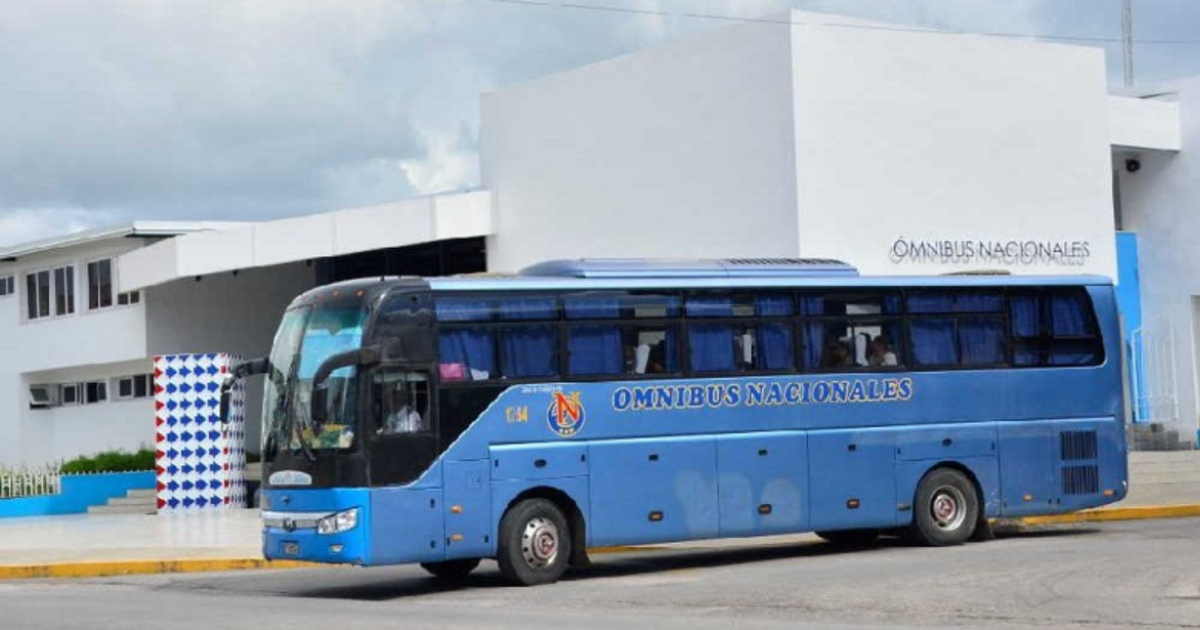
The interprovincial transportation system in Cuba is undergoing a crisis characterized by a shortage of buses and essential resources. Out of a fleet of 558 buses belonging to the National Bus Company, only 219 are currently operational, as acknowledged by engineer Walter Luis Duvergel, the general director of that state entity, in statements to the official newspaper Trabajadores.
The official explained that to meet the national schedule, at least 320 units would be needed, and acknowledged that the deficit "forces us to overutilize the existing ones, leads to breakdowns along the way, and creates a demand that far exceeds the supply."
Duvergel also pointed out that the fleet is “aged, with most of the buses being over five years old,” and that the main difficulties are focused on “access to lubricants, spare parts, batteries, tires, fuel, and workforce.”
"Just for oil, the monthly costs exceed 15 thousand dollars," specified the executive, who added that the most affected routes are those of Cienfuegos, Guantánamo, and Pinar del Río.
Endless waits or higher fees
The report by Trabajadores depicts the daily scene at the Villanueva Bus Terminal in Havana, where hundreds of passengers wait for hours, or even days, to secure a seat on national trips.
Travelers are torn between waiting for a state ticket, with prices that can reach 312 pesos, or paying thousands of pesos for private rental services, which offer greater speed but also much higher prices.
In this context, private transporters —whether self-employed workers or small and medium-sized enterprises— have taken on an increasingly important role, renting spaces at terminals and charging directly on board. According to current legislation, the maximum fare set by the state is 4,000 pesos to Camagüey and 5,500 to Guantánamo, although in practice these limits "often disappear" due to gasoline shortages and high demand.
The private alternative and regulatory chaos
The deputy director of the State Traffic Unit, Onix Grimón, stated that the leasing of transportation means "constitutes an alternative to support the transportation of passengers," and that some vehicles are recovered by the lessees, who also bear the ongoing expenses to keep them operational.
Duvergel himself acknowledged that when a state bus breaks down, they resort to "rented buses that maintain the transport on time and at the same price reserved."
In this context, private companies such as Pedrocarr S.R.L, established in 2022 in Las Tunas, have emerged, offering both private and shared travel services, as well as cargo and maintenance services, and frequently collaborating with the National Bus Company.
Despite the efforts to maintain the service, Trabajadores concludes that the response remains “insufficient in the face of growing and diverse demand,” and warns that the challenge is not only to keep the system operational but also to exert “more effective control to ensure order, equity, and stability.”
A national transportation crisis
The situation with interprovincial transportation adds to a widespread crisis across the country. In the province of Matanzas, the shortage of buses and fuel has forced many companies and state entities to adjust their work schedules so that employees can get to and from home. This measure, adopted as a temporary solution, has impacted productivity and work discipline, while the deterioration of public transport continues to worsen nationwide.
According to that report, based on an article from the state-run newspaper Girón, the crisis has directly impacted productivity and the quality of services, causing delays in deliveries and a deterioration of work discipline.
Both in Matanzas and across the country, the reasons are the same: lack of fuel, deterioration of the vehicle fleet, and lack of planning. Meanwhile, millions of Cubans face long waits, high prices, and daily uncertainty in their attempts to travel between provinces. The lack of investment, inefficient state control, and absence of autonomy in public enterprises exacerbate a crisis that the regime tries to justify with the embargo, but which is rooted in years of mismanagement and economic centralization.
Filed under: