
Related videos:
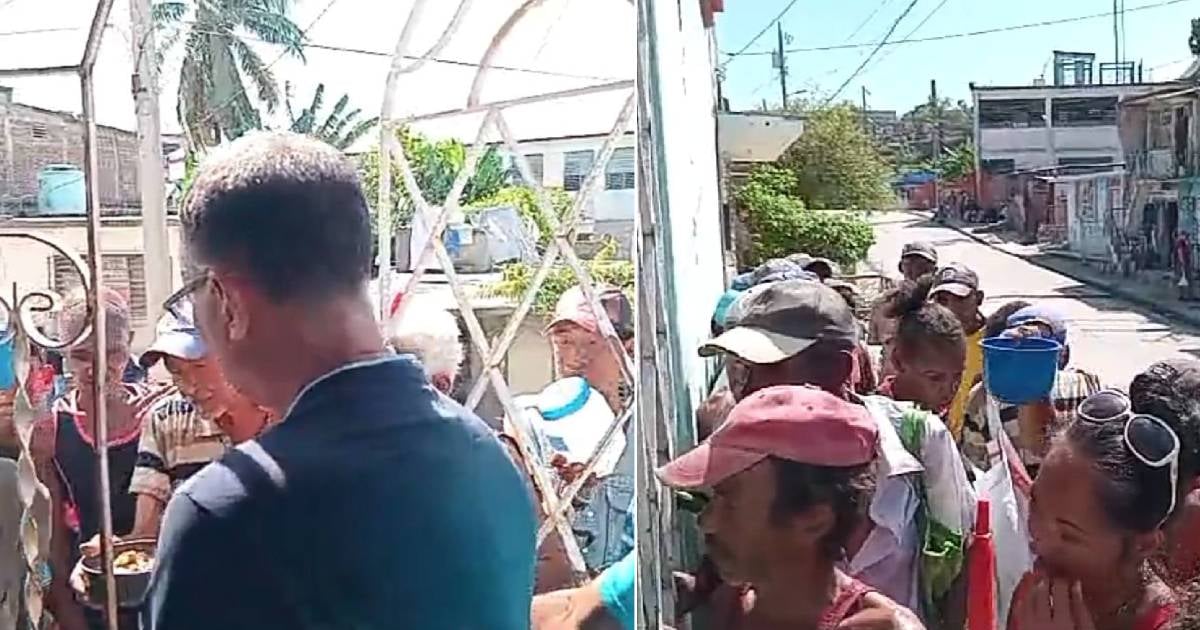
The opponent José Daniel Ferrer, leader of the Patriotic Union of Cuba (UNPACU), continues his humanitarian work in Santiago de Cuba, providing food and assistance to vulnerable individuals.
In a message on his Facebook account, Ferrer recounted how, together with his family and the support of compassionate citizens, they managed to feed more than 260 needy people on Thursday.
"Today we provided food to more than 260 vulnerable individuals. We even distributed our afternoon meals. We only kept the portion for the child. The adults will eat bread and banana smoothies (fongos). But what a beautiful chain of solidarity among Cubans both inside and in exile!" he expressed.
Ferrer highlighted the spontaneous donations they have received, from a soft drink vendor to another selling vinegar, as well as the contribution of firewood from some of those who have benefited from their assistance. "Solidarity and service are very much needed in times of serious crises," he emphasized.
This altruistic work is not new. On February 14th, Ferrer and his wife, Dr. Nelva Ismaray Ortega, also provided assistance to dozens of people in vulnerable situations.
In a message on his X account, he detailed how both combine their solidarity activities with their family life, despite the challenges posed by the regime.
"While my wife, Dr. Nelva Ismaray Ortega, attends to patients and other matters, I take care of dozens of people throughout the day: family members of political prisoners, calls from political and regular prisoners, activists who are victims of repression or facing other serious issues. As we confront the many challenges imposed by the regime, we lovingly care for our son. I'm making him a mash of malangas. Quite expensive, by the way," he stated.
Before being imprisoned, Ferrer was already undertaking these actions, facing constant threats and harassment from the regime. During the pandemic, the authorities tried to stop his humanitarian work, but he refused to cease it.
The State Security has even gone so far as to prevent people from reaching the aid distribution points, in an attempt to mitigate its impact on the community.
Ferrer was released on January 16 after spending three and a half years in prison. His release was part of an agreement between the Cuban regime, the Vatican, and the United States, which involved the gradual release of 553 political prisoners, something that the communist government has paused following Cuba's reinstatement on the list of state sponsors of terrorism.
Even after his release, Ferrer has continued to face harassment from the communist authorities. On January 27, he rejected a police summons in Santiago de Cuba, stating that he would not obey the order and that he is not afraid of imprisonment.
Additionally, in February he was summoned again by the Municipal People's Tribunal of Santiago de Cuba, to which he responded that he does not recognize the tribunal and is willing to face the consequences of his refusal.
Ferrer has also denounced the constant surveillance by the political police, including the use of drones to monitor his home in Santiago de Cuba. Despite these intimidation tactics, he has reaffirmed his commitment to the struggle for human rights and the well-being of the Cuban people.
Despite the repression and challenges imposed by the government, Ferrer and his wife continue their work, strengthening a network of solidarity that stands strong in the face of the crisis affecting the Cuban people.
Frequently Asked Questions about José Daniel Ferrer's Humanitarian Work in Cuba
What kind of help does José Daniel Ferrer offer in Santiago de Cuba?
José Daniel Ferrer, leader of the Patriotic Union of Cuba (UNPACU), is dedicated to providing food and assistance to vulnerable individuals in Santiago de Cuba. Ferrer, along with his family and supportive citizens, has managed to feed more than 260 people in need in a single day, demonstrating his commitment to the community despite the challenges imposed by the Cuban regime.
How has the Cuban government reacted to Ferrer's humanitarian efforts?
The Cuban government has attempted on several occasions to hinder the humanitarian actions of José Daniel Ferrer, imposing restrictions and ongoing harassment. During the pandemic, the authorities tried to prohibit his humanitarian work, but Ferrer refused to stop, facing threats and repression. Even after his release, Ferrer continues to be monitored and harassed by the communist authorities in Cuba.
What is the current status of José Daniel Ferrer following his release?
José Daniel Ferrer was released on January 16 after spending three and a half years in prison as part of an agreement between the Cuban regime, the Vatican, and the United States. Despite his release, Ferrer continues to face harassment and restrictions from the Cuban government, including limitations on his internet access and police summons that he has openly rejected.
What is the impact of Ferrer's work on the Cuban community?
The work of José Daniel Ferrer has had a significant impact on the Cuban community, especially among those in vulnerable situations. His efforts have strengthened a network of solidarity among Cubans both on and off the island, highlighting the importance of mutual support in times of crisis. Despite government repression, Ferrer continues to be a symbol of resistance and commitment to human rights and the well-being of the Cuban people.
Filed under: