
Related videos:
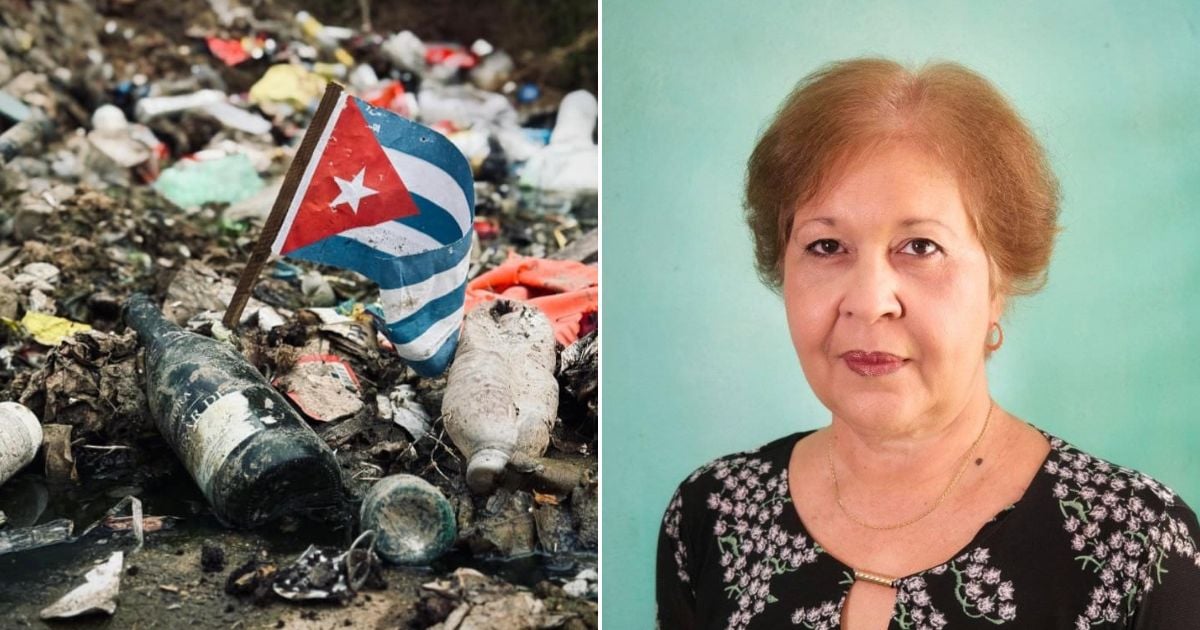
The prominent Cuban scholar and essayist Alina Bárbara López condemned this Wednesday on her social media the regime's staged efforts to simulate a nonexistent normalcy in Cuba, despite the deep crisis the country is facing.
In a post on his Facebook profile, López reflected on the term "simulation," pointing out that the government has refined this practice to make it seem as though life is going on normally.
"I am amazed at the way those in charge in Cuba have found to simulate that everything is fine, that we are making progress and that life is perfectly normal," he wrote.
The intellectual emphasized that this is not a self-deception by the authorities, as they are fully aware of the serious situation facing the island. She also does not believe they are trying to deceive the citizens, as the current conditions make the precariousness evident.
"It’s enough to listen to opinions when more than two people gather, even if they are strangers, in one of the many lines we have to wait in for anything," he noted.
As a concrete example of this "surreal simulation," López described the abrupt changes in his neighborhood in anticipation of a possible visit from high-ranking officials.
Worker brigades have been deployed to clean neglected green areas for months, paint utility poles and sidewalks, and even decorate with the colors of the Cuban flag, though using an ochre tone instead of the usual red.
However, these cosmetic improvements contrast with the daily reality of the residents, who continue to face blackouts, stagnant sewage, and overflowing garbage bins: "It doesn't matter that the real function of the 'aestheticized' poles, which is to hold the electrical wires, has lost all meaning since, for example, since yesterday afternoon we have had no electricity."
López also shared images that illustrate the contradiction between the image that is intended to be projected and the daily hardships faced by the population.
One of the photos that impacted her the most shows a small Cuban flag standing tall in the middle of a trash heap: "An allegory of the suffering homeland but one that still holds hope? I want to believe so. I take refuge in that image of resilience."
The Cuban scholar and activist Alina Bárbara López Hernández has been one of the most critical voices in the intellectual sphere in Cuba. Her defense of free speech and her activism have made her a target of reprisals from the authorities.
In August 2024, López was arbitrarily detained along with the writer Jorge Fernández Era after attempting to peacefully protest in Havana. Both have been targeted for their dissenting views and for participating in acts of protest. López has insisted on her right to free expression, denouncing on social media the ongoing violations of the rights of Cuban citizens.
Weeks later, in September 2024, the Union of Writers and Artists of Cuba (UNEAC) announced her expulsion, arguing that she had engaged in "activities against the revolution." This decision sparked widespread rejection among intellectuals and artists, including actor Luis Alberto García, who labeled the measure as a “gross error” and an act of political censorship.
Despite the reprisals, López Hernández has reaffirmed his commitment to the defense of civil rights in Cuba. He has denounced the harassment by State Security and continues to express his opinions on social media and independent outlets, asserting that he will keep fighting for a country where fundamental freedoms are respected.
Frequently asked questions about the regime simulation and the crisis in Cuba
What does Alina Bárbara López denounce about the Cuban regime?
Alina Bárbara López denounces the "surreal simulation" of the Cuban regime, which tries to project a non-existent normality amidst a deep crisis in the country. According to López, the government is aware of the difficulties Cuba faces, but continues with a performance to conceal the reality of the precarious situation that citizens endure.
How does the "surrealist simulation" of the Cuban regime manifest itself?
The "surrealist simulation" is evident in actions such as the abrupt cleaning and decorating of neighborhoods in anticipation of visits from high-ranking officials, while everyday conditions of hardship, such as power outages and rubbish accumulation, continue. These actions do not address the real problems faced by citizens, but rather aim to create a facade of normality that contrasts with the harsh reality of daily life in Cuba.
What specific examples illustrate the crisis in Cuba according to Alina Bárbara López?
Alina Bárbara López mentions how, in her neighborhood, cosmetic improvements such as painting poles and cleaning green areas are only carried out at strategic moments, but the everyday reality is still characterized by blackouts, stagnant sewage, and overflowing trash bins. These superficial actions do not address the basic needs of the population, which struggles with the lack of essential services.
What is the impact of the crisis on the daily lives of Cubans?
The crisis in Cuba deeply affects the daily lives of its citizens, forcing them to resort to creative methods to carry out everyday activities such as cooking, charging electronic devices, or even working. Prolonged power outages and a lack of basic resources are commonplace, impacting both households and essential services like hospitals and transportation. This situation has led Cubans to adapt and seek ingenious solutions for survival.
Filed under: