
Related videos:
In the early hours of March 14, a total lunar eclipse will be visible across much of the world, including America, Europe, and Africa. Cuba will be in a privileged position for observing the phenomenon, as its territory will be entirely within the path of totality.
Professor Luis Enrique Ramos, a member of the Meteorological Society of Cuba, highlighted that the eclipse will be fully visible starting at midnight on March 13, when the Moon passes through the constellations of Leo and Virgo.
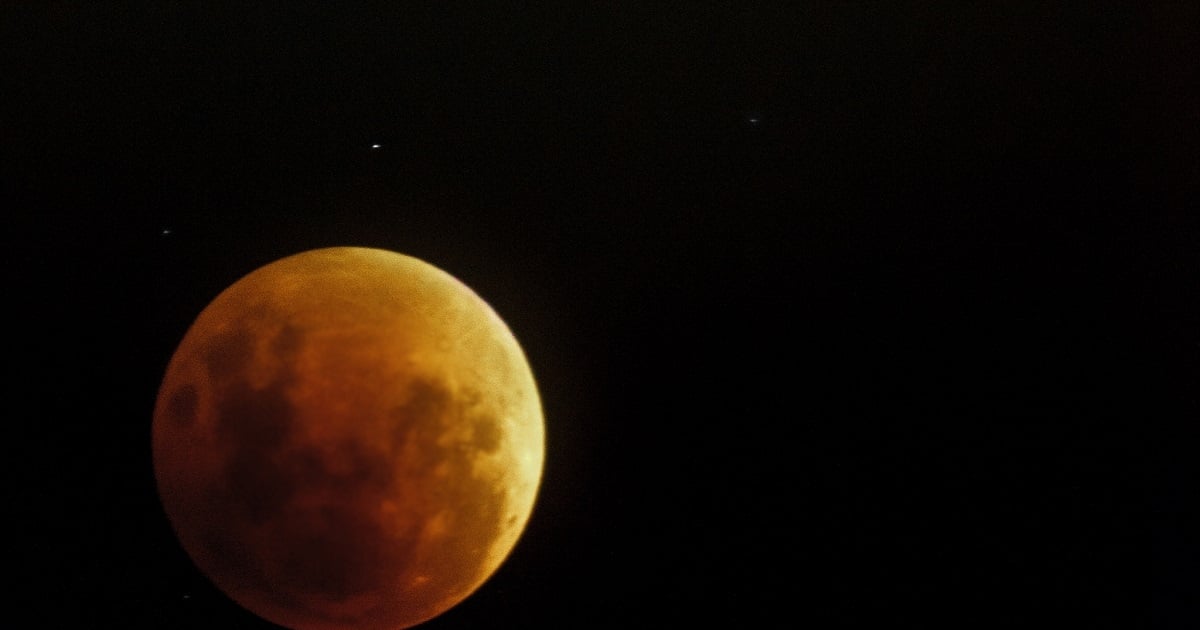
During the peak of the eclipse, the natural satellite will take on a characteristic reddish hue due to the scattering of light in the Earth's atmosphere, an effect similar to that of sunsets.
According to the Institute of Geophysics and Astronomy of Cuba, the total phase of the eclipse will begin at 2:26 AM on March 14 and will last for one hour and six minutes.
The astronomical event can be appreciated without the need for special instruments, although it is recommended to find a location with low light pollution for a better experience.
Total lunar eclipses, unlike solar eclipses, can be observed from any point on the planet where it is nighttime. This will be the first total lunar eclipse since 2022, making it a special event for astronomy enthusiasts.
The Red Moon, as this phenomenon is known, is the result of the Earth positioning itself between the Sun and the Moon, casting its shadow on the satellite. Due to the refraction of light in the Earth's atmosphere, red and orange tones predominate, resulting in the spectacular image of the Moon tinted red.
For those interested in observing the eclipse in Cuba, it is recommended to distance yourself from sources of artificial light and, if possible, to use binoculars or telescopes to better appreciate the details of the event.
Frequently Asked Questions about the Total Lunar Eclipse in Cuba
When will the total lunar eclipse be visible in Cuba?
The total lunar eclipse will be visible in Cuba during the early morning of March 14, 2025. The total phase will begin precisely at 2:26 a.m. and will last for one hour and six minutes. For optimal observation, it is recommended to find a location with low light pollution.
How does a total lunar eclipse occur?
A total lunar eclipse occurs when the Earth sits between the Sun and the Moon, casting its shadow over the satellite. This phenomenon causes the Moon to take on a reddish hue, known as the "Blood Moon," due to the scattering of sunlight in the Earth's atmosphere.
Is it necessary to use special instruments to observe the eclipse in Cuba?
It is not necessary to use special instruments to observe the total lunar eclipse. However, it is recommended to move away from artificial lights to fully enjoy the spectacle. Using binoculars or telescopes can enhance the experience by allowing viewers to appreciate more details of the event.
Why is this total lunar eclipse special for Cubans?
This total lunar eclipse is special for Cubans because it is the first of its kind since 2022. Additionally, Cuba will be in a privileged position to observe it in its entirety, making it a significant astronomical event for local enthusiasts.
Filed under: