
Related videos:
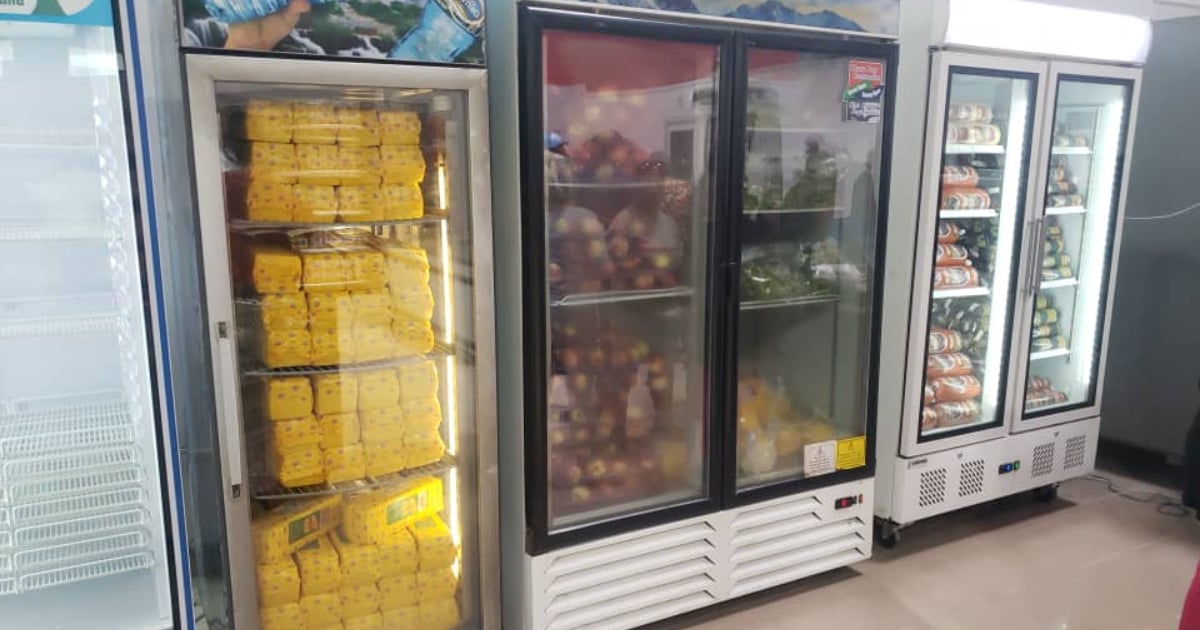
The CARIBE Stores chain reopened the Maravilla Shopping Center on Sunday, located in the Cerro municipality of Havana, under a new sales model exclusively in dollars. This measure follows the growing trend of stores operating solely with foreign currency on the Island.
Through a post on their Facebook account, the Habana Oeste Division of Tiendas CARIBE announced the reopening of the store, highlighting its wide range of products that include food, beverages, fragrances, personal care items, and household goods.
Additionally, they provided information about the payment methods they accept, including international cards such as VISA, MasterCard, and MIR, as well as prepaid cards from BANDEC and the AIS, Viajero, and Clásica cards, which offer a 5% bonus on purchases.
Located at the corner of Calzada del Cerro and Palatino, the reopening of the Maravilla Shopping Center comes amid a growing debate in Cuba about the expansion of businesses that operate exclusively in dollars, which creates greater inequality between those who have access to foreign currency and those who rely on the national currency.
This establishment is preceded by the recent return of the Altahabana Shopping Center, which also reopened its doors in March with sales limited to foreign currencies only.
The dollar sales model has become one of the main strategies of the Cuban government to confront the economic crisis, amid criticism for excluding a large part of the Cuban population that does not have access to foreign currency and finds its ability to acquire basic goods severely restricted.
In February, the regime opened its first store in this currency in Holguín, and it did so amid a blackout. The store, which previously operated in MLC, is part of the "Agua y Jabón" project and sells hygiene products, perfumes, cleaning supplies, household items, and baby products.
Unlike what happened in stores opened in other provinces, no advertising was done for the one in Holguín. "We need to handle this discreetly; we know it causes discomfort to the population," commented a worker.
This phenomenon reflects a growing dollarization of the Cuban economy, in which access to quality products largely depends on citizens' ability to handle foreign currencies, thereby widening the economic gap.
Although Tiendas CARIBE promotes this model as an effort to offer quality items, Cubans have expressed their discontent over the difficulty of accessing these products, given the average salary of 4,000 pesos, when one dollar is worth 345 CUP on the black market.
The reappearance of these centers highlights the growing contrast between those operating with foreign currencies and those still selling in Cuban pesos, adding more economic and social tensions to the current crisis.
The Ministry of Domestic Trade (MINCIN) has justified the strategy by arguing that the supply in the local currency is insufficient due to a contraction in production and a lack of liquidity to import goods.
The government authorized 15 wholesale and retail businesses in foreign currencies, eight of which are linked to the MINCIN business system.
Following the inauguration of the Supermarket at 3rd and 70 in Miramar, Havana, which was presented as an "accessible" space despite its high prices in dollars, the opening of other establishments of this kind has since occurred.
While these exclusive markets in dollars are usually well stocked, the stores that operate in Cuban pesos or in Freely Convertible Currency (MLC) face severe shortages, which increases discontent among the population.
Frequently Asked Questions about the Opening of Dollar Stores in Cuba
Why are stores that only accept dollars opening in Cuba?
The Cuban government is betting on the opening of stores that operate exclusively in dollars as part of a strategy to attract foreign currency and address the country's economic crisis. However, this measure has generated criticism for increasing inequality and limiting the access of most Cubans to basic products, as the majority receive salaries in Cuban pesos and do not have access to foreign currency.
What are the accepted payment methods in these dollarized stores?
In stores that only accept dollars, payment is allowed through international cards such as VISA, MasterCard, and MIR. Prepaid cards issued by BANDEC and AIS, Viajero, and Clásica cards are also accepted, offering a 5% bonus on purchases. Cash payment in dollars is also permitted in some establishments.
What impact does the opening of these stores have on the Cuban population?
The opening of dollar stores has generated significant discontent among the Cuban population. These stores exacerbate economic inequality as only those with access to foreign currency can purchase the products they offer. This excludes a large portion of the population that receives salaries in national currency, deepening the economic and social tensions on the island.
How does partial dollarization affect the Cuban economy?
Partial dollarization in Cuba creates economic segmentation that excludes those who do not have access to foreign currency, worsening the economic crisis and limiting the majority of Cubans' access to essential products. Although the government seeks to capture foreign currency to improve supply, the measure does not address the structural problems of the economy and increases inequality.
Filed under: