
Related videos:
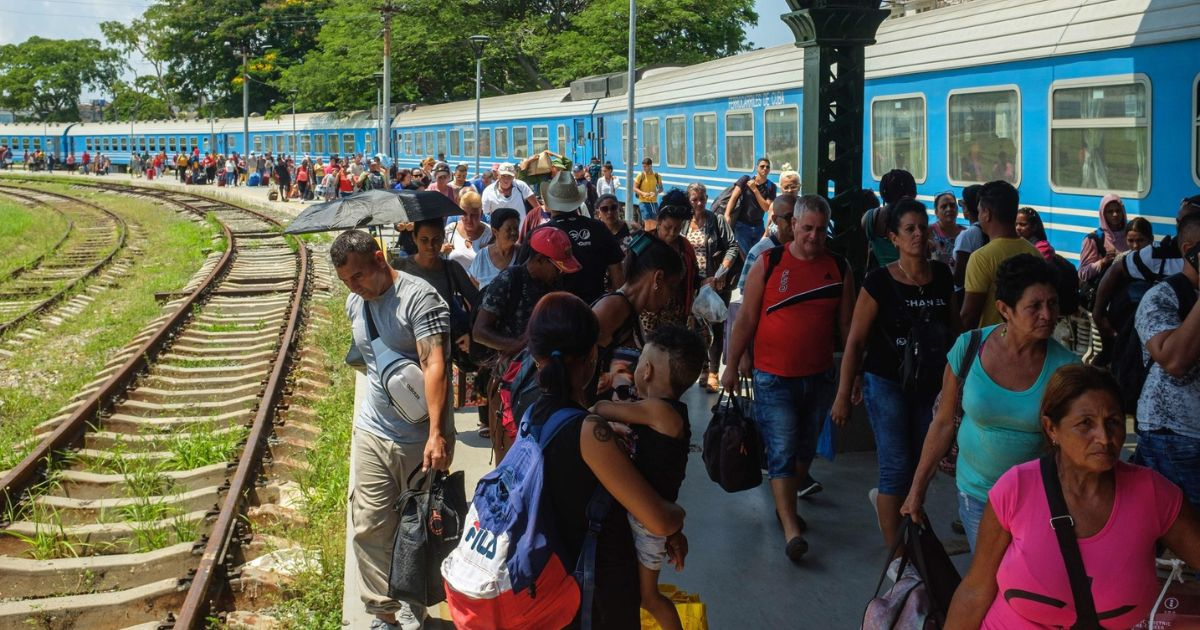
The Cuban railway system faces significant technical and operational limitations, characterized by a lack of spare parts and the deterioration of rolling stock.
The Minister of Transportation, Eduardo Rodríguez Dávila, reported on Facebook that, while some progress has been made in passenger transport, the lack of resources has impacted the quality and stability of the service.
One of the main issues lies in the availability of locomotives and cars, as of the 20 locomotives needed, only an average of 14 were operational during 2024, which caused delays and irregularities in the schedules, reported the head of the department.
Similarly, only 63% of the planned cars were in operation, due to unresolved technical issues and a lack of foreign currency for their maintenance, Rodríguez emphasized.
Despite these limitations, revenue from passenger transportation reached 107.75% of what was planned in 2024, with 65,379,814 pesos collected, a figure higher than in 2023.
This increase reflects greater efficiency in ticket sales and a growing demand for trains as a mode of transportation, as they are, from a pricing perspective, the most affordable option for the population.
The railway managed to transport 785,272 passengers, exceeding initial projections by 8.31%. This increase was attributed to the optimization of ticket sales and the addition of new stops in certain locations to facilitate passenger access.
However, the lack of locomotives affected the regularity of the service and adherence to schedules, leading to one of the greatest sources of dissatisfaction among users.
The energy crisis has also impacted the railway system. Power outages and the instability of the National Electro-Energy System (SEN) have affected the operation of railway stations and workshops.
To mitigate these effects, backup plans were implemented with emergency generators at key terminals and critical areas, allowing essential services to be maintained.
Despite the difficulties, the minister highlighted that throughout the year, railway services were not halted due to weather conditions, although on two occasions it was necessary to reschedule trips to ensure passenger safety.
Another persistent problem has been the security on trains, with reports of stone attacks against the carriages, which affects the railway infrastructure and endangers passengers.
Additionally, travelers have expressed complaints about the deterioration of the restrooms and the poor quality of the snacks.
In response, the authorities announced a plan to repair restrooms and agreements with non-state economic actors to improve food availability on trains.
To alleviate the deficiencies in service, emergency maintenance has been strengthened, prioritizing the availability of climate-controlled cars and those in better condition for passengers.
However, the lack of spare parts and resources remains a key obstacle to ensuring a stable operation of the railway system.
The railway remains a fundamental option for mobility in Cuba, but it faces serious challenges in maintenance, resource availability, and service quality, which keeps uncertainty about its ability to respond efficiently to passenger demand in the country.
Recently, the Cuban government officially acknowledged the profound crisis facing the public transport system on the island in recent months, significantly affecting the population, which endures long waits, crowded journeys, and canceled routes due to a lack of resources, further complicating daily life in a country already struggling with multiple economic challenges.
In a report broadcast by the Informative System of Cuban Television, the Minister of Transport, Rodríguez, outlined the numerous challenges that have affected the sector, ranging from the impact of the global economic crisis and the recurring argument of the tightening of the U.S. embargo to the deterioration of infrastructure and the lack of essential supplies.
At the end of 2024, the Minister of Transport admitted that the new vehicle import policies are not a permanent solution to the mobility crisis. Despite easing import regulations, the shortage of means of transportation continues to be a structural problem.
In February 2025, the state-run press attempted to justify the difficulties in the sector by attributing them to the sanctions from the United States. In an article titled "Who pays the price for an economic war?", the newspaper Girón blamed the embargo for the blackouts, rising prices, and the transportation crisis, although various independent analysts point out that governmental inefficiency and the lack of economic reforms also play a key role in the crisis.
Due to the lack of effective solutions, the Cuban government has resorted to emergency measures such as the relaunch of "solidarity transportation" in Matanzas. This initiative requires state vehicle drivers to pick up passengers during key hours, in a desperate attempt to alleviate the urban transportation crisis. However, the lack of control and coordination has led to problems in its implementation.
The situation has escalated to the point where there are rumors about a possible halt in interprovincial transportation due to the energy crisis. Although the minister of the sector denied these claims, he acknowledged that there are operational limitations and delays in bus and train services. The shortage of fuel and deficiencies in the electrical infrastructure have exacerbated the problem, affecting both passengers and the distribution of essential goods.
Frequently Asked Questions about the Status of the Railway System in Cuba
What is the current state of the railway system in Cuba?
The Cuban railway system faces serious technical and operational limitations due to a shortage of spare parts and the deterioration of rolling stock. Only 63% of the planned cars are operational, and the lack of locomotives has caused delays and irregularities in the schedules.
How does the energy crisis affect railway transportation in Cuba?
The energy crisis has heavily impacted the Cuban railway system. Blackouts and the instability of the National Electroenergetic System have affected the operation of railway stations and workshops. Emergency generators have been installed at major terminals to mitigate these effects.
What measures are being taken to improve the railway service in Cuba?
To improve train service, emergency maintenance has been strengthened, and the availability of cars in better condition for passengers is being prioritized. The authorities have announced a plan to repair the train restrooms and enhance the food offerings through agreements with non-state economic actors.
What challenges does railway transportation in Cuba face in terms of safety?
Safety on trains remains a persistent issue, with reports of stone attacks against the carriages, putting passengers at risk and affecting the railway infrastructure. Furthermore, the deteriorated condition of the restrooms and the poor quality of snacks are sources of complaint among travelers.
Filed under: