
Related videos:
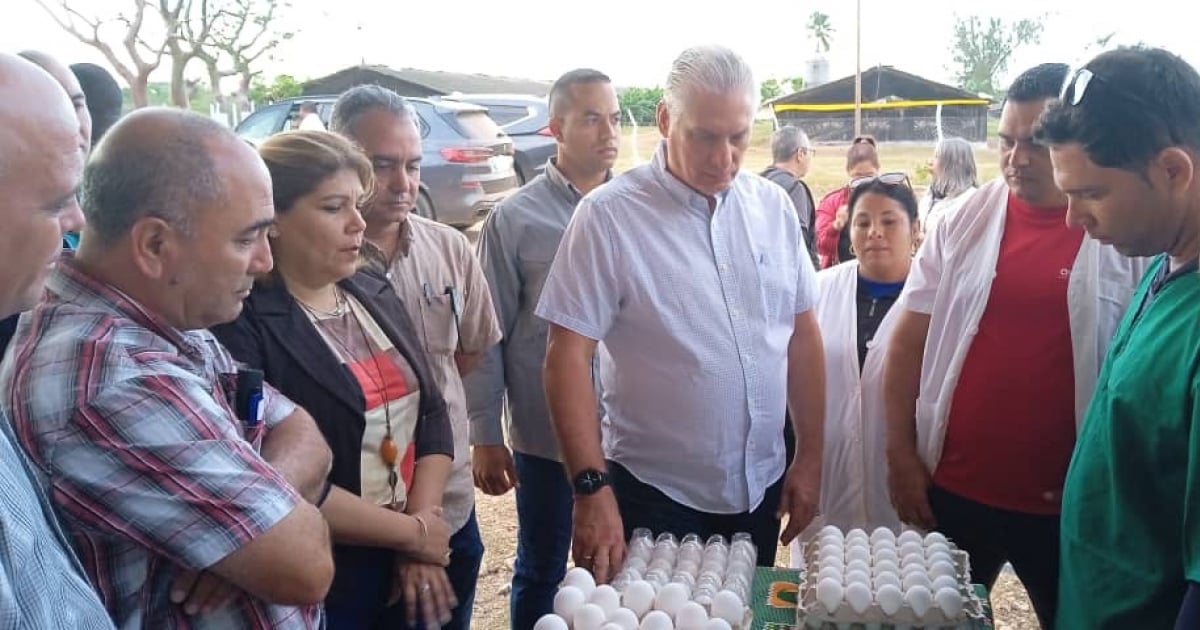
President Miguel Díaz-Canel visited the La Soria poultry farm in the municipality of Quivicán, in the province of Mayabeque, this Friday, where production is intended for sale in dollars.
This time he was accompanied by his inseparable Roberto Morales Ojeda, Secretary of Organization of the PCC, and according to a report from Radio Mayabeque, both were particularly interested in information regarding the viability of the farm; specifically, the number of eggs produced by each of the 34,000 birds and the salaries of the workers, whom he encouraged to continue "providing eggs."
As is often the case, the state media claims that the farm, which in 2024 suffered the effects of the hurricane Rafael, has recovered by 84% and is meeting production targets, although they do not specify what these goals are. Additionally, they note that the proceeds from the sale of eggs are reinvested in the feeding of the hens and, of course, in the consumption of children, the elderly, and pregnant women in the municipality of Quivicán, something that can only be confirmed or denied by the local residents.
Right now, the hens at the La Soria farm would be feeding on "high-quality" imported feed provided by the Mayabeque Agroforestry Group.
The triumphalist narrative of the official press regarding egg production on the Island contrasts with the scarcity of this product in the country, resulting in exorbitant prices. In August of last year (2024), the Tiendas Caribe network boasted on social media about "the great acceptance" of this product being sold for $5.95 at various locations in Havana.
In that same month of August, the price of eggs in Cuba reached alarming levels by exceeding 5,000 pesos per carton in the informal market, amidst the serious food crisis the Island is experiencing.
The regime has taken everything away from Cubans except for their sense of humor, and jokes about the shortage of eggs have emerged as well. In the summer of 2024, a Cuban reported the high price of eggs in the market, using humor by showing a table covered with shells and ironically claiming that he had invested nearly a dollar in them.
Manuel Viera, in a Facebook post, expressed his frustration by showing a table with eggshells, commenting: “And here I am! Waiting for the ladies with creative recipes to find a way to use the eggshells. After paying more than 100 pesos for each one... something has to be done with them.”
In February 2025, at the Carlos III store in Havana, long lines were recorded to purchase them at 6 MLC, which is equivalent to 1,800 CUP, while in the informal market the cost at that time reached 2,600 CUP.
The truth is that Cuba imports eggs. According to information released by authorities from the Dominican Republic, this country exports an average of 16.5 million eggs to the Island each month. In fact, the Dominican government has significantly increased the sales of eggs and other agricultural products to several Caribbean islands and other countries, including Cuba.
Filed under: