
Related videos:
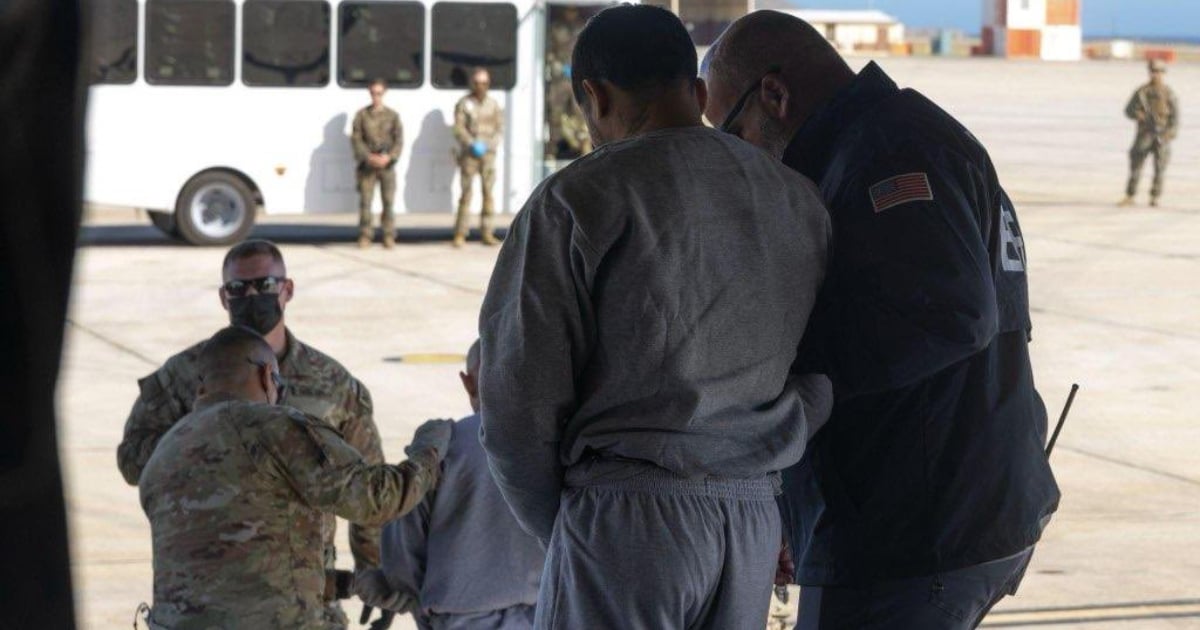
Despite the tough rhetoric on immigration that characterizes the administration of United States President Donald Trump, the data shows that air deportations have not seen a significant increase compared to the management of his predecessor Joe Biden.
According to an analysis by The New York Times, between January 20 and March 19, 2025, the Trump administration conducted 60 deportation flights to Guatemala, a figure lower than the 65 flights recorded during the last months of Biden's term. A similar pattern is observed in Colombia, where the number decreased from 20 flights under Biden to 16 with Trump.
However, other countries experienced a slight increase in deportations during this period. Honduras received 55 flights under Trump (compared to 47 with Biden), while El Salvador recorded 25 flights (surpassing Biden's 15). Mexico, by contrast, saw a reduction in deportation flights under Trump (31) compared to Biden (42).
A relevant fact is that the deportations to Cuba have been limited to just two flights under both administrations, indicating that the deportation policy to the island remains more restricted than in other countries in the region.
Despite the increased measures against the Cuban migrant community, the data shows that there has not been a drastic change in the number of deportations from the United States.
The recent measures implemented by the White House have raised concerns within the Cuban community in the United States
Among the most significant actions is the revocation of the "humanitarian parole" program, which allowed the entry and temporary stay of migrants from countries such as Cuba, Haiti, Nicaragua, and Venezuela for humanitarian reasons.
This decision, announced in March, could affect approximately 530,000 people, leaving them at risk of deportation as they lose their legal status and protection.
Moreover, the Trump administration has indefinitely suspended the processing of immigration applications for immigrants benefiting from "humanitarian parole" and family reunification, which has created uncertainty among thousands of Cubans who relied on these programs to regularize their status in the U.S.
Precisely, this Thursday, 60 irregular migrants -55 men and five women- arrived in Havana on a deportation flight from the United States.
During the first month of Donald Trump's second term, 37,660 deportations were recorded, a figure significantly lower than the monthly average of 57,000 expulsions during the last year of the Biden administration.
This decrease in deportations is attributed to the gradual implementation of new strategies and international agreements by the Trump administration. Despite the initial reduction, it is anticipated that the figures will change in the coming months as these policies continue to be developed by the U.S. government.
Frequently Asked Questions about Deportations and Changes in U.S. Immigration Policy Under Donald Trump's Administration
Have deportations increased during Donald Trump's administration?
No, deportations have not significantly increased during Donald Trump's administration compared to Joe Biden's. Although an increase was anticipated due to the hardline rhetoric of the Trump administration, deportation flights to various countries have decreased or remained stable. For example, Guatemala and Mexico have seen a reduction in deportation flights.
What changes has Trump made to the humanitarian parole program?
Trump has revoked the humanitarian parole program, affecting more than 530,000 migrants from Cuba, Haiti, Nicaragua, and Venezuela. The program, which allowed for the temporary entry of migrants for humanitarian reasons, will be canceled starting April 24, 2025. This leaves thousands of individuals at risk of deportation as they lose their legal status and protection.
How does the cancellation of humanitarian parole affect Cubans in the United States?
The cancellation of humanitarian parole affects more than 110,000 Cubans who entered the United States legally under this program. These Cubans could lose their legal status and face deportation if they have not regularized their situation through the Cuban Adjustment Act or another immigration benefit. The Cuban community in the U.S. is especially concerned about the potential for mass deportations and their repercussions.
What measures has Trump implemented to speed up deportations?
Trump has granted more powers to the Immigration and Customs Enforcement (ICE) to expedite the deportation of immigrants who entered under programs such as humanitarian parole. This includes the ability to revoke temporary permits and prioritize the deportation of those who have not initiated legal processes to regularize their immigration status.
Filed under: