
Related videos:
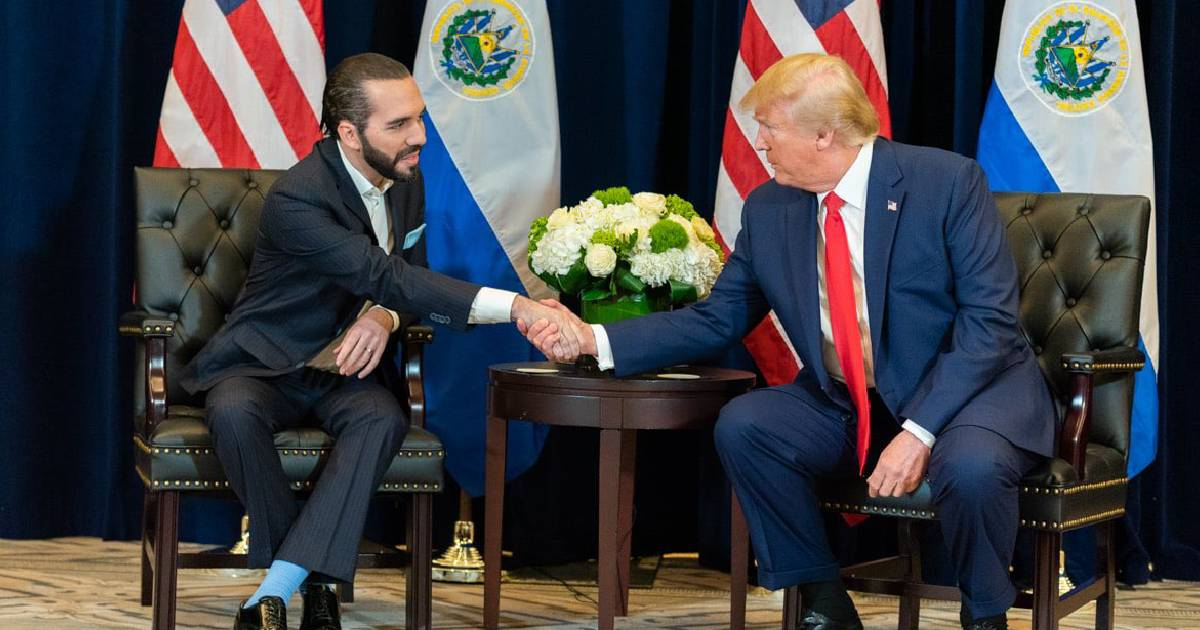
The President of the United States, Donald Trump, is expected to host his counterpart from El Salvador, Nayib Bukele, at the White House next month amid the controversial deportations of immigrants to the Central American nation.
The meeting will be held "in recognition of (Bukele's) collaboration in the fight against organized crime," according to a post by independent journalist Nick Sortor, co-host of the program "Roundtable Space."
The meeting -which would make the Salvadoran the first leader from the Western Hemisphere to receive a formal visit to the White House- takes place in the context of a controversial agreement between both governments that has allowed the detention in Salvadoran territory of hundreds of alleged members of the Tren de Aragua, a Venezuelan criminal organization designated as a terrorist group by Washington.
After that agreement—under which the U.S. paid approximately $6 million to the government of El Salvador—Trump described El Salvador as "one of our best allies" in terms of security and migration control.
Bukele's visit to Washington has not been officially announced yet, but it came to light this Friday following the recent arrival of U.S. Secretary of Homeland Security, Kristi Noem, at the Counterterrorism Confinement Center (CECOT), the mega-prison in El Salvador where hundreds of Venezuelan migrants expelled by the Trump administration in March are being held.
In a statement at the prison, Noem issued a warning to undocumented immigrants: "Do not come to our country illegally. You will be expelled and prosecuted."
The deportations of Venezuelans, carried out under wartime legislation, have sparked strong criticism, especially since a federal judge had prohibited the measure.
Despite this, the government of Trump carried out the transfer of 238 migrants accused of belonging to the Tren de Aragua, although lawyers and family members of some of the detainees claim that they have no ties to the criminal organization.
The Venezuelan government classified the action as a "kidnapping" and filed a habeas corpus petition demanding justification for the arrests.
For its part, Amnesty International condemned Trump's immigration policy and Bukele's role, stating that "both governments are criminalizing individuals without due process."
Frequently Asked Questions about the meeting between Trump and Bukele and the deportations to El Salvador
What is the purpose of the meeting between Donald Trump and Nayib Bukele at the White House?
The meeting aims to strengthen collaboration in the fight against organized crime, framed within an agreement that has facilitated the arrest of members of the Tren de Aragua in El Salvador. This visit also seeks to acknowledge Bukele as a key ally in security and immigration control for the United States.
Why do the deportations of Venezuelan immigrants generate controversy?
Deportations have been criticized because they were carried out under wartime legislation, despite a federal judge's prohibition. Lawyers and relatives of the deportees argue that many of them are not connected to the Tren de Aragua, and organizations such as Amnesty International denounce the lack of due legal process.
What political implications could the alliance between Trump and Bukele have?
The collaboration between Trump and Bukele strengthens the security and immigration control policies of both leaders, but it could create tensions with future administrations in the United States that view these practices as a threat to human rights and bilateral cooperation in the region.
How is the detention of deported migrants funded in El Salvador?
The United States has allocated around $6 million to fund the detention of deported migrants in El Salvador, which is part of the security collaboration agreement between the two countries. This funding facilitates the imprisonment of individuals deemed dangerous or linked to organized crime.
Filed under: