Countless criticisms and even mockery have emerged among Cubans on social media regarding the Round Table dedicated to reparto. What was once a censored genre, deemed marginal, now appears to have transformed into a source of national pride.
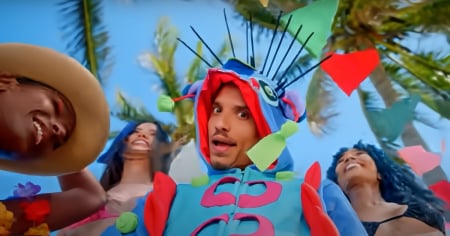
Since the fragments of the official program broadcast this Friday began circulating, the questions have arisen quickly, but without a doubt, the main protagonist is Chocolate MC, whose explosive reaction is eagerly anticipated upon seeing his name mentioned on the Mesa de Redonda.
“Let Chocolate in!”; “Wow, Pedro at the Round Table, I saw it all”; “A victory for Chocolate MC”; “Everyone is walking chocolatiers”; “They needed to interview Choco to tell them where he came from”; “Definitely Chocolate is a force to be reckoned with”; “Talking about the distribution is talking about me. Regards: Chocolate MC”; “Tribute to Chocolate MC at the round table”; “And to think that Chocolate has been censored since the beginning”; “Oh, oh, oh, now Chocolate really gets it”; “Bebeshito on the news and Ja Rulay at the Round Table, soon The Clown will appear on Palmas y Cañas,” users commented on social media.
El Taiger, Oniel Bebeshito, Ja Rulay, Charly & Johayron, Chocolate MC, Dany Ome, and Kevincito el 13 were some of the artists featured in the images shared by the Mesa Redonda. Although they are performers who have largely built their careers in Miami, the attendees of the program proudly stated that it is “Cuban music consumed by all social classes” on the island.
Many internet users noticed that the Mesa Redonda dedicated a program to this topic amidst the widespread crisis affecting the island: “Seriously, with so many problems?”; “This must be a joke, in Cuba how can there not be bigger issues than reggaeton songs? Lately, I don't understand why they're giving it so much visibility. I remember years ago when they harshly criticized El Chacal on the news for a song, Osmani was also heavily criticized in Granma”; “Is this the Mesa Redonda or a podcast?”; “Cuba without electricity and they're talking about distribution”; “If in a country where there are so many problems they dedicate a television program to discussing these topics, it's because they truly have a very distorted view of reality; this is really sad.”
Frequently Asked Questions about the Roundtable on Redistribution in Cuba
Why did the Mesa Redonda dedicate a program to the distribution?
The government program Mesa Redonda dedicated a segment to distribution due to its growing impact on contemporary Cuban society. The discussion addressed its cultural, social, and political implications, as well as its influence on popular taste. However, many Cubans criticized the decision to focus a program on this topic amidst the widespread crisis facing the island.
What has been the Cuban public's reaction to the promotion of the cast on state television?
The reaction from the Cuban public has been predominantly critical. Many internet users questioned the decision to dedicate time to background music when the country is facing more pressing issues. The criticism focuses on the perception that the authorities are disconnected from the true needs and concerns of the population.
What does the distribution mean for music and Cuban society?
The reparto is considered an indigenous musical expression of Cuba, with significant links to popular dance music. It carries considerable weight in Cuban society, influencing tastes and cultural practices, and is seen as a reflection of the country's social reality. Although it promotes certain questionable values, it also provides a means of upward mobility for some young Cubans.
Filed under: