
Related videos:
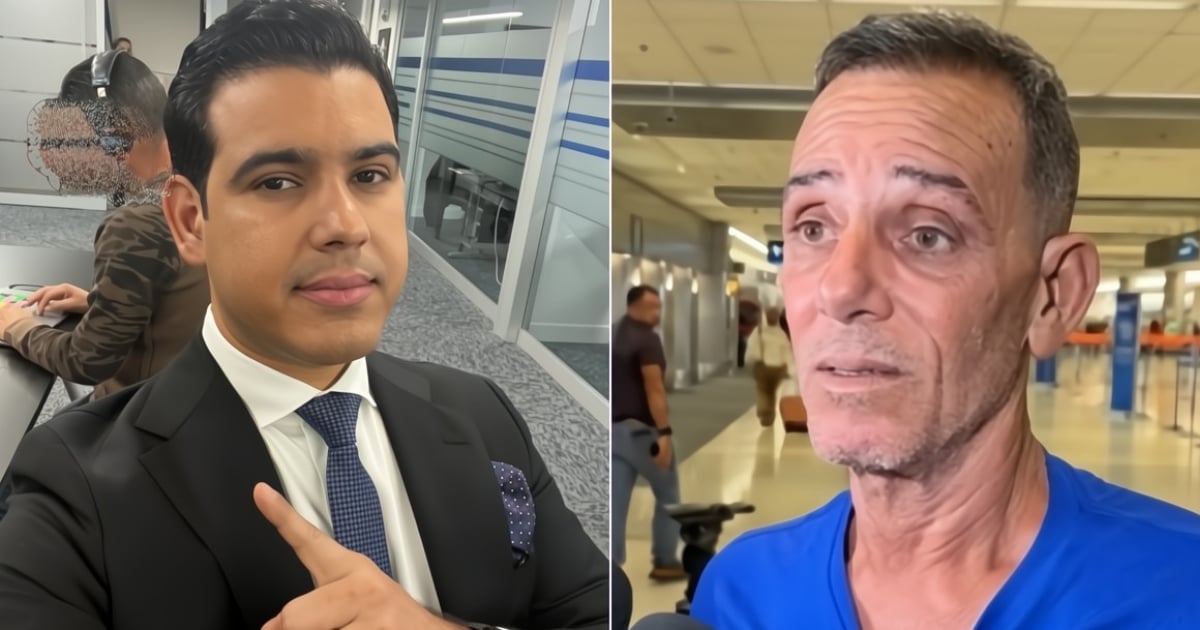
The journalist Javier Díaz advised Cuban exiles in the United States not to be intimidated by the letters sent by the U.S. Citizenship and Immigration Services (USCIS), which notify that the humanitarian parole has been revoked and demand that they leave the country.
"Don't let yourself be intimidated by an email and do not leave the country!" Díaz wrote on his social media, referring to the case of the independent reporter and former Cuban political prisoner Lázaro Yuri Valle Roca, who is facing possible deportation after receiving such an email.
"I interviewed Lázaro after he arrived sick in the city of Miami. Just remember that these are automatic emails sent by a programmed computer. If you are Cuban, apply for residency after a year and a day, and do not return to a country without freedom," Díaz urged.
The case of Valle Roca has generated a strong wave of concern within the Cuban exile community. The journalist, known for his staunch opposition to the regime, was imprisoned for nearly three years and left the island in June 2024, after obtaining a humanitarian permit at the United States Embassy in Havana with the help of his wife, Eralidis Frómeta.
Now, Valle Roca could be affected following the cancellation of humanitarian parole programs for citizens of Cuba, Haiti, Nicaragua, and Venezuela, a measure announced on March 25 by the Department of Homeland Security (DHS) as part of the implementation of Executive Order 14165 signed by President Donald Trump.
In a post on his Facebook profile, Valle Roca expressed his distress over the possibility of being deported. "How sadistic life can be at times. They want to send us back to death, but faith in God (...). If they send me back to my beloved homeland, I will enter as always shouting: Down with the Cuban dictatorship!" he wrote.
The official notice received by Valle Roca states that the beneficiaries of the parole must leave the United States before the expiration date of their immigration status, under the threat of being subjected to expedited deportation proceedings.
Furthermore, the revocation also entails the cancellation of work permits granted under the parole.
The DHS has indicated that those who do not leave the country on time could face "adverse immigration consequences" and accumulate unlawful presence, unless they obtain a legal basis to remain in U.S. territory.
The measure has raised alarm among activists and human rights defenders, who warn of the real danger posed to journalists and political opponents by returning to countries where they are persecuted for their beliefs.
Javier Díaz, for his part, called for calm and informed action: "I hope that the United States can truly resolve all this internal chaos that the government has created regarding immigration."
Frequently Asked Questions about the Revocation of Humanitarian Parole for Cubans in the U.S.
What is humanitarian parole and why has it been revoked?
Humanitarian parole is a program that allows the temporary entry of immigrants into the U.S. for humanitarian reasons. It was implemented by the administration of Joe Biden for citizens of Cuba, Haiti, Nicaragua, and Venezuela. However, President Donald Trump, through Executive Order 14165, decided to revoke these programs, arguing that they do not meet the immigration and border policy goals of his administration.
What should Cubans affected by the revocation of humanitarian parole do?
Cuban individuals affected must leave the United States before the expiration date of their immigration status, which is April 24, 2025. Those who do not do so will face expedited deportation proceedings and may accumulate unlawful presence, complicating future applications for entry into the country. Affected individuals are advised to seek legal counsel to evaluate their options, such as applying for the Cuban Adjustment Act if they meet the requirements.
What consequences does a Cuban face if they do not leave the U.S. before April 24, 2025?
If a Cuban does not leave the United States before the deadline, they will be subject to an expedited deportation process. Furthermore, they will begin to accumulate unlawful presence, which may result in inadmissibility for future entry applications to the country. They will also lose any work authorization granted under humanitarian parole.
How does the revocation of humanitarian parole affect those who have not applied for permanent residency?
Cubans who have not applied for permanent residency and are under humanitarian parole find themselves in a precarious immigration situation. The revocation means they must leave the country or face deportation. However, those who have initiated valid processes, such as the Cuban Adjustment Act or political asylum, may remain in the country while their applications are in process.
Filed under: