
Related videos:
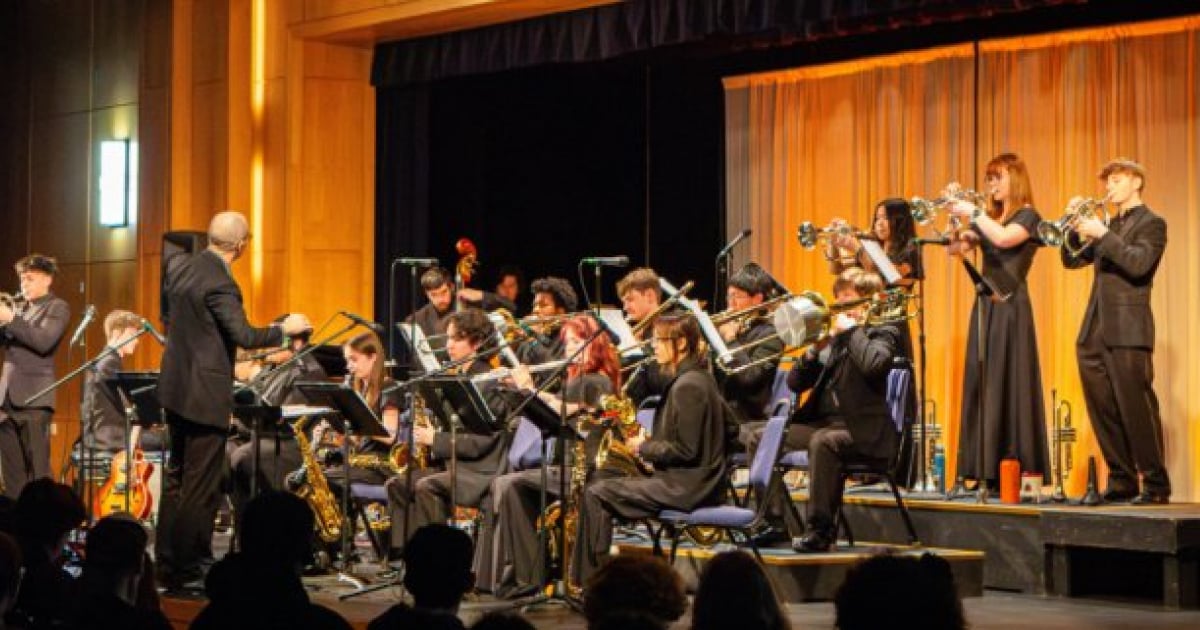
The United States government denied travel permission to Cuba for the Clark College jazz band just hours before the students were set to board the plane to Havana.
The musical group had planned to visit the Cuban capital during spring break, from March 26 to March 31, with the goal of participating in musical exchanges and attending presentations on Cuban jazz, reported the newspaper The Columbian.
However, on March 25, Clark College received a notification from the Office of Foreign Assets Control (OFAC) denying the specific travel license application.
"After careful consideration and in consultation with the U.S. Department of State, OFAC has determined that your request to authorize the travel of the Clark College Jazz Ensemble to Havana, Cuba, would be inconsistent with U.S. government policy. Consequently, the request has been denied," read the letter sent by the federal agency.
During their stay in Havana, the students were scheduled to learn and perform alongside their Cuban peers from the Amadeo Roldán Music School and the Fellini Cultural Center. Maureen Chan-Hefflin, a spokesperson for Clark College, stated that the goal of the trip was to provide the 21 students with an immersive experience in the history of Cuban jazz through presentations by local experts.
The jazz program at Clark College has been recognized nationally and internationally, standing out in festivals in the USA and Mexico.
The curriculum includes comprehensive training in jazz, covering its evolution within the Latin and Afro-Cuban context.
The decision of the U.S. government generated a swift response from the Cuban regime, which often uses these events to portray itself as a victim in the dispute between the two countries.
Bruno Rodríguez Parrilla, the Foreign Minister of the Caribbean country, expressed his rejection on social media, describing the measure as an act of "fanatical obscurantism" against cultural exchanges.
"The fanatical obscurantism that fuels the anti-Cuban politics in the U.S. goes so far as to prohibit a cultural exchange of students from the Clark College jazz band. What are the enemies of #Cuba afraid of? What danger do they see in the powerful artistic development of Cuba?" wrote Rodríguez Parrilla on his official account.
While cultural exchanges between Cuba and the United States were encouraged during the administrations of Barack Obama and Joe Biden, under Donald Trump's administration, policies and sanctions against the regime on the island have tightened once again.
Frequently Asked Questions about the Travel Ban for the Jazz Band to Cuba
Why did the United States prohibit the Jazz band from traveling to Cuba?
The prohibition is due to the fact that the Office of Foreign Assets Control (OFAC) deemed that the trip would be inconsistent with the policy of the U.S. government. This measure aligns with the restrictions imposed by the United States on Cuba in an attempt to pressure the Cuban regime.
What was the Cuban regime's reaction to the travel ban?
The Cuban regime, through its Foreign Minister Bruno Rodríguez Parrilla, described the measure as an act of "fanatical obscurantism" and used the incident to portray itself as a victim in the context of the dispute between both governments, questioning the fear of the United States regarding Cuban artistic development.
What was the purpose of the Clark College Jazz Band's trip to Cuba?
The goal of the trip was to provide students with an immersive experience in the history of Cuban jazz through exchanges and performances alongside Cuban musicians, at institutions like the Amadeo Roldán Music School and the Fellini Cultural Center.
How does U.S. policy toward Cuba influence cultural exchanges?
The U.S. policy towards Cuba, which includes travel restrictions and sanctions, negatively impacts cultural exchanges, limiting opportunities for artistic and educational collaboration that could benefit both countries.
What recent measures has the U.S. taken against the Cuban regime?
The U.S. has implemented visa restrictions on officials of the Cuban regime and has suspended certain categories of visa applications, as part of a broader policy to pressure the Cuban government and promote democratic changes on the island.
Filed under: