
Related videos:
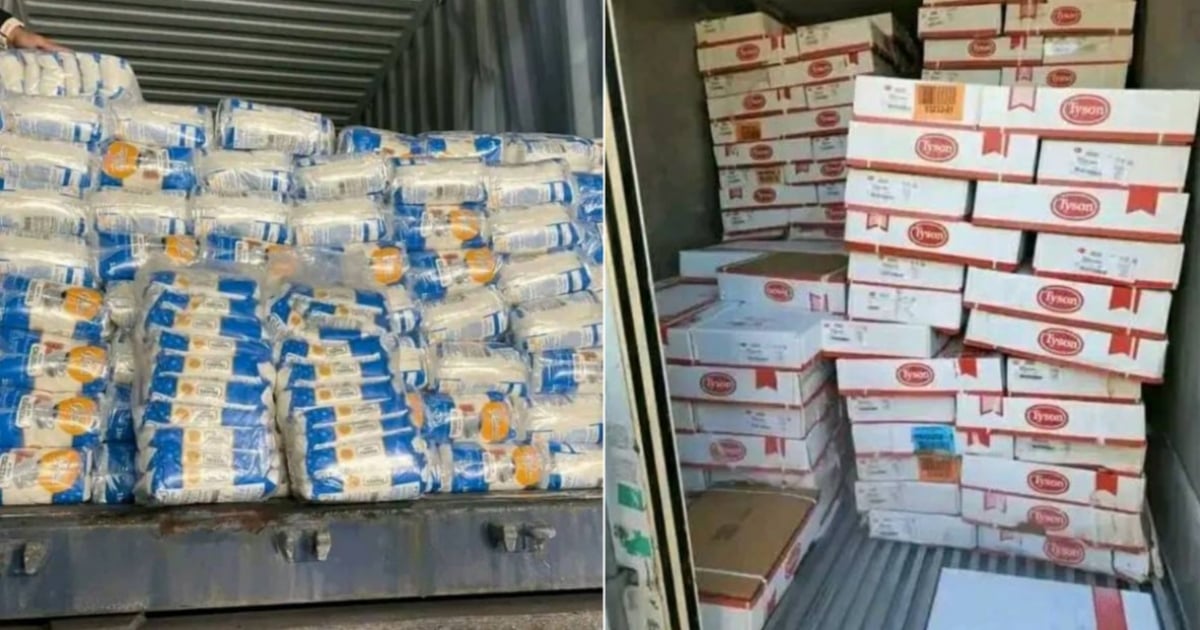
Cuban self-employed workers who had been authorized to engage in wholesale trade have had to liquidate their inventories following the cancellation of their licenses, another measure by the regime to strengthen control over the economy and weaken the private sector.
This Wednesday, the government announced on its X account that self-employed workers initially authorized to wholesale national or imported goods are currently settling the merchandise in transit and in the market.
On the other hand, the regime extended the deadline until September 30 for private micro, small, and medium-sized enterprises (mipymes) and non-agricultural cooperatives (CNA) whose main activity was wholesale marketing to confirm that they will continue carrying out this activity, but with the mandatory participation of state entities.
The Resolution 56 of the Ministry of Domestic Trade (MINCIN) of 2024 initially granted 90 days for these businesses and non-agricultural cooperatives, if they express their intention to continue engaging in wholesale trade, to update their commercial license. The new license must specify that the marketing is carried out through contracts with state entities.
According to reports from the Periódico 26 in Las Tunas, that initial deadline has been extended by an additional five months.
"Likewise, the micro, small, and medium enterprises (mipymes) and the CNA that had wholesale trade as their secondary activity last December would have until September 30 to liquidate their inventories, being able to do so on a retail basis, as long as it is defined in their corporate purpose and they hold a commercial license for it," the note specifies.
However, the self-employed individuals were not included in the extension.
Authorities emphasized that "self-employed workers in the wholesale trade of national or imported goods must complete the inventory liquidation of goods in transit and on-site, intended for wholesale trade or bulk sale, by the established deadline (which will end next May)."
Periódico 26 specified that all non-state economic actors (including self-employed individuals), whose main activity is production, will be able to engage in wholesale marketing of their products.
"However, they cannot wholesale other national or imported products, only their own productions," emphasizes the official weekly.
The government clarified that retail trade continues for all non-state actors that have approved activities, and announced that six new joint ventures between state entities and private small and medium-sized enterprises have been approved.
In December of last year, the government revoked all licenses for wholesale trade activities for small and medium enterprises and non-agricultural cooperatives that had such activities approved as secondary in their social purpose.
The measure supposedly aims to "regulate" wholesale and retail trade in the private sector, according to the resolution from the Minister of Domestic Trade, Betsy Díaz Velázquez.
According to the regulations, companies that do not choose to ratify partnerships with state entities must liquidate their stock of goods within a maximum period of 120 days.
They could only do it by selling their products at retail, as long as it is approved in their corporate purpose and they hold the commercial license.
The closure of these licenses represents a new blow to private initiative on the Island, hindering the development of a sector that is striving to establish itself in the face of restrictions imposed by the State.
The government maintains that the socialist state-owned enterprise remains the fundamental actor in the economy, while non-state management forms play a complementary role.
It does not address the burden of state inefficiency. It merely emphasizes that the alliance with non-state economic actors has the advantage of allowing the use of infrastructure, transportation, and commercial expertise of state forces.
The Ministry of Domestic Trade clarifies that private companies can continue to engage in retail trade (selling to the public or providing services to the public), as long as it is approved in their corporate purpose or project and they hold the respective license.
Additionally, it emphasizes that self-employed workers will not be able to engage in wholesale trade. In fact, the resolution automatically cancels the registration of wholesale trade activities for national or imported goods for self-employed individuals.
The restriction is imposed in the context of a deep economic crisis on the Island, with severe supply issues and a state sector incapable of meeting the basic needs of the population.
Frequently Asked Questions About Restrictions on MSMEs in Cuba
Why has the Cuban government canceled wholesale trade licenses for small and medium-sized enterprises?
The Cuban government has canceled the wholesale trade licenses for micro, small, and medium enterprises to reinforce state control over commerce on the island. This measure aims to centralize wholesale trade in the hands of state entities, justified by the need to improve infrastructure and transportation. However, in reality, it increases bureaucracy and inefficiency, limiting opportunities for the private sector.
How does the cancellation of wholesale licenses affect small and medium-sized enterprises (mipymes) in Cuba?
The cancellation of wholesale licenses forces small and medium-sized enterprises (SMEs) to liquidate their inventories and limits their ability to operate independently. This turns SMEs into captive customers of inefficient state-owned wholesale companies, which could increase inflation and worsen product shortages on the island, impacting social and economic stability in a context of high demand for consumer goods.
What alternatives do small and medium-sized enterprises have after the cancellation of their wholesale licenses?
SMEs must form alliances with state entities to continue in wholesale trade, updating their business license and social purpose within 90 days. Those that do not wish to form alliances must liquidate their stocks by selling them at retail within 120 days, provided they have the appropriate license for this.
What is the economic impact of these restrictions on the private sector in Cuba?
Restrictions could suffocate private trade by reducing competition and turning small and medium-sized enterprises into dependents of inefficient state-owned wholesalers. This could increase inflation, worsen the chronic shortage of products, and generate social instability, especially during times of high demand for consumer goods.
Filed under: