
Related videos:
An operator from the Ministry of the Interior (MININT) in Ciego de Ávila was sentenced to seven years in prison for the crime of sabotage after pouring water into the fuel tank of a generator that powered the communications center of the provincial delegation of the same organization.
The events occurred on April 29, 2024, during an audit in which a shortage of 30 liters of diesel was detected in the unit identified as “Ciego 1,” according to the official report from the local newspaper Invasor.
The accused, a university graduate certified as a "C Operator," attempted to cover up the loss by pouring water into the tank, which he described as an impulsive act driven by fear of being held accountable.
Hours later, when the country was facing one of its frequent blackouts, the generator was activated and ran for only 20 minutes before failing.
Water contamination caused the disconnection of the communications system of MININT, also affecting the automated services of the National Revolutionary Police (PNR), video surveillance systems in the province, the emergency telephone lines for the PNR and firefighters, as well as the provincial and national information flow.
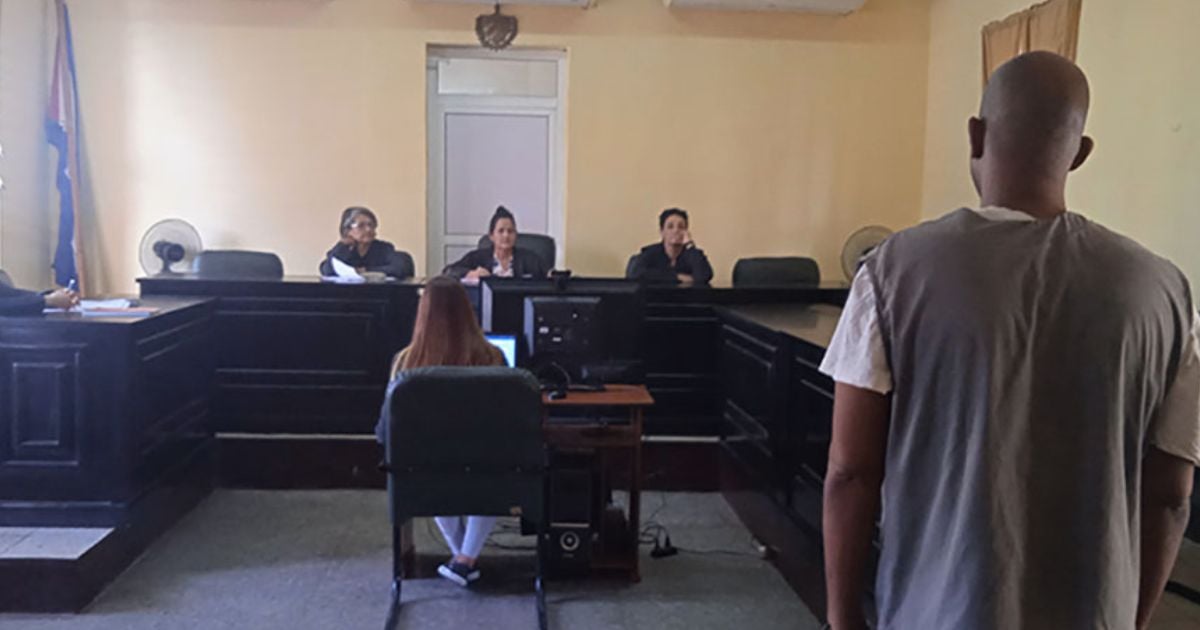
Months later, the trial was held in the Court of Crimes Against State Security, in the province of Camagüey, under case number 4 of 2024.
The court determined that the defendant acted with eventual intent, meaning he was aware that his actions could cause harm, even if he did not seek it directly.
He was found guilty of sabotage, according to Article 125, Section 1, Clause a, of the current Penal Code.
Despite the defense highlighting his status as the primary accused, as well as his previous good social and work conduct, the court imposed a seven-year sentence of imprisonment, along with additional penalties such as disqualification from holding office, a ban on leaving the country, and the confiscation of the container used to pour the water.
The accused expressed remorse: “I thought they were going to blame me, I got nervous... My intention was never to cause any harm. I am quite embarrassed because I am not someone who commits crimes, and even less so sabotage.”
The prosecutor's office, however, emphasized the seriousness of the crime, stating that acts of sabotage threaten the internal security of the State, institutional order, and the stability of political structures.
"The crime of sabotage affects public goods and the internal security of the State... it can occur as either direct or eventual intent, as in this case," argued the representative of the Public Ministry.
This case highlights the severity with which Cuban authorities punish behaviors that affect state infrastructure, especially in the context of frequent blackouts, fuel shortages, and public discontent, where the regime is particularly sensitive to any act that could be interpreted as a threat to its institutional control.
During the month of March 2025, the Cuban regime intensified its judicial offensive as part of the so-called National Exercise for the Prevention and Combating of Crime, Corruption, Illegality, and Social Indiscipline, a campaign aimed at conveying a message of authority and discipline through exemplary trials.
The very Miguel Díaz-Canel demanded from the Central Committee of the Communist Party “strong” responses to crimes committed in state institutions, including theft, vandalism, and corruption, making it clear that these actions will be pursued vigorously to impose social control.
One of the most notable cases was the trial of a man in Holguín, sentenced to ten years in prison for attempting to snatch a cellphone from a girl on the street, amidst a context of rising urban violence and a sense of insecurity.
This extreme punishment was presented as a demonstration of the State's "zero tolerance," despite doubts about its proportionality in relation to the crime committed and the economic situation of the population.
Days prior, workers from the "Ñico López" refinery in Havana were criminally prosecuted, accused of corruption and administrative negligence. The individuals involved faced serious charges after irregularities were detected in the delivery of fuel, a critical resource amid a deep national energy crisis.
In Puerto Padre, Las Tunas province, another former official was sentenced to seven years in prison for administrative corruption. This was the former mayor of the municipality, who was charged with offenses for improperly favoring private entities and granting irregular contracts.
The authorities emphasized that such processes against local figures aim to "preserve transparency in public management," although experts warn that these actions may reflect more of a punitive logic than a genuine institutional transformation.
Frequently asked questions about the sabotage case in Ciego de Ávila and the energy crisis in Cuba
Why was the MININT operator in Ciego de Ávila condemned?
The operator was sentenced to seven years in prison for sabotage after pouring water into the fuel tank of a generator set, which disrupted the communication system of the MININT and other provincial services. His action was seen as an act of eventual intent, aware of the potential damage even if he did not directly pursue it.
What were the consequences of the sabotage to the generator in Ciego de Ávila?
The sabotage caused the disconnection of the MININT communication system, also affecting services of the National Revolutionary Police (PNR), video protection systems, emergency lines, and the flow of information, amid a general blackout in the province.
What does this case reflect about the Cuban government's stance on crimes against state infrastructure?
The case reflects the severity with which the Cuban government punishes behaviors that affect state infrastructure, especially in a context of frequent blackouts and public discontent. The authorities are particularly sensitive to any act that could be interpreted as a threat to their institutional control.
How does this incident fit within the judicial strategy of the Cuban regime?
The Cuban regime has adopted a strategy of "exemplary trials" to control social discontent, imposing severe sentences for crimes that affect state infrastructure or are perceived as destabilizing to public order.
Filed under: