
Related videos:
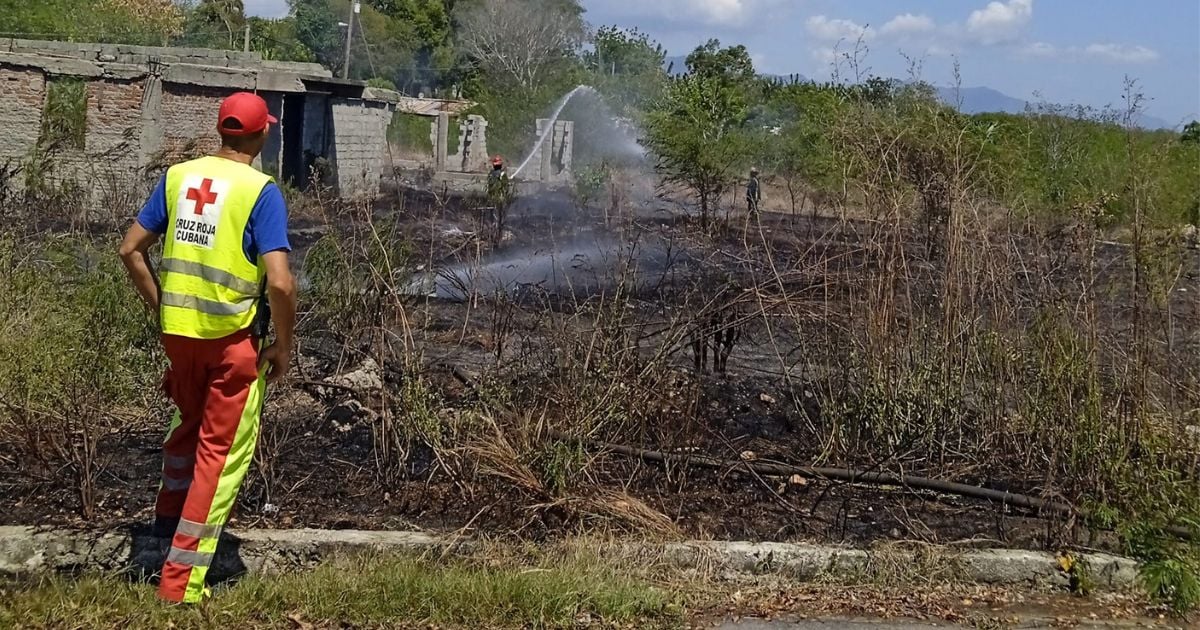
A large-scale brush fire was brought under control this Sunday in the Ateneo area of the Vista Hermosa neighborhood in Santiago de Cuba, following the intervention of the Fire Department from Command 1 Martí, with the support of a specialized tanker.
Aris Arias Batalla, provincial vice president of the Volunteer Firefighters Association of Cuba (ABVC), reported on Facebook that the flames, classified with a Q-102 magnitude, broke out shortly after 1:00 p.m. and reached areas very close to homes, causing alarm among residents.
Arias highlighted the effectiveness of the response teams in combating a fire that threatened to spread rapidly due to strong winds.
Although it has been extinguished, the fire still left a dense column of smoke visible in the area, he emphasized.
Additionally, he took the opportunity to urge the population to take extra precautions, especially during the current dry season, when the risk of wildfires significantly increases.
He also denounced the irresponsible attitude of individuals who ignite fires at micro or macro landfills, exacerbating an already dangerous situation.
"The negligence or deliberate act of starting fires in trash areas can lead to greater harms: loss of human lives, injuries, and significant material damage," warned the representative of the volunteer firefighters.
In his post, Arias shared a detailed report on the devastating effects that fires in micro-dumps have on both the environment and public health, as well as social stability.
He explained that during these fires, highly toxic gases such as methane, benzene, dioxins, and fine particles are released, which degrade air quality and directly affect the lungs and cardiovascular system of individuals, particularly among vulnerable groups such as children, the elderly, and pregnant women.
Additionally, it was noted that subsequent rains can wash away ashes and contaminating liquids (leachate) into water sources and agricultural soils, affecting biodiversity and contaminating crops.
Emissions of gases like methane—up to 25 times more harmful than CO₂—also contribute to climate change.
The text warns about the social and economic consequences of these disasters, such as the destruction of homes and infrastructure, the displacement of communities, and the insecurity they generate in impoverished areas. It also highlights the high cost that extinguishing fires and cleaning up affected areas represents for authorities.
Among the factors that exacerbate these scenarios are the presence of flammable materials such as tires and plastics, unplanned urbanization on slopes or areas near landfills, and adverse weather conditions such as prolonged droughts and strong winds.
As preventive measures, Arias advocated for comprehensive waste management, the creation of controlled landfills, the use of clean technologies such as ecological extinguishing agents, and increased community education in fire prevention and emergency management.
"Fires in illegal dump sites represent an environmental and public health crisis that requires urgent action, coordination among institutions, serious public policies, and citizen participation," he concluded.
During the first months of 2025, Santiago de Cuba has faced an alarming series of fires, many of which originated in residential areas or abandoned facilities.
In January, a fire in a multi-family building in the Reparto Abel Santamaría caused great alarm among the residents. The flames, preceded by an explosion, caused severe material damage, although no casualties were reported. The quick response of the firefighters prevented the fire from spreading to other apartments.
In early March, another fire occurred at the old Armando Marcerón cement factory. Although the area was deserted, the dense column of smoke was visible from various points in the city.
Authorities have warned about the dangers of setting fire to landfills or vegetation during drought conditions and emphasized the importance of acting responsibly in these situations.
The situation became more serious at the end of March when, in just two consecutive days, fires were reported due to explosions from electric motorbikes.
The first incident occurred on March 20 in the Los Cangrejitos neighborhood, where an explosion of a lithium battery caused a fire that destroyed nearly all of the belongings in a home. Neighbors managed to rescue the residents without any loss of life.
The next day, March 21, in the same area, another explosion forced two people to jump from the second floor of their house to escape the fire. One of them was injured by glass while trying to exit through the flames.
A few days ago, a brush fire near the Amiguito de Vilma daycare raised alarms. The incident, which occurred while the children were taking their nap, was promptly controlled by Fire Command 1. Local authorities emphasized the risks associated with uncontrolled burns in green areas, especially those close to educational institutions or residences.
Frequently Asked Questions about Fires in Santiago de Cuba
How was the recent fire in Santiago de Cuba controlled?
The brush fire was controlled by the Fire Department of Command 1 Martí, with the support of a specialized fire truck. This quick action prevented the fire from spreading to nearby homes, causing alarm among the residents.
What are the risks associated with fires in micro landfills?
Fires in micro-landfills release highly toxic gases such as methane, benzene, and dioxins, which degrade air quality and impact public health. Additionally, rain can wash away contaminating ash into water sources and agricultural soils, affecting biodiversity and crops.
Why is fire prevention important in Cuba?
Fire prevention is crucial to avoid loss of human life, material damage, and high economic costs. Unplanned urbanization, adverse weather conditions, and the presence of flammable materials exacerbate the situation, making comprehensive waste management and community education in fire prevention essential.
What measures are being taken in Santiago de Cuba to prevent fires?
In Santiago de Cuba, mandatory training on fire prevention has been implemented for workers in the state sector, self-employed individuals, and MIPYMES. This measure aims to enhance workplace safety and comply with current legislation on health and safety at work.
Filed under: