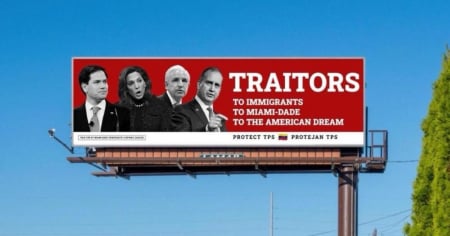
The Cuban-American congressman Carlos A. Giménez, representative of Florida's 28th district, sent a letter to Secretary of State Marco Rubio, in which he supports visa restrictions on foreign leaders linked to the exploitation of health specialists from the island and demands severe economic sanctions against countries that collaborate with the Havana regime through so-called medical missions.
In the letter published on the social media platform X, Giménez described these programs as “one of the most grotesque forms of human exploitation and modern slavery in our hemisphere.”
He also reported that the Cuban regime keeps the majority of the generated income, while subjecting healthcare professionals to long working hours, withheld salaries, and restrictions on movement.
"These missions claim to provide medical services, but in reality, they are a perverse mechanism through which the Cuban regime exploits its own citizens in conditions of slavery," the lawmaker stated.
Call for decisive measures
Giménez urged the State Department and the Trump Administration to take a more vigorous stance, proposing specific financial sanctions against countries that maintain agreements with Havana to receive Cuban doctors under this scheme.
"The governments that collaborate with this system are supporting a regime that practices slavery. If they truly need medical services, they should pay the Cuban professionals directly and not the government that exploits them, or face the full weight of tariffs and sanctions from the United States," he argued.
Commitment to human rights
The congressman emphasized that these actions are consistent with U.S. policy of defending human rights and that sanctioning international actors who benefit from this exploitation network sends a strong and necessary message.
"By implementing specific financial sanctions, we can send a clear message to these nations that human exploitation will not be tolerated. This not only protects the dignity of those suffering under these conditions but also reinforces our commitment to ethical governance on a global scale," he concluded.
The letter reiterates its full support for the measures adopted so far by the State Department and urges to intensify efforts to dismantle what it describes as a network of modern slavery driven from Havana.
Requested the Trump administration to suspend travel and remittances to Cuba
Congressman Giménez formally requested the White House for the immediate suspension of all travel to and from Cuba, as well as the cessation of remittances to the island, except for humanitarian exceptions previously approved by the State Department.
The request was formalized on April 2 through a letter addressed to the Secretary of the Treasury, Scott Bessent, in which the legislator for Florida's District 28 urged the U.S. government to take more aggressive actions against the Cuban communist regime.
"I am writing to you today to respectfully request the cessation of all travel to and from communist Cuba, as well as the elimination of remittances to the island, with very limited humanitarian exceptions approved by the Department of State," Giménez expressed at the beginning of his letter.
The congressman justified his request by appealing to national security and U.S. foreign policy, reminding that Cuba is included on the list of State Sponsors of Terrorism.
"The regime in Cuba is on the list of State Sponsors of Terrorism, harbors fugitives from U.S. justice, and represents a clear threat to the security of the United States and our citizens," he warned.
"This is a matter of great importance for the Cuban-American community and for millions of Americans who value freedom, democracy, and human rights as guiding principles," he emphasized.
Frequently asked questions about the sanctions proposed by Carlos Giménez against Cuba and allied countries
Why does Congressman Carlos Giménez call for sanctions against countries that collaborate with Cuban medical missions?
Carlos Giménez believes that Cuban medical missions represent a form of human exploitation and modern slavery, and for this reason, he calls for severe economic sanctions against the countries that cooperate with the Cuban regime. According to Giménez, these countries are supporting a system that subjects healthcare professionals to unfair working conditions.
What measures does Carlos Giménez propose to intensify pressure on the Cuban regime?
Giménez has requested the suspension of all travel to and from Cuba, as well as the cessation of remittance transfers to the island. These measures aim to cut off the income sources of the Cuban regime, which he considers a threat to the security of the United States and a violator of human rights.
How do international missions affect Cuban doctors, according to the allegations?
Cuban doctors on international missions are subjected to exploitation and forced labor, with restrictions on movement and wages withheld. The Cuban regime retains the majority of the income generated, while professionals work under strict conditions of control and surveillance.
What impact could the sanctions proposed by Giménez have on the relations between the U.S. and the countries that receive Cuban medical missions?
Sanctions could deteriorate diplomatic relations between the U.S. and countries that depend on Cuban medical cooperation, such as some in the Caribbean. These countries could face visa restrictions and economic sanctions from the United States, which could complicate their bilateral relations with Washington.
What is the stance of Caribbean countries regarding Cuban medical missions?
Some Caribbean leaders have expressed their support for Cuban medical missions, considering Cuba's medical assistance to be essential for their health systems. They prefer to maintain medical cooperation rather than lose access to U.S. visas, emphasizing the importance of these services for their communities.
Filed under: