The Cuban actress and influencer Eileen Morales, known as @lacubanatiktok, has once again shaken up social media with a powerful video in which she responds to a user who defended traveling to Cuba as a tourist destination. "You're not Cuban, so you don't understand," she says at the beginning of the clip that has quickly gone viral on TikTok.
In her testimony, Morales argues from her own experience and the collective pain of exile. "My country Cuba is a country that is under dictatorship, where young people literally risk our lives to give a better future to the families we leave behind," she says. The influencer recalled that she had to leave her son on the island, cross jungles, seas, and deserts, and that she lost a friend during the migration journey to the United States.
"It pains us to have to send money to Cuba because we know it will always end up in the hands of the government," he states. But what hurts him the most, he insists, is seeing foreign tourists "enjoying themselves while the people are starving." His criticism is straightforward: "All that money is pocketed by the government and does not help the people. While you are enjoying yourselves, eating your meat, a child is dying who has nothing to eat."
The video adds to others in which Eileen Morales has denounced the dire situation on the island. In April 2025, she publicly questioned the lack of medical attention her son received in Cuba, despite his chronic condition. Months earlier, in November 2024, she also criticized other Cubans who, living in the United States, downplay the crisis being experienced on the island.
Morales' statements align with a growing wave of testimonies from foreign tourists who have highlighted the contradiction between the luxury of Cuban hotels and the misery faced by its citizens. Among them, there is the case of a Spanish tourist criticized for justifying the embargo as the cause of the crisis; that of a Chilean who listened to a doctor turned waiter; and that of another Spaniard shocked by child poverty on the island.
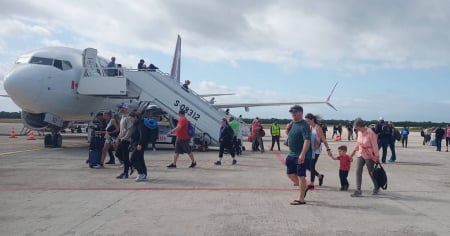
The contrast between tourist luxury and the scarcity experienced by the population has been documented by many. At a hotel in Cayo Guillermo, tourists were celebrating the abundance of food while in other areas of the country there is barely light or basic food supplies. Despite this, the regime has allocated 14 times more resources to tourism than to agriculture.
Tourism in Cuba has also experienced a 30% drop so far in 2025, according to recent official data. This reflects a structural crisis that impacts both the economy and the international perception of the country.
Supportive reactions and debate on TikTok
The video by Morales received a flood of reactions. “I'm Puerto Rican and I always wanted to go to Cuba, but because of everything you explained, I gave up on the idea a while ago,” commented one user. "I totally admire you, I will never go while that government is in power," wrote another.
There was also support from Venezuelans, Colombians, Uruguayans, and other Latin Americans who live or have lived under authoritarian regimes. "I also crossed the Darién to flee Venezuela," said one follower. "Cuba is beautiful, but I can't vacation while its people suffer," wrote another.
Others, on the other hand, asked for more context or expressed doubts: “And your son? How are you going to manage?” asked one internet user, to which Morales responded that he hopes to reunite his family in the United States soon. The conversation continued to grow with thousands of comments that reflect both empathy and the debate generated by discussing tourism in a country experiencing a humanitarian crisis.
While some justify that tourism can economically benefit Cubans, Morales and many exiles insist that these revenues ultimately serve to strengthen the regime. Their message is clear: "It hurts us when we see tourists going to enjoy and spend money on that dictatorship, on a government that is getting richer every day."
Frequently Asked Questions about Tourism in Cuba and its Impact on the Population
Why does Eileen Morales criticize tourism in Cuba?
Eileen Morales criticizes tourism in Cuba because she believes that the money spent by tourists strengthens the regime and does not benefit the Cuban people. She argues that while tourists enjoy their vacations, Cuban citizens face hunger and precariousness. Morales has highlighted the contradiction between the luxury of tourist resorts and the misery experienced by the local population, reinforcing her position that tourism on the island does not contribute to the well-being of Cubans but rather perpetuates the dictatorship.
What is the situation of the healthcare system in Cuba according to Eileen Morales?
The healthcare system in Cuba faces serious shortcomings, such as a lack of available medications and adequately available medical personnel. Eileen Morales has publicly denounced the precariousness of the healthcare system on the island, pointing out that her son, who suffers from a chronic medical condition, does not receive the care he needs. Morales highlighted cases where medical appointments are delayed for months, and care is interrupted by staff meetings, reflecting a significant deterioration in healthcare in Cuba.
How does the United States embargo affect the situation in Cuba?
The Cuban regime uses the U.S. embargo as an excuse to justify the country's economic crisis. However, the embargo does not prohibit the sale of food or medicine to Cuba, and the island maintains trade relations with over 150 countries. The economic crisis in Cuba is mainly due to the socialist model imposed by the Communist Party, which has failed to provide basic resources to the population. Testimonials from tourists and Cubans abroad agree that Cuba's problem lies with its government, not with the embargo.
What impact does tourism have on the Cuban economy?
Tourism in Cuba represents a significant source of income for the government, but it does not translate into improvements for the local population. Although tourism could potentially benefit the Cuban economy, the reality is that most of the revenue ends up with the regime, while Cubans continue to face shortages of basic products and precarious living conditions. The lack of investment in critical sectors such as agriculture and healthcare, in favor of tourism, further exacerbates the situation.
What do other influencers think about the situation in Cuba?
Various influencers have expressed their concern about the crisis in Cuba, highlighting the need for change. Influencers like Yessy World and tourists like Carolina Márquez have used their platforms to expose the harsh living conditions on the island. These testimonies have sparked a broad debate on social media, where the responsibility of the Cuban regime in the current situation and the necessity for the international community to pay attention to the humanitarian crisis in the country are being discussed.
Filed under: