
Related videos:
In an era when Cuban boxing was synonymous with international glory, Félix Lemus was one of the figures that added luster to the national medal tally, although his story did not end as gloriously as those of his contemporaries.
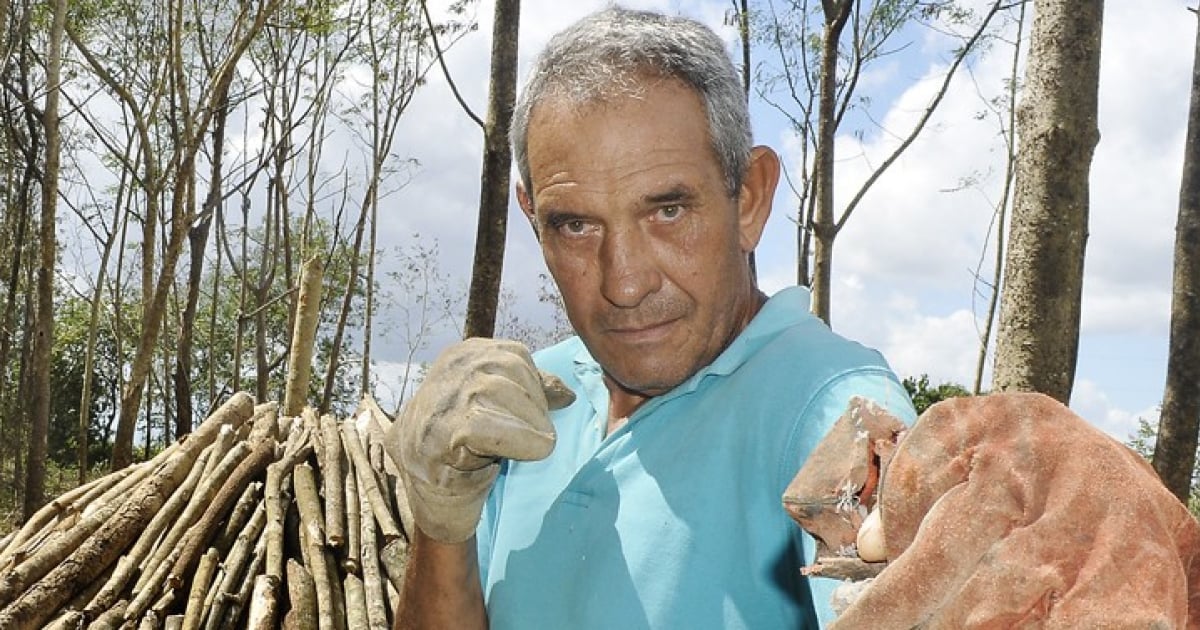
Today, this 64-year-old from Cienfuegos lives far from the ring and even farther from the recognition he deserves. His voice, weary from disillusionment, echoes as a living testament to the neglect many figures in Cuban sports have faced after their retirement.
In a recent interview granted to the official newspaper Trabajadores, Lemus disclosed a situation that he has been enduring for years: he lives isolated in the countryside, working the land to survive, making barely over 3,000 pesos a month — a symbolic amount considering his status as an internationalist combatant — and suffering from health issues due to the effort.
"No one cares about me, nor do they know where I am", she laments.
Félix Lemus was not just any boxer. National champion in 1985 and runner-up in 1984 and 1986, he also won medals in the Playa Girón tournaments, the Córdova Cardín, and secured gold at the Central American and Caribbean Games in 1983.
He was a key figure in the heavyweight division during the years when Teófilo Stevenson dominated the category. In fact, one of his lesser-known achievements is that he was never knocked out by Stevenson, something that happened to many of his rivals.
"I always lost to him, once by a vote of 3-2. But he never knocked me out," he commented with pride. "Honestly, I was confident going into those fights. I fought my fight. What could happen? That he would knock me out? That happened to almost everyone," he added.
Disease, poverty, and institutional neglect
Today, Lemus suffers from severe physical aftereffects: he has four herniated discs, one surgically treated cervical disc, and he experienced a heart attack. He is physically incapacitated. His wife, who has undergone cancer surgery, is also unable to work and does not have any pension.
"I came here to survive. In the city (...) it is impossible," he emphasized.
"I made efforts years ago to have us moved to a different home. Eight of us lived in a two-bedroom apartment. I never received a response. My situation was even known to the provincial government," she reported, with a clarity that highlights the indifference of the institutions.
An anecdote that highlights the government's indifference: "Many years ago, the Athlete Support Commission gave me a set of bathroom tiles. They promised to buy me the fixtures. Everything stopped there."
One of the reasons Lemus does not receive the support that other retired athletes enjoy is his bureaucratic classification: he is not considered a "sports glory," but rather a "relevant figure." This distinction limits his access to certain benefits and assistance.
"I don't know what that is," he said with evident frustration. "I didn't compete in the Olympics or World Championships or Pan American Games. There was Teófilo Stevenson. I won gold in the Playa Girón and Giraldo Córdova Cardín tournaments, I was the champion of the Central American and Caribbean Championship in 1983, and I earned medals in several events in Europe."
The difference is significant. In Cuba, sports heroes often receive some level of state support. However, many prominent figures often fall into oblivion, as if their achievements were not enough to deserve remembrance or gratitude.
Racism and a forced exit from boxing
Lemus also revealed the most painful reasons for leaving boxing: a heated argument with the legendary coach Alcides Sagarra and a personal experience marked by racism.
"I felt the racism. I’m telling the truth. In boxing, they didn’t treat the white athletes well when it came to deciding who would go to competitions. If you complained, they would tell you it was a technical decision," he detailed.
"At some point in my career, they were unfair to me. Being at the Olympic Games would have been incredible, but there was my friend Teófilo Stevenson. It was impossible," he admitted.
A common story among forgotten athletes
The story of Félix Lemus is not unique. In recent years, other similar cases of Cuban athletes have come to light who, after dedicating their best years to sports and representing Cuba in multiple international settings, end their days in neglect, with meager incomes and without access to a dignified life.
Lemus, from his piece of land, continues to fight. Not in the ring anymore, but against indifference. And his words should not fall on deaf ears. "Nobody cares about me, nor do they know where I am." I hope someone, beyond an occasional interview, listens.
Frequently Asked Questions about the Institutional Abandonment of Cuban Athletes
What is the current situation of the boxer Félix Lemus after his retirement?
Félix Lemus lives in precarious conditions in the countryside, working the land to survive. At 64 years old, he barely receives a little over 3,000 pesos a month and suffers from severe physical ailments, such as herniated discs and a heart attack. He laments the lack of institutional support and the neglect following his sports career.
Why doesn't Félix Lemus receive the state support that other retired athletes do?
Lemus is not considered a "sports glory" in Cuba, but rather a "relevant figure." This bureaucratic classification limits his access to certain benefits and assistance that sports glories typically receive, such as appropriate state support. His frustration is evident as he does not understand why his achievements do not guarantee him the same recognition.
What problems do retired Cuban athletes generally face?
Retired Cuban athletes face neglect, poverty, and a lack of institutional support. Many, like Félix Lemus and Miguelito Calderón, live in precarious conditions without the assistance they deserve, despite having brought glory to the country. This situation has led many young talents to seek opportunities outside the island.
How has the Cuban government responded to the allegations of neglect regarding retired athletes?
The Cuban government denies that there are sports heroes abandoned and claims that they have institutional support. However, the reality suggests otherwise, with multiple reports on social media about the precarious living conditions of many former Cuban athletes who do not receive the necessary attention.
Filed under: