
Related videos:
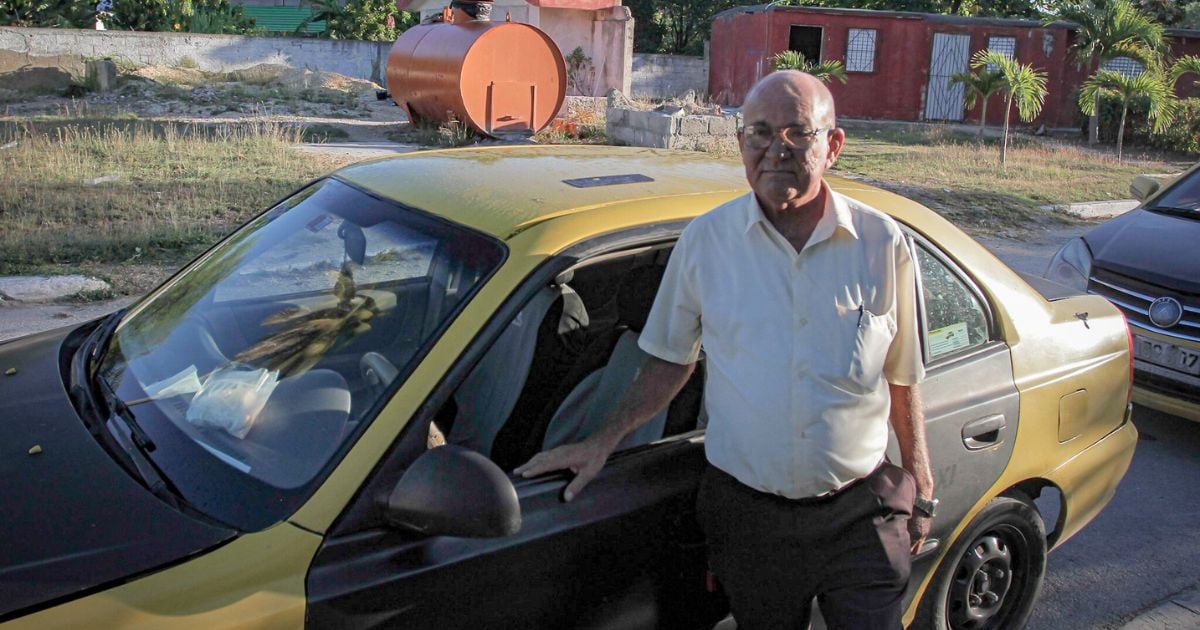
Ricardo Palmero Rodríguez is no ordinary taxi driver. He is a 68-year-old man who, for nearly four decades, has dedicated his driving to those who need it most: the dialysis patients in Sancti Spíritus.
Her story, recently revealed by Transport Minister Eduardo Rodríguez Dávila on social media, needs no official embellishments to touch the heart. It speaks for itself.
Amidst the current transportation crisis faced by Cubans, as well as the grim situation in the country's hospitals, this man tries to provide some comfort to the patients he transports daily.
Since 1986, Ricardo has become a kind of guardian angel on wheels for dozens of people who must visit the Nephrology and Hemodialysis Service at Camilo Cienfuegos Hospital several times a week.
And although he started in the transportation world in 1978, it was that step towards accompanying the sick that defined his destiny.
"I always try to be on time for pick-up, because they have a schedule to follow," she explains with the humility of someone who knows that her job is not just about transporting patients, but about being there, day after day, being part of their struggles.
Over time, the service became better organized, assigning fixed vehicles to patients, which allowed for a more humane and closer relationship to be established.
Ricardo doesn't talk about clients, but about people. "They are not just clients; they are human beings who are suffering," he says.
And that empathy is what has sustained him even in the hardest moments, such as when he has to deal with the death of one of his patients: "The biggest problem is when a patient passes away. You get to know them, you bond with them, and they become part of the family," he confesses.
One of those difficult moments occurred this year, on January first, when he arrived as usual to see a patient and learned that the patient had passed away in the early hours of the morning: “It was a very difficult moment,” he recalls with sadness.
But despite the pain, he has never strayed from his path, knowing that his service is a ray of light amidst the desolation of living in Cuba: “In the face of so much illness and death, what keeps me here is the desire to help.”
That desire to help is the driving force that pushes him to continue, even when he already speaks about retirement. But, true to his calling, he assures that he won’t go far: “After retirement, I will continue in the transportation field, which is what I have always done.”
Ricardo also has a message for society: "When a hemodialysis patient arrives at a pharmacy or any place, they should be given priority. We need to have more empathy, more understanding towards those who face these types of situations."
In a country where resources are scarce, but often sensitivity as well, men like Ricardo Palmero remind us that true service does not require a uniform, applause, or official recognition. All it takes is heart.
Since 2023, the regime has alerted about an increase in kidney problems in Sancti Spíritus, a situation that reflects the progressive deterioration of the Cuban healthcare system in the nephrology area.
The scarcity of medical resources and limited access to specialized treatments have worsened the situation for patients with chronic conditions, such as those who rely on hemodialysis.
Meanwhile, the complaint of a Cuban in need of dialysis emerged who was a victim of inadequate care in the hospital system.
Recently, the Cuban regime announced the implementation of a new transportation service for children with illnesses, which, although a positive development, highlighted the fact that sick adults — such as kidney patients — continue to rely on alternative solutions and individual solidarity for their transportation to medical facilities.
In March, a solidarity initiative backed by Habana Club emerged that uses tricycles to facilitate the transportation of vulnerable individuals.
This action demonstrates that, in the face of state inefficiency, citizen responses continue to emerge to meet the basic needs of those who need it most.
Frequently Asked Questions about the Transportation Service for Hemodialysis Patients in Cuba
Who is Ricardo Palmero and what work does he do in Sancti Spíritus?
Ricardo Palmero is a 68-year-old Cuban taxi driver who has spent nearly 40 years helping transport dialysis patients in Sancti Spíritus. He has devoted his life to supporting those in need, becoming a crucial figure for kidney patients who must visit the Nephrology and Dialysis Service at the Camilo Cienfuegos Hospital several times a week.
How does Ricardo Palmero tackle the transportation difficulties in Cuba?
Ricardo Palmero faces the challenges of transportation in Cuba with dedication and empathy. Despite the transportation crisis and the scarcity of resources in the country, Ricardo has remained consistent in his efforts, ensuring that dialysis patients arrive on time for their treatments. This dedication has made him an essential support for his passengers, who appreciate not only his service but also his humanity.
What message does Ricardo Palmero convey about the treatment of hemodialysis patients?
Ricardo Palmero emphasizes the need for empathy and understanding towards hemodialysis patients. He recommends that when a patient arrives at a pharmacy or any other place, they should be given priority due to their condition. His message underscores the importance of human sensitivity, especially in a country that faces shortages of resources and basic services.
Filed under: