
Related videos:
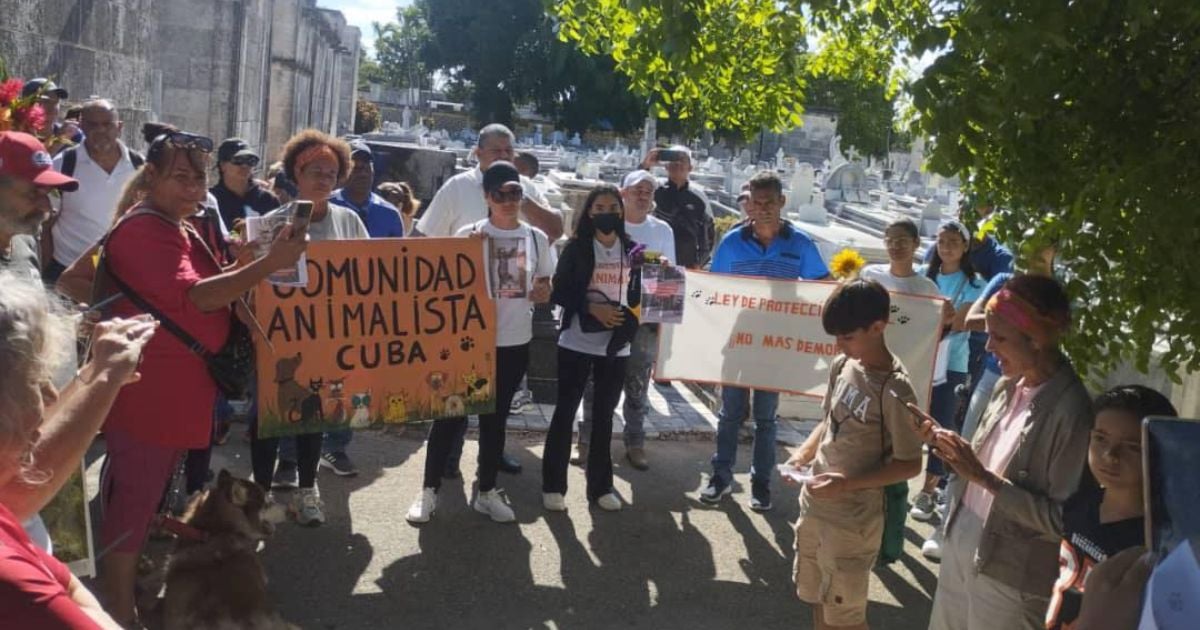
On Dog Day in Cuba, activists and animal rights defenders held an emotional pilgrimage at Colón Cemetery in Havana this Sunday to demand the strict implementation of the Animal Welfare Law and effective punishment for abuse.
The action was reported on social media by the group Protección Animal SOS - PASOS, which highlighted that this was the largest pilgrimage conducted to date to the so-called Tomb of Fidelity, where the remains of Jeannette Ford Ryder, a historical advocate for animals, and her dog Rinti, who stayed by her side until her death, rest.
"We reaffirm our commitment to continue fighting for a truly effective Animal Welfare Law that firmly punishes abuse and guarantees the rights and respect that our animals deserve," stated the animal protection organization.
The event, filled with respect and sensitivity, was also a denunciation of the failure to comply with the provisions set forth in the Animal Welfare Decree-Law, which was approved in 2021 after years of citizen pressure.
The advocates argue that the regulations are still not being effectively enforced, and that abuse continues to occur with complete impunity in many parts of the country.
Rinti's grave has become a symbol of loyalty and resilience, where activists gather each year to remind us that love for animals must translate into real, strong, and enforced laws, not just symbolic gestures or institutional promises.
This complaint was also joined by the organization Cubans in Defense of Animals (CEDA), which took advantage of the event to highlight the multiple forms of mistreatment that continue to occur throughout the country, many of which extend beyond the domestic sphere.
In a message posted on their social media, CEDA denounced the persistence of practices such as the abandonment of litters of kittens in garbage dumps, the beating of dogs without legal consequences, the use of horses for draft purposes under extreme conditions, the overcrowding of farm animals, the trafficking of wild birds, and the use of animals in laboratories and underground fights.
"Wherever there is an animal in Cuba, its basic needs and rights require improvement and protection," the organization warned, while calling for a stricter and truly enforceable law that goes beyond the limitations of the current Animal Welfare Decree-Law.
CEDA also called for flooding social media with stories and faces of Cuban animals as a way to raise a voice for "those who do not have one" and to keep up public pressure for structural changes that protect the lives and dignity of all sentient beings in the country.
In the days leading up to the commemoration of Dog Day, several incidents of animal cruelty shook the Cuban public opinion, fueling the outcry from activists demanding the effective enforcement of the Animal Welfare Law.
One of the most shocking cases occurred last Wednesday when an individual offered a live owl for 20,000 pesos in a Facebook group in Havana.
The publication, which included images of the bird confined in a metal bucket, sparked a wave of criticism over mistreatment and trafficking of protected species, exposing the impunity with which the provisions of the current decree-law are violated.
Just one day prior, another event emerged that caused shock: a woman in Gibara found thieves cooking her stolen cat.
The report was disseminated by the Animal Protection Society in Holguín, which described the act as “barbaric” and criticized the silence of the authorities.
Another revealing situation was brought to light last March when activist Yenney Caballero publicly accused the veterinary clinic Mascolive of refusing to perform surgery on a critically ill cat.
The center cited technical reasons and demanded a high payment, which was regarded by animal advocates as an act of negligence incompatible with ethical care. The complaint once again raised questions about the lack of effective mechanisms to ensure animal welfare beyond the legal framework.
Frequently Asked Questions about the Animal Welfare Law in Cuba and its Implementation
Why are activists criticizing the Animal Welfare Law in Cuba?
Activists criticize the Animal Welfare Law in Cuba because, although it has been in place since 2021, it is not enforced effectively, allowing animal abuse to continue without significant legal consequences. The penalties established are seen as insufficient to deter acts of cruelty, leading animal advocates to demand a review of the law and harsher penalties.
What are the main forms of animal abuse reported in Cuba?
In Cuba, the main forms of reported animal abuse include the abandonment of animals, beating dogs, using horses under extreme conditions, overcrowding of farm animals, trafficking of wild birds, and the use of animals in illegal fights. These acts reflect a lack of effective protection for animals despite the existence of the Animal Welfare Law.
How does the economic crisis affect animal welfare in Cuba?
The economic crisis in Cuba has a negative impact on animal welfare, as people prioritize their basic needs over pet care, leading to abandonment and mistreatment. Furthermore, shelters and veterinary clinics are facing a shortage of food and resources, exacerbating the situation for homeless animals.
What actions are activists demanding to improve animal protection in Cuba?
Activists are demanding to amend the legislation to include harsher penalties for animal abuse, ensure the effective implementation of the Animal Welfare Decree-Law, and establish more effective reporting mechanisms. They also ask for the protection of street animals to be guaranteed through appropriate sterilization and vaccination campaigns.
Filed under: