
Related videos:
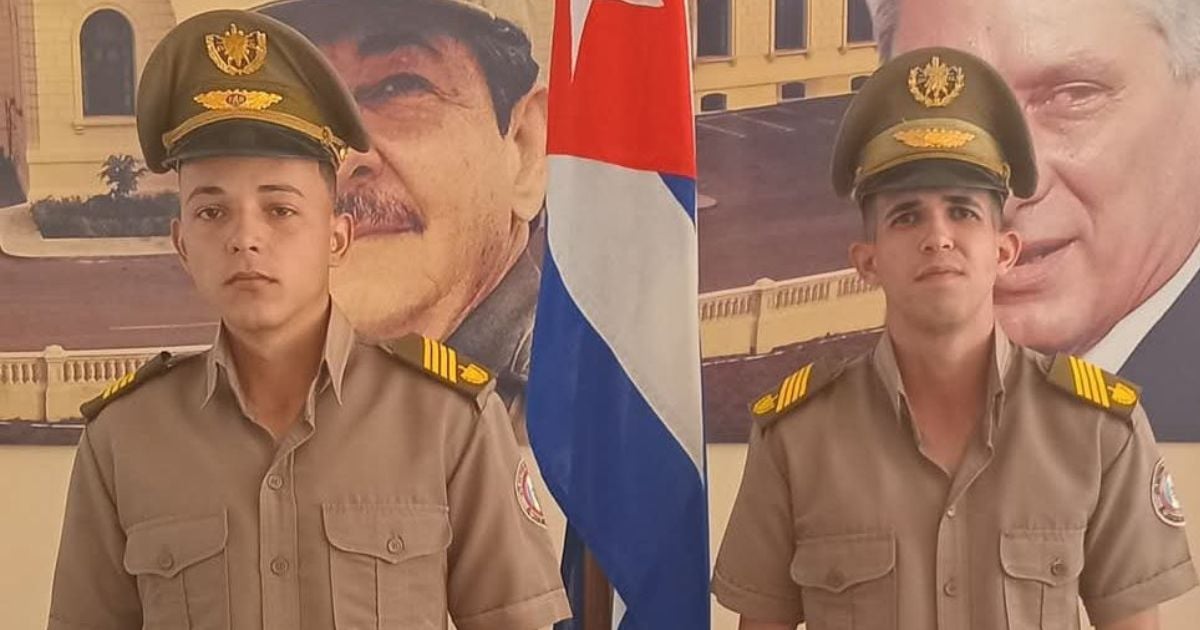
Two cadets from the Military Technical Institute (ITM), identified as Alejandro Cantillo Pérez and Yoerlandy Camero Baños, returned a lost backpack that contained a substantial amount of foreign currency, personal documents, and a mobile phone.
The incident occurred this Saturday in the Playa municipality in Havana and was shared on Facebook by the official spokesperson Frank Enrique.
According to the account of a regime-supporting user, the youths were walking through the intersection of 110th Street and 5th Avenue when they noticed an abandoned backpack on the ground.
Upon reviewing its contents, they discovered that it contained 4,000 Cuban pesos, 5,400 euros, 3,084 US dollars, a mobile phone, and an identity card.
Upon verifying that the address on the ID corresponded to a residence in the same municipality, they went there to return the item, but found the house closed and under construction.
In light of this situation, they opted to go to the police station, where they began the process of handing over the money.
During that moment, a Cuban citizen residing in the Dominican Republic —who turned out to be the husband of the owner of the backpack— came forward to report the loss of his ID and mobile phone, without expecting that the money would turn up.
Upon clarifying the facts, he expressed his gratitude to the cadets and personally escorted them back to their school.
The story has been presented by the official profile as an example of the ethical and patriotic training of the youth who are part of the Cuban defense system.
However, this exaltation contrasts with the actions of other uniformed individuals who respond to popular protests with indiscriminate violence and repression, calling into question the values they claim to represent.
In recent months, the Cuban regime has intensified its efforts to present a more human and ethical image of its repressive forces, particularly the State Security (SE) and the Ministry of Interior (MININT).
This effort to rehabilitate the image of the repressive bodies was recently supported by statements from Colonel José Marco Rubinos, who, at an official event, revealed that the SE does not recognize a Cuban counter-revolution, but instead attributes all opposition to foreign funding.
According to Rubinos, the repression against dissenters is a state policy structured from the highest levels and carried out by young officials "trained" to confront the "main enemy": the United States.
On that same day, Miguel Díaz-Canel reaffirmed this line of discourse in the government podcast Desde La Presidencia, stating that the SE is "respected and envied" around the world.
The ruler praised the Castro legacy in the creation of this repressive structure and described its members as "global references" for their effectiveness.
The narrative of exaltation has also been channeled through public events. Last March, MININT organized a vocational festival at a school in Havana, where the work of the SE organs was promoted among students, presenting them as options for ethical and professional development.
A short while ago, a note highlighted repressive forces playing soccer in an attempt to humanize their image, which generated backlash among critical sectors, who interpret these actions as part of a propaganda strategy to soften public perception of the repressive apparatus.
Frequently Asked Questions about Honesty and Security in Cuba
What happened to the lost backpack in Havana?
Two cadets from the Military Technical Institute returned a lost backpack in the Playa municipality of Havana, which contained foreign currency, personal documents, and a mobile phone. The cadets took the backpack to the police station for its return, being acknowledged for their ethics and values.
How is the performance of the Cuban police perceived in cases of disappearances and theft?
The actions of the Cuban police in cases of loss and theft are viewed in mixed terms. In some cases, such as the return of lost items, their swift response is commendable. However, there are criticisms regarding the overall effectiveness of law enforcement, especially in light of the rising wave of crime in the country.
What factors contribute to the rise of crime in Cuba?
The rise in crime in Cuba is highly influenced by the economic crisis the country is experiencing. The lack of basic resources and inflation are key factors that have led to an increase in thefts, assaults, and other crimes, creating an atmosphere of insecurity and concern among the population.
How are social media used to promote honesty in Cuba?
Social media in Cuba plays an important role in promoting honesty. Platforms like Facebook are used to share stories of honesty and connect individuals who have found belongings with their rightful owners, fostering values of solidarity within the community.
Filed under: