
Related videos:
The tension between the Judicial Power and the Administration of President Donald Trump has escalated to a new level with the formal initiation of the process to declare his government in contempt of court, after ignoring an order that prohibited the deportation of more than 200 migrants, mostly Venezuelans, to a mega-prison in El Salvador.
Federal Judge James E. Boasberg, from the District of Washington, determined that there is "probable cause" to consider that the Trump administration violated his order issued on March 15, which prohibited the deportation of migrants under the Foreign Enemies Act, an 18th-century legislation historically reserved for times of war.
Boasberg reported in a 46-page document - referenced by the U.S. press - that the administration displayed a “deliberate ignorance” in carrying out the deportations even after the order had been communicated.
“The Constitution does not tolerate intentional disobedience of judicial orders, especially by officials who have sworn to uphold it”, wrote the judge.
In his statements, Boasberg was clear: “The Court does not reach such a conclusion lightly or hastily; in fact, it has given the defendants ample opportunity to rectify or explain their actions. None of their responses have been satisfactory.”
The flights and the prison of El Salvador
On March 15, while the order was being communicated, two flights with over 200 migrants departed from the United States to El Salvador, via Honduras.
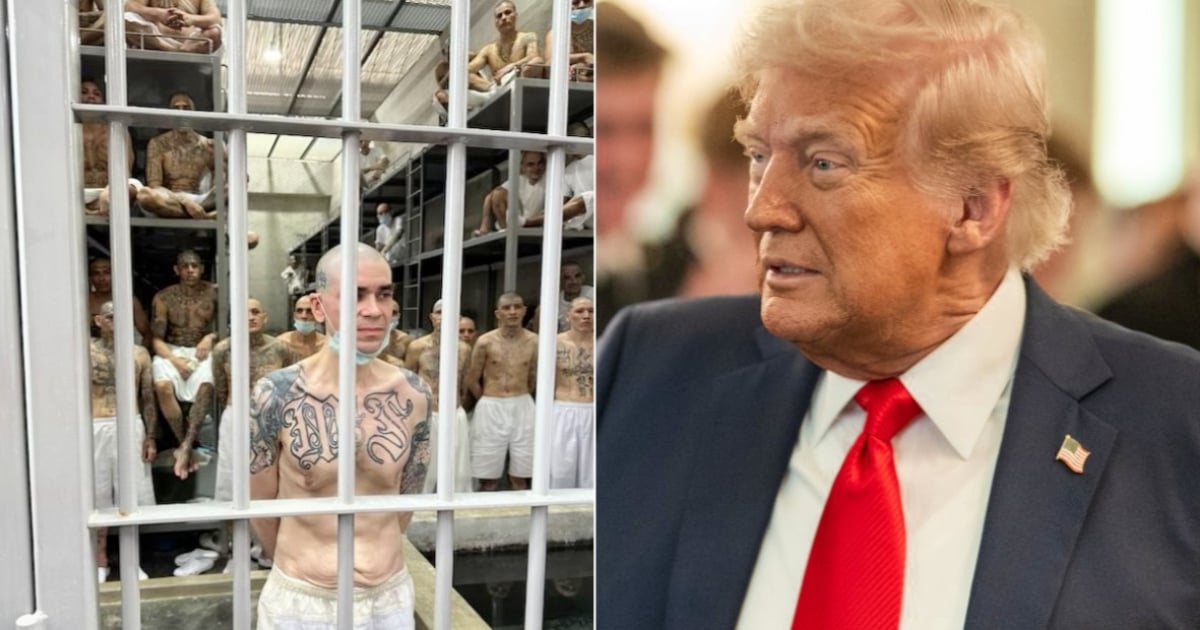
The deportees, mostly Venezuelans and Salvadorans, were accused without a judicial process of belonging to criminal gangs such as MS-13 and Tren de Aragua, and were subsequently interned in the Center for Terrorism Confinement (CECOT), the controversial mega-prison of maximum security promoted by Salvadoran President Nayib Bukele.
Boasberg stated that the most effective way for the administration to purge the probable contempt would be for deported migrants to “be able to exercise their right to challenge their expulsion,” even without the need to be physically returned to the U.S.
State secret and obstruction of the process
The White House denied having violated the judge's order.
However, press secretary Karoline Leavitt acknowledged that the flight could have taken place before the written resolution, although she did not provide the exact time of takeoff, which fueled the court's suspicions.
In response to Boasberg's request to provide flight details, the Government invoked the privilege of state secrecy, thereby hindering transparency and complicating judicial oversight.
In the words of the judge, “the Administration could ‘purge’ its contempt by returning to U.S. custody those who were sent to prison in El Salvador.”
If the Department of Justice refuses to proceed, the judge will appoint an independent attorney to prosecute the case.
An impending constitutional crisis
The case represents a critical point in contemporary U.S. history.
As the judge points out, “the Constitution does not tolerate the willful disobedience of court orders, especially by officials of a coordinated branch who have taken an oath to uphold it.”
The implications of a federal court formally holding a presidential administration in contempt could trigger an unprecedented institutional crisis.
As Boasberg stated, he is facing a situation in which “one branch of government is deliberately ignoring the instructions of another,” which implies a breakdown of constitutional balance.
The role of Bukele and the defiant message
The situation became even more controversial when Salvadoran President Nayib Bukele posted a defiant message on social media along with a video of the migrants entering the prison: "Oops. Too late."
This gesture was perceived as a direct affront to both U.S. justice and the international order.
The case of Kilmar Armando Abrego García
Among those deported is Kilmar Armando Abrego García, a Salvadoran who was returned allegedly due to "an administrative error."
The U.S. government accuses him of being a "terrorist," although it has not yet presented any public evidence to support that claim.
The case reached the Supreme Court, which ruled that Abrego García had the right to challenge his expulsion.
However, the Trump administration insists that its fate is already in the hands of Bukele, who during a recent visit to Washington refused to return it to the U.S.
Partial support from the Supreme Court, but with warnings
Although the Supreme Court recently authorized the government to resume deportations under the Foreign Enemies Act, it did so for a legal technicality: the lawsuit, as ruled by the high court, should have been filed in Texas and not in Washington.
However, the ruling also reminded that migrants have the right to a judicial hearing prior to their deportation, a step that was not respected.
The Chief Justice of the Supreme Court, John Roberts, even had to issue an unusual public statement to remind Trump how the judicial system works following his verbal attacks against Judge Boasberg and his attempts to impeach him.
U.S. media warns that the legal battle between Judge James Boasberg and the Trump administration is much more than a court case: it is a testing ground for the limits of executive power, respect for the rule of law, and the human rights of migrants.
Boasberg has given the government a week to account under oath or present an effective remedy. If they fail to do so, the contempt will be formalized and could have historic consequences.
Filed under: