
Related videos:
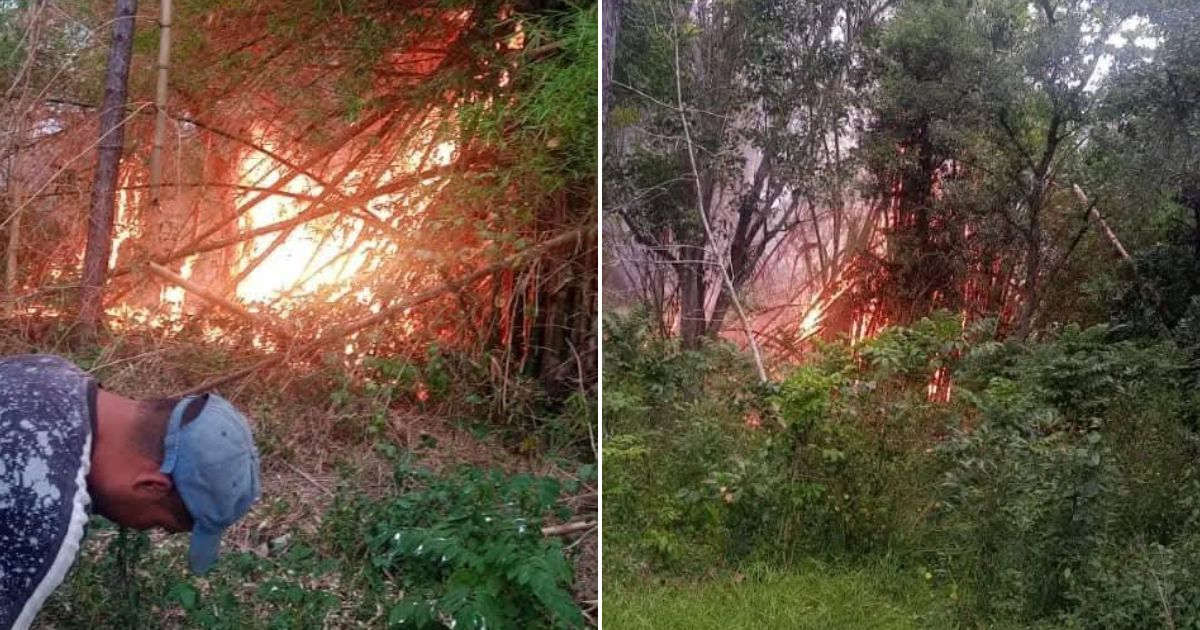
The Botanical Garden of Pinar del Río has been the scene of three fires in less than eight days, a situation that poses a serious threat to the site and reveals shortcomings in environmental prevention.
Radio Guamá reported on Facebook that the incidents were controlled in time but posed a risk not only to the natural heritage of the province but also to the wildlife that inhabits these protected areas.
According to the report, everything points to the fires being caused by acts of social indiscipline, which has generated significant concern among local workers, environmental authorities, and residents of the area.
The last of the fires was extinguished thanks to the swift action of the residents of the La Cabaña community, along with firefighters and staff from the Botanical Garden itself.
The flames have affected areas of ecological value in one of the most important natural spaces in the province, which is home to protected plant and animal species.
"These incidents threaten not only the forest heritage of the province but also the wildlife that inhabits the affected areas," warned the official Pinar media.
In light of the recurrence of these events, local authorities have emphasized the need to strengthen preventive measures and increase surveillance, especially in Pinar del Río, which is considered the second most forested province in Cuba.
There has also been a call for citizen collaboration and to promote greater environmental awareness to prevent further losses.
"Citizen collaboration and environmental awareness are key to protecting these valuable ecosystems," emphasized Radio Guamá, at a time when wildfires are increasing in frequency and risk, amidst an ever more aggressive dry season.
Last March, a fire in Pinar del Río affected areas of the UEB Forestal Dos, damaging natural resources and causing significant losses to the region's forest heritage.
Local authorities indicated that the fire was contained with the participation of firefighters and forestry workers, although failures in prevention and initial response were evident.
Days later, another wildfire devastated over 400 hectares in Pinar del Río, marking one of the largest impacts recorded that month.
The fire, fueled by dry conditions and strong winds, forced the evacuation of surrounding areas and highlighted the fragility of the local ecosystem in the face of extreme events.
A recent report revealed that in Cuba wildfires had devastated a total of 800 hectares, raising concern among environmental experts. Authorities have urged for greater public awareness and warned of the increased risk during the dry season.
Frequently Asked Questions about the Fires in the Pinar del Río Botanical Garden and Their Impact on the Region
What is happening at the Botanic Garden of Pinar del Río?
In less than eight days, the Botanical Garden of Pinar del Río has been the scene of three fires, endangering both the natural heritage of the province and the local wildlife. Authorities suspect that these fires were caused by acts of social indiscipline, raising significant concern among the workers at the site and the residents of the area. The swift intervention of the community and firefighters has been crucial in controlling the flames.
What measures are the authorities taking to prevent future fires in Pinar del Río?
In light of the recurrence of fires, local authorities have emphasized the need to strengthen preventive measures and increase vigilance in the region. A call has been made for citizen collaboration and to promote greater environmental awareness to protect these valuable ecosystems. The dry season and adverse weather conditions, such as strong winds, have also been identified as factors that heighten the risk of fires.
What have been the consequences of the wildfires in Pinar del Río during 2025?
In 2025, Pinar del Río has experienced numerous wildfires that have significantly impacted its forested areas. Large-scale fires have swept through hundreds of hectares of forests, primarily consisting of pines. These events have highlighted the province's vulnerability to fire and the importance of implementing effective preventive measures.
What relationship exists between climate change and wildfires in Cuba?
Climate change has been identified as a contributing factor to the increase in fires in Cuba. Prolonged droughts, along with adverse weather phenomena such as strong winds, have worsened the frequency and severity of wildfires. These adverse weather conditions facilitate the spread of fires, endangering both ecosystems and nearby communities.
Filed under: