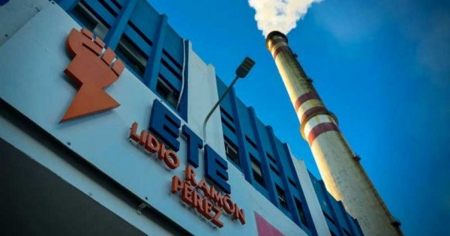
The energy crisis shaking Cuba reaches a new critical point this Thursday, with widespread blackouts across the country due to a generation deficit that warns of outages amounting to 1,701 MW.
Yesterday, the service was affected for 24 hours and remained so throughout the early hours of today. The maximum volume of blackouts yesterday reached 1,742 MW at 8:20 p.m., coinciding with the peak demand time.
The situation was not much better yesterday. According to the official report issued today by the Electric Union (UNE), the peak impact on April 16 was 1,742 MW at 8:20 PM, right at the peak demand time, leaving large areas of the country without electricity during one of the most critical times for Cuban households.
The system's availability at 7:00 a.m. today was just 1,506 MW, while demand exceeded 2,570 MW, creating an immediate deficit of 1,094 MW.
It is estimated that by midday there will be power outages around 1,250 MW, a very high daytime figure.
However, the outlook becomes even more concerning as it extends into the night, when a peak demand of 3,400 MW is expected, compared to an availability of 1,769 MW, resulting in a deficit of 1,631 MW.
It is estimated that the overall impact during peak hours could reach up to 1,701 MW during nighttime.
Structural failures and fuel crisis
The report reveals a series of faults and maintenance issues that continue to undermine the capacity of the National Electroenergy System (SEN).
Breakdown: Unit 6 of CTE Nuevitas and Unit 2 of CTE Felton.
Maintenance: Unit 2 of the Santa Cruz CTE, Units 3 and 4 of the Cienfuegos CTE, and Units 5 and 6 of the Renté CTE.
This is in addition to a limit of 342 MW on thermal generation.
69 distributed generation plants (614 MW) are out of service due to lack of fuel. Additionally, there are 218 MW impacted in the Fuel Oil engines of Moa and Mariel affected by this issue.
Additionally, 54 MW are unavailable due to a lack of lubricants.
It is considered the input for the peak hour of five engines at the Mariel Site with 83 MW and six engines with 90 MW.
Solar energy: an insufficient relief
The technical report also highlighted the production of 1,013 megawatt-hours (MWh) generated by the eight new solar photovoltaic parks, a figure that, while representing progress in diversifying the energy matrix, is clearly insufficient given the magnitude of the current deficit.
A crisis without an immediate solution
The reality of the SEN exposes a deep structural and operational crisis that does not seem to have a short-term solution.
Although the government has called for energy efficiency and has invested in renewable sources, the aging national infrastructure, dependent on fossil fuels, remains extremely vulnerable to technical failures and resource shortages.
Meanwhile, Cuban citizens are facing another day of prolonged blackouts, with no specific date in sight for a sustained recovery of electrical service.
What has become routine for many—the return of candlelight, the blackout in the middle of dinner, the fan stopped on a hot night—has once again turned into a symbol of a country that still struggles to turn on the light.
Frequently asked questions about the energy crisis in Cuba
What is the current state of blackouts in Cuba?
The energy crisis in Cuba is critical, with massive blackouts exceeding 1,700 MW due to a significant shortfall in electric generation capacity. This situation is seriously impacting the population throughout the day.
What factors are causing the blackouts in Cuba?
Power outages are due to a combination of breakdowns in thermal power plants, scheduled maintenance, and a lack of fuel. These limitations have taken numerous generating units out of service, affecting the capacity of the National Electric System (SEN) to meet the country's electricity demand.
How do blackouts affect the daily life of Cubans?
Blackouts significantly impact the daily lives of Cubans, affecting essential activities such as food preparation and the use of household appliances. Moreover, they generate frustration and social discontent due to the lack of electricity during critical times of the day.
What measures is the Cuban government taking to address the energy crisis?
Until now, the measures implemented by the government have been insufficient to resolve the energy crisis. Effective long-term solutions have not been established, and the population continues to suffer the effects of power outages, increasing discontent and protests in various regions.
Filed under: