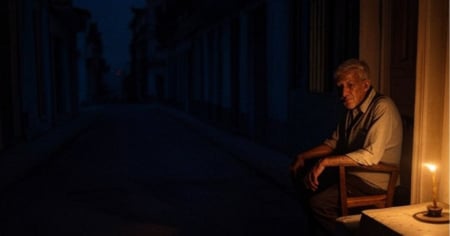
Cuban Alex Daniel shared a video on TikTok showing how he lights charcoal using plastic, due to the lack of electricity and fuel. "Well, family, today we had a total blackout in Cuba," he says in the recording.
In the video, recorded in Los Arabos, Matanzas province, the young man comments that he uses plastic because he has no access to gasoline or other types of fuel. “This is a total feat of Cuba… I wouldn’t say it’s just an instinct for survival… my people, yes, for survival because many people use it to cook and they have to light it this way,” explains @alex.daniel188 while showing how he ignites it.
He also mentioned that he always ends up burning his fingers when he tries to light the charcoal. "It’s worth mentioning, sir, that there's no time I light it without burning a finger. Literally, always. Every time I light it, I burn my fingers," he says at the end of his testimony, which he describes as a "mini blog."
Alex Daniel himself acknowledged in the comments that the situation is "very sad." Other users expressed their support and shared their geographical or emotional connection to the experience. One internet user commented: "Greetings and many blessings, I am from Los Arabos," to which the young man replied that he is also from that municipality in Matanzas.
A situation that repeats itself
Alex Daniel's testimony adds to other similar accounts recently shared on social media. In early April, a young woman identified as Sheyla demonstrated on TikTok how to light charcoal using a mixture of oil and gasoline due to the lack of liquefied gas. In her video, she highlighted that a liter of oil costs 350 pesos and gasoline 400, which forces many people to make do with paper, banana leaves, or any other available materials.
A few days later, another Cuban named Yisell, under the username @una.cubana.de.el, shared her routine after a blackout. With an ironic tone, she described how she wakes up with “raccoon eyes” and is forced to cook with charcoal, clean the pots filled with soot, and take care of her child in precarious conditions. “The truth is that it's pointless, because tomorrow they will be just as bad or perhaps worse,” she said while showing her blackened utensils.
Even official sources acknowledge the precariousness
In February, the state newspaper Girón published a photo report titled “Improvised Fire and a Cold Plate of Food”, showcasing images of people cooking with firewood or charcoal in yards and outdoors, without electricity or gas. Although the text aimed to highlight the “creativity” of Cubans, the images revealed the harshness of a reality that has drawn criticism on social media.
According to that report, many families have to wait for their brief electricity supply to cook or improvise stoves with bricks. There are also cases mentioned, such as that of a sick woman who has to use firewood due to the lack of liquefied gas.
The increase in the use of coal and firewood has led to a rise in prices. In provinces like Holguín and Las Tunas, a sack of coal can exceed 1,400 pesos, making it an unattainable resource for many families.
An island between blackouts and improvised stoves
The case of Alex Daniel, like those of Sheyla and Yisell and many others, illustrates a daily situation that stretches across the entire island. In the face of constant blackouts and fuel shortages, cooking has become an act of survival that demands ingenuity, sacrifice, and resilience.
Plastic, firewood, and other materials replace gas or electricity, but they pose risks to health, safety, and the environment. Meanwhile, most Cubans continue to adapt as best they can to a collapsed energy system.
Frequently Asked Questions about the Energy Crisis and Daily Survival in Cuba
Why do Cubans use plastic to light charcoal?
Cubans use plastic to ignite charcoal due to the lack of access to traditional fuels such as gasoline or liquefied gas. Faced with constant power outages and an energy crisis, they must resort to available materials for cooking and survival.
How does the energy crisis affect daily life in Cuba?
The energy crisis in Cuba significantly impacts daily life, forcing families to resort to rudimentary methods such as cooking with charcoal or firewood. This not only complicates food preparation but also endangers health and safety due to exposure to smoke and potential accidents.
What impact does the energy crisis have on the cost of living in Cuba?
The energy crisis has increased the cost of living in Cuba, due to the rising prices of alternative materials such as coal and firewood. These resources have become essential in the face of electricity and gas shortages, but are increasingly inaccessible to many families.
What risks are associated with the use of alternative cooking methods in Cuba?
The use of alternative methods such as plastic to ignite charcoal poses significant risks to health and the environment. Burning plastic releases toxic substances, while the use of firewood contributes to deforestation and air pollution, affecting the health of the population.
How has the Cuban government responded to the energy crisis?
The Cuban government has been criticized for its inability to provide effective solutions to the energy crisis. Although plans have been announced to increase solar energy generation, the reality is that conditions continue to deteriorate, and the population is facing increasing difficulties without clear answers from the regime.
Filed under: