
Related videos:
More than five months after the passage of Hurricane Oscar, the residents of the Boca de Miel community in Baracoa are still without a solution to the collapse of the wooden bridge that connects them to the rest of the city.
According to a report by Radio Baracoa on Facebook, the structure has been unusable since October of last year, and there has been no official response regarding its repair.
The bridge, located over the mouth of the Miel River, has been for decades the only direct access route between the coastal community and the Primada City of Cuba.
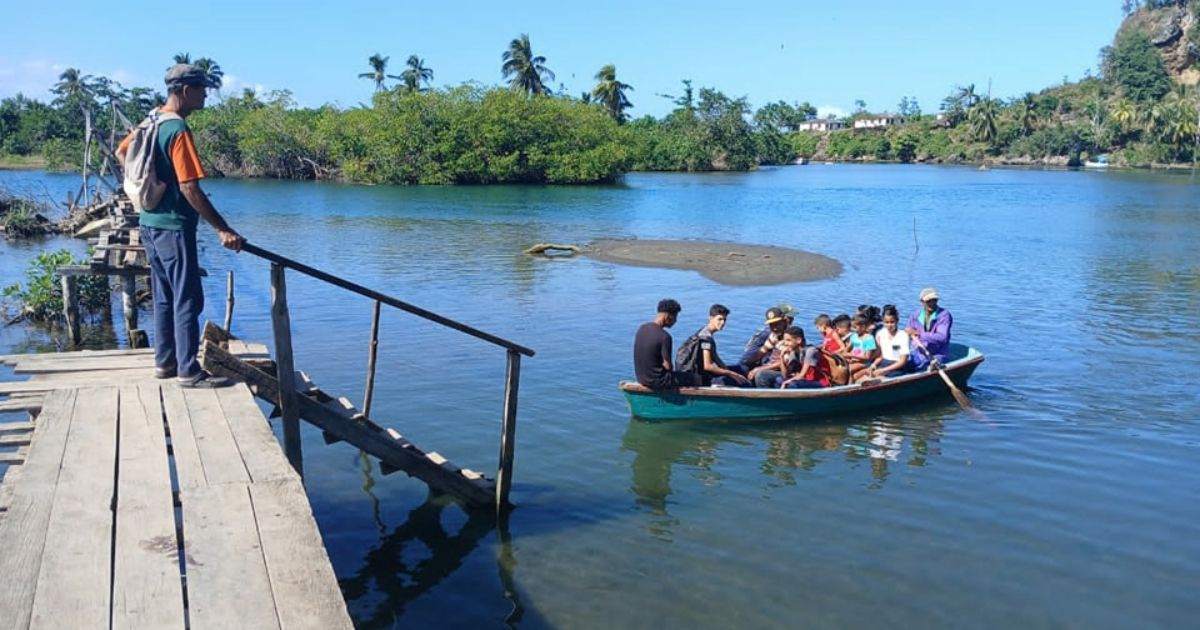
Its deterioration, caused by the impact of the hurricane, has forced the neighbors to rely on a cayuca (small boat) to cross from one shore to another, for a fee and within limited hours, as the boat only operates when its operator is available.
Neighbors consulted by the local media expressed that this situation affects not only their economy but also their daily mobility, access to medical services, work, education, and basic supplies.
"The schedule for the cayuco driver is limited, and if someone needs to pass outside of that time, they simply get stranded," they reported.
The wooden bridge had been restored several times before, but its current collapse has severed land access for more than 500 people, with authorities yet to provide a viable alternative or a reconstruction timeline.
The community of Boca de Miel remains in a state of forced isolation, while unfulfilled promises and institutional silence continue in one of the historically most vulnerable areas of eastern Cuba.
In the comments section of the social media post, several internet users shared their opinions and frustrations regarding the prolonged inaction of the authorities.
“That bridge is essential for the hundreds of people who pass over it daily,” wrote Daylen Lobaina, who lamented that the residents of Boca de Miel must walk several kilometers to reach their jobs or schools if they are unable to cross in the canoe.
In addition to questioning the lack of an official solution, he also denounced the unfair treatment of the cayuquero, who—he claims—is subjected to requirements such as life jackets and other demands “that he cannot acquire.” “But the authorities do not see that,” he concluded.
Fuentes Yula called for a lasting and not makeshift solution: “It needs to be fixed, but it should be something worthwhile, not just a temporary fix, because then they end up in the same situation again,” she warned.
He emphasized that the bridge not only serves the residents of Boca de Miel, but also those from five other communities, including workers, students, vendors, and visitors, who are severely impacted in their daily mobility.
"When it comes to the sick, a lot of effort is put in, and the situation becomes even more difficult outside the times when the cayuca passes," he explained.
Yunet Paján Giral also expressed regret over the condition of the bridge, calling it a disgrace: “It is a shame that the bridge is still in this state, especially since children, the elderly, and pregnant women pass through there.”
His greatest concern is the lack of response to emergencies: “When someone falls ill, they take away the little container at six in the evening, and they can’t go out at night because they are prohibited,” he reported.
"But for that situation, there are no resources... what a pity," she concluded with evident frustration.
The hurricane Oscar, which made landfall in eastern Cuba on October 20, 2024, caused widespread devastation to the road infrastructure in Guantánamo, leaving many areas isolated and inflicting severe damage to bridges and roads.
In an initial assessment, numerous isolated rural areas were reported, particularly in Baracoa, Imías, and Maisí, where intense rains and landslides hindered land access, worsening the humanitarian crisis in those regions. The hurricane swept away key sections of the road network, including national routes such as the Cantillo-La Tinta highway.
Few days after the impact, the authorities partially restored traffic between Guantánamo and Imías, albeit only via a temporary route, which allowed for the initiation of food distribution and essential donations.
The reopened passage facilitated access to the affected areas and reduced travel time from seven to two hours, easing the logistics of support for the impacted communities. However, circulation needed to be maintained with caution, as rehabilitation work would continue.
The seriousness of the situation led the Eastern Army of Cuba to deploy a tactical bridge of Russian origin in the section between Jesús Lores and Imías, capable of supporting vehicles weighing up to 12 tons.
This military structure, set up by engineering units, allowed for the restoration of connectivity in a vital area for mobility and transport, following the destruction of the previous bridge by the flooding of the Guajacal River. The installation of the temporary bridge was crucial for reactivating traffic and ensuring the continuity of supply in the region.
Frequently Asked Questions about the collapsed bridge in Baracoa and the situation following Hurricane Oscar
Why are the residents of Boca de Miel still cut off from communication?
The residents of Boca de Miel remain cut off because the wooden bridge connecting them to the rest of Baracoa collapsed after Hurricane Oscar hit over five months ago. Despite promises, the authorities have not provided a viable solution nor established a timeline for its repair.
How does the lack of the bridge affect the residents of Boca de Miel?
The lack of the bridge affects the daily mobility of the residents of Boca de Miel, limiting their access to medical services, work, education, and basic supplies. Currently, they depend on a small boat to cross the river, which involves additional costs and restricted schedules.
What other infrastructures were affected by Hurricane Oscar in eastern Cuba?
The hurricane Oscar caused severe damage to the road infrastructure in eastern Cuba. Several roads and bridges were destroyed, disrupting communication and transport in areas such as Imías and Maisí. Additionally, more than a thousand homes sustained significant damage in Baracoa and Maisí.
What is the current situation regarding electricity and connectivity in Baracoa?
The community of Baracoa continues to face serious electricity and connectivity issues. Many homes rely on makeshift setups, leading to low voltage and hindering the normal use of appliances. Furthermore, the lack of phone service and internet further complicates the daily lives of the residents.
Filed under: