
Related videos:
In Cuba, the glory of the stages and screens does not guarantee dignity in old age. Despite their contributions to national culture, many artists end their lives in conditions of extreme vulnerability, victims of an institutional system that forgets those who once elevated the art in the Island.
The case of the popular film and television actor Samuel Claxton, beloved by generations of Cubans, has reignited the debate about the lack of state support for its performers.
Claxton, 82 years old, has been facing a delicate health situation for some time, according to reports from colleagues and friends on social media.
He lives in the Alamar neighborhood, in East Havana (although he is not there at the moment), and his basic medical needs, such as urinary catheters and collection bags, are not being met by the institutions responsible for his well-being.
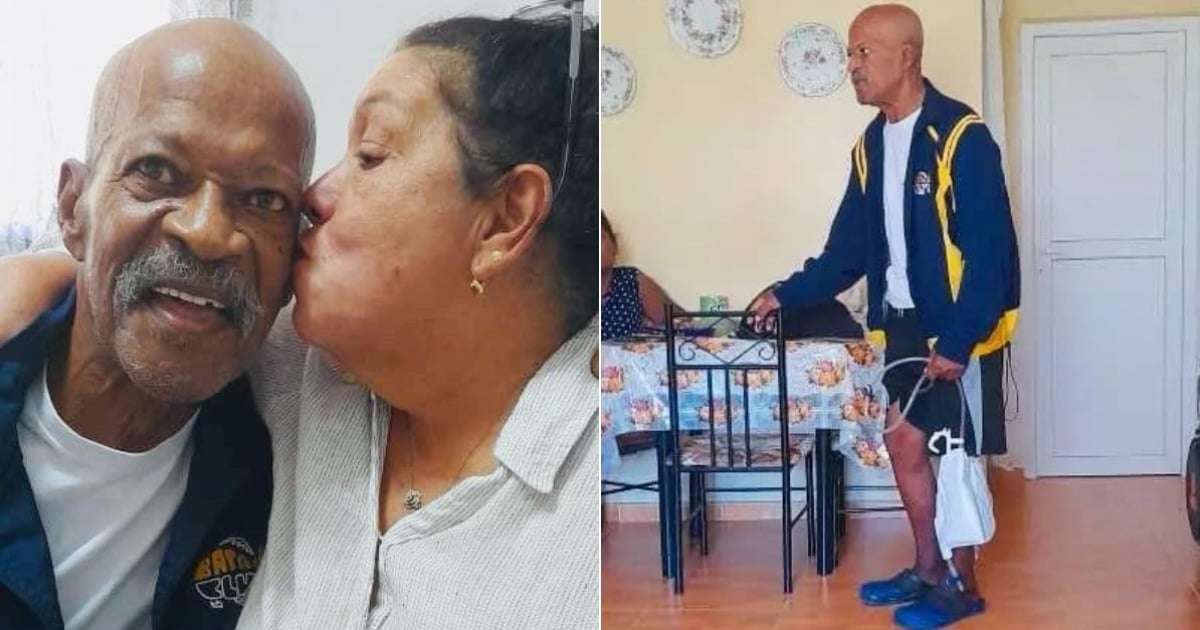
On Facebook, the platform Cubaactores shared photos taken from the account of Libia Batista, a casting director and key figure in the support network for Cuban actors, in which Samuel appears quite thin.
On her Instagram account (the Facebook post no longer exists), Libia recounts: "I had been thinking about this actor, Samuel Claxton, for days. I called him, but no one answered. Today, I went with Anita to Alamar, and when we arrived, he wasn't at home, how sad. We started to ask around and found out that his wife had taken him home since he shouldn't be climbing stairs."
"His joy was immense. He is unwell; we need catheters No. 16, 18, and 20, and bags for urine collection. This outstanding actor, with over 60 films to his credit and his usual charisma, we must help him. Please, any assistance can be reached at my phone number 52648942."
The actress Yaneisy Sánchez also publicly shared the details of the request, joining the call from Cubaactores and Libia Batista.
Anyone willing to donate can call the number 53164696.
The reports are clear and painful: artists who dedicated their lives to national theater, television, or cinema now rely on the solidarity of the community to survive.
"The minimum is that he should be able to have his bladder catheters and urine collector without having to ask," wrote an internet user in the post from Cubaactores.
That outcry summarizes the frustration over the systematic neglect by the Ministry of Culture and the Union of Writers and Artists of Cuba (UNEAC), entities that limit themselves to issuing posthumous tributes but are absent when their members need support the most.
Born in Camagüey in 1943, Samuel Claxton is a renowned actor with over five decades of experience in television, film, and theater.
One of his most beloved characters on television was Mantilla from the popular police series "Su propia guerra." In film, he starred in "En 3 y 2" and participated in titles such as "Los días del agua," "Retrato de Teresa," "Caravana," "Operación Fangio," and "La última cena."
In the theater, he/she performed in plays such as "María Antonia," "Some Men and Others," "Divine Words," and "Santa Camila of Old Havana."
The accusations are clear and painful: artists who dedicated their lives to theater, television, or national cinema now rely on the solidarity of citizens to survive.
"The least is that she should be able to have her urinary catheters and her urine collector without needing to ask," wrote an internet user in the post on Cubaactores.
That cry encapsulates the frustration of many regarding the systematic abandonment by the Ministry of Culture and the Union of Writers and Artists of Cuba (UNEAC), entities that limit themselves to issuing posthumous tributes but are absent when their members need assistance the most.
The case of Samuel Claxton is not an isolated one.
In January, the actor Lázaro Guillermo Gómez Jiménez passed away under deplorable conditions.
According to reports online, Gómez -who had lost a leg and suffered from serious health complications- was turned away from several hospitals. It was a passerby, Dr. Lázaro Daniel, who found him lying in the street and took him to Calixto García Hospital, where he ultimately passed away.
Indignation grew when it became known that, despite his prestigious career in theater and television, no institution stepped in to assist him.
Another name that has borne the weight of oblivion is actor Jorge Losada. In 2024, it became known that he needed a wheelchair to move around, but he could not afford to get one.
Luis Lacosta, art director of ICAIC, went to the Council of Performing Arts and UNEAC, but they told him they had none available. "Here, it's not easy at all, even with famous actors," he lamented.
Years earlier, Losada had already faced severe anemia and an alarming shortage of medications, prompting his loved ones to turn to social media for assistance.
These episodes are symptoms of an institutional decay that punishes with indifference those who have given their best for Cuban art.
Actors, musicians, and other creators grow old in anonymity, often without access to a decent pension, medications, or a state network that ensures basic care.
Publications that denounce these events also face restrictions on digital platforms, forcing those who want to help to resort to informal channels to provide assistance.
The Cuba that once applauded these figures now leaves them in the shadows. The official narrative of culture as a "pillar of the Revolution" sharply contrasts with the real neglect faced by its protagonists when they are no longer in the spotlight.
While institutions remain silent, popular solidarity—the kind that doesn't require decrees or applause—continues to be the only lifeline for Cuban artists in their old age. But it shouldn't be this way.
Honoring those who built the cultural heritage of a country cannot depend on the goodwill of citizens. A serious, sustained, and sensitive public policy is required, one that adequately rewards those who dedicated their lives to art and today plead not to be forgotten.
Frequently Asked Questions about the Situation of Artists in Cuba
What is the current situation of retired artists in Cuba?
Retired artists in Cuba face neglect and a lack of state support, despite their contributions to the national culture. Many end up in conditions of extreme vulnerability, without access to basic care or a decent pension.
Why does the case of actor Samuel Claxton generate so much debate?
The case of Samuel Claxton has sparked debate because, despite his recognized career, he is facing serious health issues without the necessary institutional support. The lack of supply for basic medical supplies has reignited criticism of the Cuban government for its neglect of retired artists.
How does the Cuban government respond to the needs of its veteran artists?
The Cuban government has faced widespread criticism for its inaction and lack of effective response to the needs of veteran artists. Cultural entities often limit themselves to posthumous tributes without providing real support when it is most needed.
What recent examples reflect the abandonment of artists in Cuba?
Recent examples include the case of Lázaro Guillermo Gómez, who passed away under deplorable conditions, and Jorge Losada, who needed a wheelchair that he could not obtain due to lack of state support. These cases highlight a pattern of neglect and disregard for those who dedicated their lives to Cuban art.
Filed under: