
Related videos:
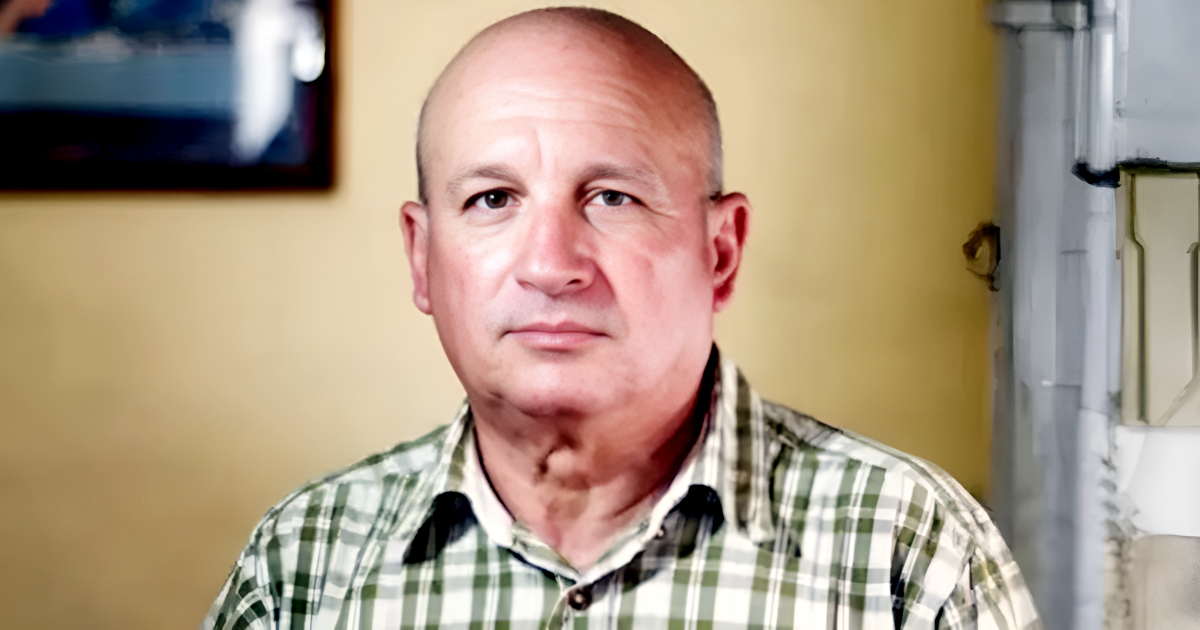
The historic Cuban opposition figure Félix Navarro was arrested this Tuesday, just three months after having been conditionally released as part of an agreement negotiated between Havana, Washington, and mediated by the Vatican.
The arrest took place following a significant police presence at his home in Perico, Matanzas province, according to reports from family members and human rights organizations.
Since dawn, State Security agents have surrounded Navarro's home, interrupted his Internet service — as well as that of other activists — and at six in the morning, three police officers, unknown to the family, entered the residence and took him away to an unknown destination.
The activist Iván Hernández Carrillo, who shared the events on the social network X, highlighted the violence of the operation and the lack of official information regarding Navarro's whereabouts. "Enough of repression," demanded the Cuban American National Foundation (FNCA), which condemned the new wave of harassment against dissidents.
The official argument: revocation due to "non-compliance"
According to the official media Razones de Cuba, the revocation of Navarro's probation was based on alleged "repeated violations" of the obligations imposed by the court following his release on January 18, 2025.
According to the Vice President of the Supreme People's Court, Maricela Sosa Ravelo, Navarro —who is serving a sentence of 9 years for alleged offenses of public disorder, contempt, and assault— would have left his municipality on seven occasions without the proper judicial authorization, thus violating Article 135 of the Regulations of the Penal Enforcement Law.
On this basis, the Third Chamber of the Provincial People's Court of Matanzas ordered his reentry into prison to serve the remainder of his sentence: five years and two months.
At the same time, the courts also revoked the parole of opposition leader José Daniel Ferrer, who was detained in Santiago de Cuba under similar reasons.
Repressive context: more than a "non-compliance"
The arrest of Navarro cannot be understood in isolation. Félix Navarro, 72, is one of the most emblematic figures of peaceful dissent in Cuba. He was one of the members of the Group of 75 imprisoned during the Black Spring of 2003, and since his initial release in 2011, he has continued his work denouncing human rights violations on the island.
In the months following his release this year, Navarro resumed his activities as the coordinator of the Party for Democracy Pedro Luis Boitel, supporting the families of political prisoners and denouncing the abuses committed against opponents. These humanitarian and civic actions once again made him an inconvenient target for the regime's repressive apparatus.
The constant surveillance, the systematic interruption of Internet access, and the criminalization of activism reflect a clear pattern: the Cuban state continues to regard peaceful dissent as a threat that must be neutralized, even at the cost of undermining its own legally recognized guarantees.
Assessment of Judicial Arguments
Although the regime invokes Article 146.1 of the Criminal Enforcement Law to justify the revocations, it is essential to remember that both Félix Navarro and José Daniel Ferrer had already completed their primary sentences, as highlighted in a previous report by CiberCuba in December 2024 regarding the Ferrer case.
The supposed "parole" functioned as an instrument of extended surveillance, rather than a genuine measure for reintegration or respect for the rights of the sanctioned. In this context, using bureaucratic formalities to re-imprison dissidents reveals a deep lack of judicial guarantees and the manipulation of the law for political purposes.
The fact that the official site itself mentions the social and diplomatic connections of those detained—while noting that they "do not form part of the process"—demonstrates an underlying political motivation that the regime can hardly hide.
A legal tightrope stretched over the dissidents
The new arrest of Félix Navarro confirms the lack of genuine willingness of the Cuban regime to respect the civil and political rights of its citizens.
In Cuba, the "probation period" of parole is not a mechanism of justice, but a legal tightrope stretched over dissenters to suppress them at the slightest pretext.
Navarro, whose life has been dedicated to the defense of human rights, is suffering today—once again—the consequences of a judicial system that does not protect the citizen but serves those in power.
Concern over Navarro's delicate health condition
Navarro's detention has raised a wave of concern regarding both his legal situation and his fragile health. At 72 years old, Navarro suffers from diabetes and has faced multiple health complications during his incarceration.
In September 2023, his daughter, the Lady in White Sayli Navarro, reported that her father had fainted in prison due to the worsening of his diabetic condition. Furthermore, in November 2022, family members alerted about the lack of adequate medical care and the shortage of essential medications for his treatment.
These conditions have been described by human rights organizations as inhumane and contrary to international standards for the treatment of prisoners
The revocation of his parole and his re-entry into prison not only represent a questionable legal action but also put his life at serious risk, given his fragile health and the previously reported prison conditions.
The international community and human rights organizations have expressed their concern and urged the Cuban regime to ensure Navarro's physical integrity and wellbeing.
Filed under: