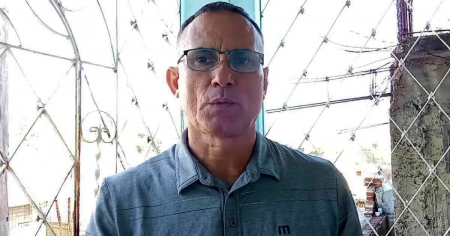
The authorities of the Cuban regime arrested the well-known dissident and opposition leader José Daniel Ferrer, founder of the Patriotic Union of Cuba (UNPACU), this Tuesday after his parole, granted only three months ago as part of a negotiated agreement between the Vatican and the U.S. government, was revoked.
According to the agency Reuters, the vice president of the Supreme People's Tribunal, Maricela Sosa, stated that the leader of UNPACU failed to comply with the conditions of his release by not attending two mandatory court hearings, which she asserted constitutes a violation of Cuban legislation.
The arrest took place during a security forces operation at the UNPACU headquarters, located in the Altamira neighborhood of Santiago de Cuba.
This was reported on social media by Ana Belkis Ferrer, sister of the opposition figure, who claimed that the house was “completely looted” and that the wife of Ferrer, Nelva Ismaray Ortega Tamayo; his youngest son, Daniel José; and activists Roilán Zárraga Ferrer and Fernando González Vaillant were also arrested. According to the report, all were taken to an unknown location.
"Miserable and cowardly criminal tyrants! We demand your immediate release and that of all political detainees and prisoners," wrote Ana Belkis on her brother's X account (formerly Twitter), along with the hashtag #SOSCuba.
José Daniel Ferrer, 54 years old, has been one of the most vocal critics of the Cuban regime for the past two decades and has faced multiple arrests and convictions for his political activism.
At the end of April, in a new episode of its smear campaign against the political opposition, the regime targeted the Ferrer García family and the opposition leader Rosa María Payá regarding the consultation and change initiatives promoted by the platform Cuba Decide.
In an article published in the newspaper Granma, the official organ of the Communist Party, titled "Counterrevolutionary activists demand double blockade against Cuba," the text labelled both opponents as "mercenaries" and accused them of urging the European Union to uphold the economic sanctions against the Island.
After his release from prison, the opposition figure has continued to denounce the dictatorship on his social media and has intensified his humanitarian efforts in light of the structural crisis of the Cuban regime, which is exponentially increasing the number of people in extreme poverty and vulnerability.
Precisely, this humanitarian aspect of the activist has kept the regime's repressors busy, who from the very beginning monitored and surrounded the UNPACU headquarters in an attempt to cut off the flow of people who come there daily to secure a meal for the day, or attend to their health and medication needs.
The respect and popularity of Ferrer García's humanitarian efforts have added to the concerns of the repressive system of the dictatorship, which has done everything possible to halt the social work of UNPACU, ranging from arrests of collaborators to pressures and threats directed at the recipients of aid.
Al momento de redactar esta nota, el régimen cubano no ha emitido un comunicado oficial sobre el paradero de los detenidos ni sobre las condiciones actuales de Ferrer García y sus familiares.
Human rights organizations have begun to demand explanations and are warning about the increase in repression on the island.
Filed under: