
Related videos:
The organization Bienestar Animal Cuba (BAC), in its Havana chapter, reported on Tuesday the illegal sale of an injured ocelot, which was offered as if it were a common commodity in a WhatsApp group.
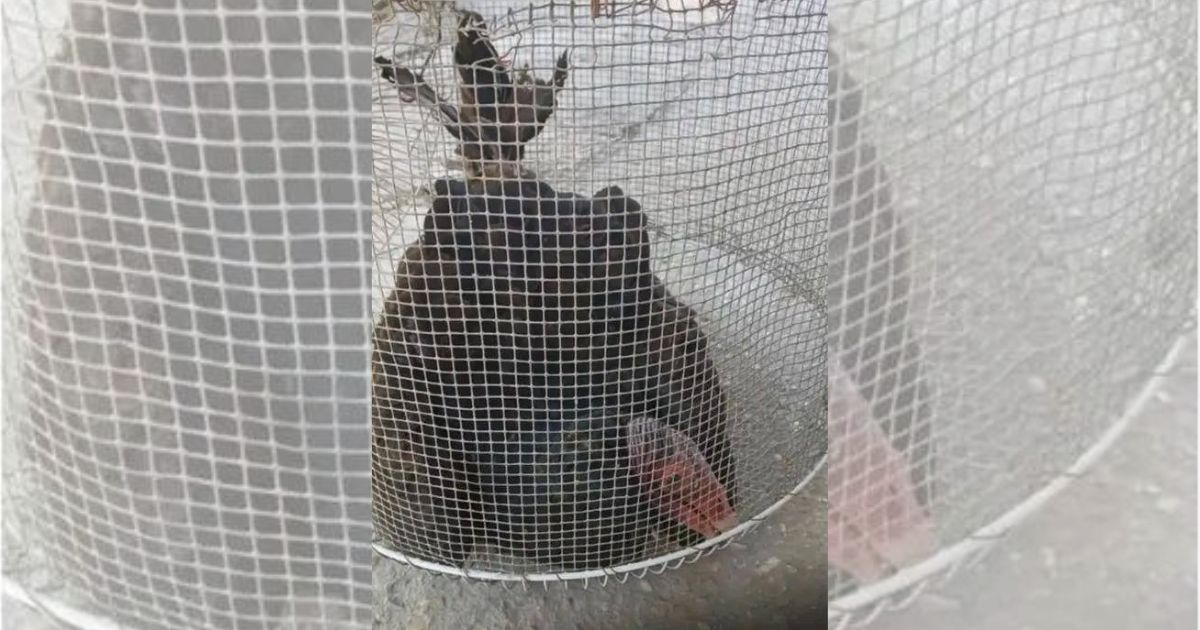
According to a post by BAC-Habana on their Facebook page, the protector Avril Gutiérrez detected on April 30, 2025, at 16:10, an advertisement in the group “Compra y Venta Güinera,” where a user identified as Mirelsy was offering a bird, a wild species known as Cathartes aura, confined in a cage and in a state of evident mistreatment.
BAC-Habana warned that the sale was conducted while ignoring the bird's vulnerability, the legal implications, and the fact that this species cannot survive in captivity.
"Without freedom to fly or its natural diet, it will die in hours," they warned in their publication.
The organization recalled that, according to Decree-Law 31/2021 on Animal Welfare and its regulations (Decree 38/2021), subjecting an animal to mistreatment or depriving it of its freedom constitutes a very serious offense, punishable by fines, confiscation, and suspension of animal ownership.
Additionally, Law 81/1997 on the Environment expressly prohibits the trafficking of wildlife in Cuba.
In response to the incident, BAC-Habana urged citizens to report the matter to the PNR, send evidence via email, share the alert on social media, and contact Animal Health to demand action.
“We demand the immediate release of the bird and exemplary sanctions for those responsible,” concludes the organization's statement.
Finally, he reminded that the defense of animals in Cuba still largely depends on the independent actions of citizens and protectors, given an institutional system that lacks effective and transparent mechanisms for real protection.
In April, a social media post showing an owl that was captured and put up for sale in Havana generated outrage and condemnation among internet users and animal advocates.
The incident occurred this Tuesday when a user identified as Marlon Enmanuel Fernández shared a reel in the Facebook group “Alamar el barrio,” where the bird can be seen confined inside a metal bucket, covered with a wooden board.
Recently, the organization Protección Animal SOS – PASOS reported through its social media account the death of an owl that was rescued after being illegally offered for sale on a page of the same social network.
The bird, allegedly captured for religious purposes, was purchased by activists from the group for 5,000 Cuban pesos, after the initial price of 10,000 was successfully negotiated down, emphasized the organization on Facebook.
Although the Cuban regime issued the Animal Welfare Decree Law in 2021, the frequent complaints from citizens highlight its limited effectiveness in practice.
Specifically, Article 58, paragraph h) states that it is an offense to "market, transport, possess, capture, breed, and any other action involving the management of animals that violates the current regulations."
Furthermore, Article 83 states that the control of wildlife populations may be carried out for justified health reasons, such as the excessive growth of individuals of a species, the presence of invasive species or pests, and diseases.
However, the sacrifice of these invasive species requires authorization from the competent authorities and must be carried out quickly and compassionately.
The 2021 Animal Welfare Decree-Law in Cuba establishes strict regulations regarding the trade of live animals, including invasive species. According to this law, individuals engaged in the trade of animals must hold the necessary licenses and authorizations in accordance with current legislation.
Individuals who commit these violations may face fines of up to 1,000 pesos, which would be imposed by the competent authorities.
One of the most criticized aspects by activists is the lack of severity regarding crimes that affect animals, including invasive species.
Frequently asked questions about the illegal sale of wildlife and animal abuse in Cuba
What is the legal situation of wildlife trafficking in Cuba?
The trafficking of wildlife is prohibited in Cuba according to Law 81/1997 on the Environment. Additionally, Decree-Law 31/2021 on Animal Welfare penalizes mistreatment and confinement of animals, which includes the illegal sale of species such as the aura tiñosa. However, the enforcement of these laws is weak, allowing these practices to continue.
What measures are being taken to combat animal abuse in Cuba?
Organizations such as Bienestar Animal Cuba (BAC) and Protección Animal SOS (PASOS) report cases of abuse and wildlife trafficking, urging the public to report these activities to the authorities. However, they highlight the lack of effective enforcement of the Animal Welfare Law of 2021, which allows these practices to continue with impunity. Activists have called for harsher penalties and the revision of laws to effectively protect animals.
What impact does the illegal wildlife trade have on Cuba's wild species?
Illegal wildlife trafficking jeopardizes the survival of wild species and contributes to animal cruelty, as many of these species cannot survive in captivity. Furthermore, these practices impact the country's biodiversity and reflect a lack of effective regulation to protect the environment and local wildlife.
How can Cuban citizens help prevent animal abuse and wildlife trafficking?
Citizens can collaborate by reporting any act of mistreatment or wildlife trafficking to the relevant authorities, such as the National Revolutionary Police (PNR) and Animal Health. They can also share alerts on social media and participate in awareness campaigns organized by animal protection groups to demand compliance with current laws and promote a cultural shift towards respect for animals.
Filed under: