
Related videos:
Cuban authorities seized a clandestine warehouse in the municipality of Bauta, where food products and merchandise allegedly introduced illegally were being stored.
A post on Facebook from the official profile "Angerona de Cuba" indicates that the operation was carried out as a result of multiple citizen complaints regarding excessive prices in the area, and allowed authorities to conduct a search at a residence where a network of alleged illicit economic activity was found.
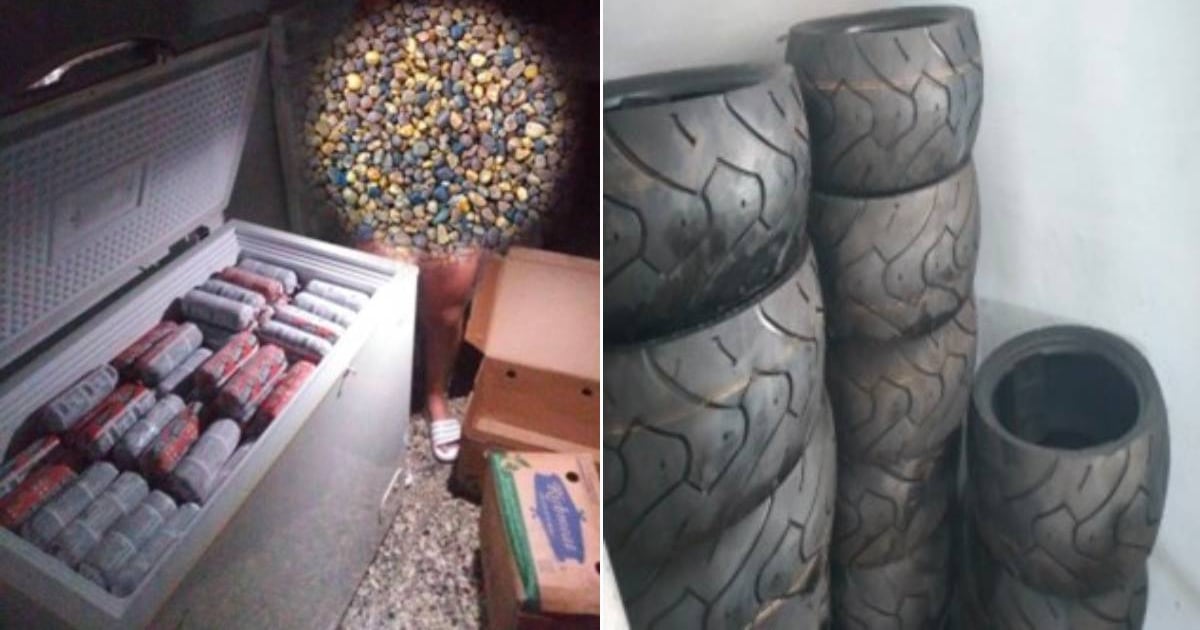
Agents of the Ministry of the Interior (MININT) seized large quantities of sausages and chicken during the operation, both products being in a semi-processed state and stored without the necessary health certification.
They also found 50 tires for electric motorcycles, which are believed to have entered the country through illegal means, the report details.
Additionally, documentation and evidence of illegal resale of the products at prices significantly above those established.
The authorities reported that a total seizure of the products was carried out and a comprehensive investigation was initiated to determine the exact origin of the merchandise and to identify possible accomplices or distribution networks.
A citizen involved was arrested and transferred for allegedly engaging in illicit economic activity.
Last week, the Cuban Prime Minister, Manuel Marrero Cruz, lashed out at the disorganization in the non-state sector, abusive pricing, and the lack of oversight in government management, threatening to confiscate products sold at inflated prices on the island.
However, the regime does not acknowledge its responsibility for the inflation affecting Cubans, resulting from the failed economic policies implemented.
Frequently Asked Questions about Smuggling and the Food Crisis in Cuba
What was discovered in the clandestine warehouse in Bauta?
The Cuban authorities seized a clandestine warehouse in Bauta that contained food products and merchandise, including large quantities of sausages, chicken, and 50 tires for electric motorcycles, allegedly introduced illegally. These products were confiscated due to the lack of sanitary certification and suspicion of smuggling.
How does food smuggling impact the economic situation in Cuba?
The smuggling of food reflects the profound economic crisis that Cuba is experiencing, where the scarcity of basic products forces many to resort to the black market. This illegal activity generates inflation and price speculation, further complicating access to food for the population.
What actions is the Cuban government taking against smuggling and corruption?
The Cuban government has intensified operations and seizures to combat smuggling and corruption, detaining individuals involved and confiscating illegal products. However, these measures are criticized for not addressing the structural causes of the crisis, such as mismanagement and a lack of adequate production.
Why is there so much corruption in the food sector in Cuba?
Corruption in the Cuban food sector is a reflection of failed economic policies and the inefficiency of the state system, which leads to shortages and forces many people to resort to illegal practices to meet their basic needs. The lack of control and transparency also fuels corruption.
Filed under: