
Related videos:
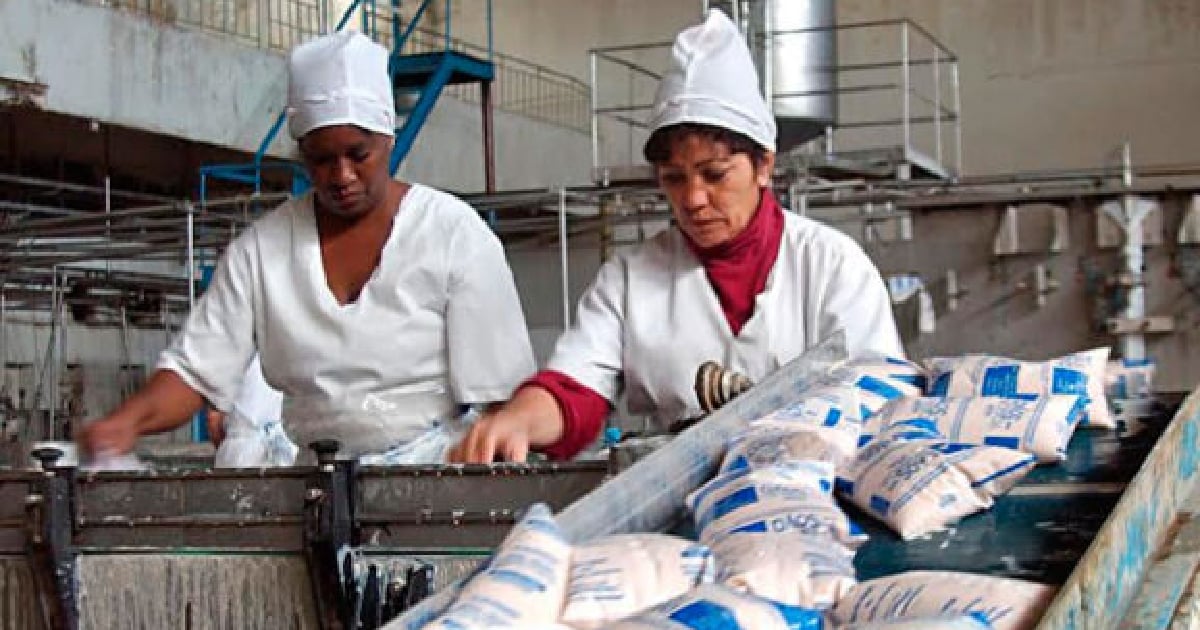
The Cuban industry showcased in 2024 the lowest production values in the last 40 years, according to economist Pedro Monreal's analysis published on social media.
The prominent researcher points out that in seven activities with a significant impact on citizen well-being, last year's production was lower than that of 40 years ago and even fell below the levels of the special period.
To support these claims, the expert analyzed the production sectors of wheat flour, feed, steel bars, bread, fertilizers, rice, and gray cement, based on the data reported by the National Office of Statistics and Information (ONEI).
In all cases, there was a significant decline, mainly in the production of steel bars and fertilizers, where levels are at zero.
He confirms the worsening of the "deindustrialization of Cuba in the post-ordering era," wrote Monreal.
This is a crisis that has never been overcome, stemming from the "breakdown of the Soviet-era integration model", the "decapitalization of the sector," and the "technological obsolescence" of a significant portion of the industrial plant.
On the other hand, he pointed out that there is no "credible program" for reindustrialization, highlighting a deep void in economic policy.
"The industry doesn't even have anything resembling the 'fig leaf' of the 63 (ineffective) measures for agriculture," he argued.
Meanwhile, the regime continues to bet on the recovery of tourism, which it insists on calling the "locomotive" of the economy, and focuses its efforts on building and remodeling hotels.
The Minister of Tourism of Cuba, Juan Carlos García Granda, expressed his optimism regarding the recovery of the sector during the 2025-2026 winter season, despite the significant 29.7% drop in the arrival of international visitors recorded in the first quarter of the year.
During statements to the press following the closing of the International Tourism Fair (FITCuba) 2025 at the Cabaret Tropicana, he stated that the fair "exceeded expectations" not only in terms of organization but also due to the participation of over 1,500 foreign professionals and 2,573 nationals, including representatives from both the state and non-state sectors.
The minister highlighted the positive comments from tour operators regarding the quality of the service provided during the previous winter season and stated that the measures taken, such as financing for suppliers and greater business autonomy, will enhance the sector's performance in preparation for the winter of 2025-2026.
"These actions are part of a path that is already yielding results," he affirmed, while also defending the inclusion of mechanisms such as the leasing of hotel facilities and a regulatory restructuring to promote foreign investment and competitiveness.
The perception of FITCuba as a successful showcase contrasts with the experience of many visitors who face high prices, a lack of services, and a limited range of offerings.
Frequently Asked Questions about the Economic and Industrial Crisis in Cuba
Why does the Cuban industry show the lowest production levels in 40 years?
The Cuban industry is facing severe deindustrialization in the post-ordering era, with production levels in 2024 lower than they were 40 years ago and even below those of the special period. The causes include the fracture of the Soviet insertion model, the capital depletion of the sector, and technological obsolescence. Without a credible program for reindustrialization, the crisis worsens.
How does investment policy in tourism affect other sectors in Cuba?
Massive investment in tourism has neglected essential sectors such as health and agriculture. Despite accounting for nearly 40% of investments, tourism has not achieved its goals, raising questions about the sustainability of this policy. This has exacerbated economic dependence on a vulnerable sector while critical areas for social well-being are being overlooked.
What criticisms has the Cuban government received for its approach to tourism?
The government has been criticized for prioritizing tourism at the expense of vital sectors for the country's development. Economist Pedro Monreal emphasizes that this policy has absorbed resources that could have been allocated to food security and infrastructure. Despite the investments, tourism has not managed to offset the decline in other sectors, calling into question its role as the "engine" of the economy.
What is the impact of the energy crisis on the Cuban economy?
The energy crisis has severely affected both the economy and daily life in Cuba. The shortage of fuel and the deteriorated electrical infrastructure have resulted in prolonged blackouts, impacting industrial production and quality of life. Blackouts have restricted essential services such as health and education, exacerbating the country's economic crisis.
Filed under: