
Related videos:
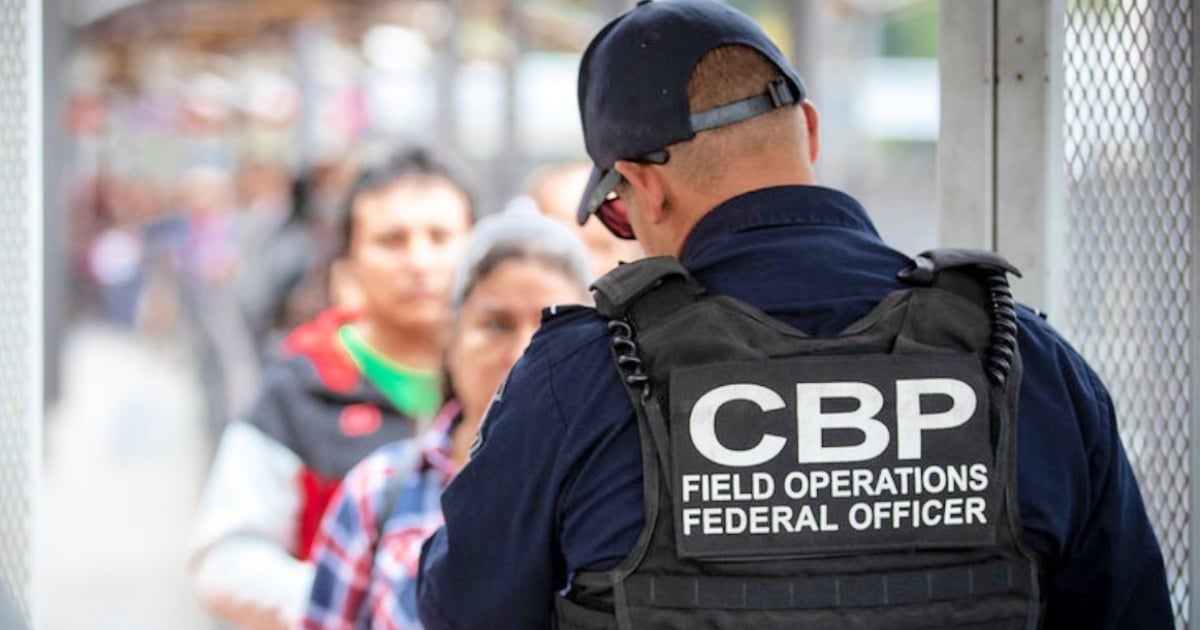
Thousands of people who entered the United States through the CBP One application, designed to manage the flow of individuals at the southern border, are receiving notifications from the federal government informing them of the imminent revocation of their work permits.
The mass cancellation of work authorizations issued through the CBP One program hits migrants hard, especially Cubans who arrived with parole and were hoping for a safe pathway to settle in the country.
One of the affected individuals, a Cuban mother who requested anonymity, stated that after receiving permission, she started working to pay her taxes and support her young son.
Now, faced with the order to leave the country, he is confronted with the possibility of returning to a Cuba that he describes as unlivable for his family.
"I can't imagine my child's future there. I hope that the government understands that not all of us are criminals and that, in reality, we came to contribute to this country," she said to Telemundo 51.
Immigration lawyers report an increase in urgent inquiries from migrants who have received emails from the Department of Homeland Security demanding that they leave the country voluntarily, using the same CBP app—now rebranded as CBP Home—to manage their departure.
In many of these cases, if the person does not provide proof of valid immigration status within 15 days, their permit will be automatically revoked.
Lawyer Liudmila A. Marcelo explained that "they canceled this type of parole under which those individuals received their permits, and as it is no longer in effect, the associated work permit also loses its legal validity."
Although there are mechanisms to request new authorizations—such as political asylum or Cuban adjustment—these all require long waiting periods and strict documentation.
One of the biggest concerns is that working without a valid permit could negatively impact any future immigration processes.
"The government said that this will also make him ineligible for status adjustment. Previously, this was not taken into account, but it has now been announced that it will be considered. Therefore, working without permission could be a disadvantage for him," Marcelo warned.
The measure has had a particular impact on Cuban migrants, who historically benefited from special laws that facilitated their integration into the country. But as the interviewed mother admits, "now we are all in the same boat; despite the fact that there is a dictatorship in Cuba, we are in the same situation and share the same fear."
Experts urge migrants to seek immediate legal advice, as each case is different and there are various avenues to maintain their status in the country. A key warning is that under no circumstances should they provide false information during the processes.
Many will be left without jobs. This has serious consequences in their lives, not only due to the loss of income but also because of the issues it may cause with residency processes in the United States.
In the case of Cubans, working without a valid permit does not prevent them from benefiting from the Cuban Adjustment Act, as long as they meet the established requirements. It is emphasized that this situation should not be taken lightly, as the consequences of not acting in a timely manner could include deportation.
The CBP One program, created by the Biden administration to allow for more controlled and legal entry through the southern border, was one of the targets of Trump's new immigration policy.
In the early months of 2025, the federal government began dismantling this pathway, citing national security concerns and claiming that the majority of beneficiaries did not meet the required criteria for parole.
A court ruling in mid-April temporarily halted the elimination of humanitarian parole for those who entered by air with sponsors. However, migrants who arrived through CBP One were not included in that suspension.
"In one way or another, these people will end up without permission..." the lawyer reported.
Various aid organizations and immigration advocacy groups have issued an urgent call to seek legal representation and to avoid making hasty decisions.
Marcelo clarified to those awaiting the court's response to their cases that if they decide to return to their country of origin, they should request their departure from the judge, not from ICE. "If they do not appear on the day of their appointment, they will receive a deportation order in absentia that will later be nearly impossible to reverse."
The revocation of work permits for immigrants with CBP One has caused distress, uncertainty, and a feeling of helplessness among those who relied on this pathway to regularize their status.
Hundreds of families, many with small children, live each day with the fear of receiving the final notification that will determine their expulsion from the country.
The American dream, for them, is fading away among the cracks of an increasingly restrictive immigration policy.
Frequently Asked Questions about the Revocation of Work Permits for Cubans with CBP One
Why are the work permits granted through CBP One being revoked?
The revocation of work permits is due to the cancellation of the parole status under which these permits were issued. The current administration has raised national security concerns and argued that many beneficiaries do not meet the criteria for parole, resulting in the revocation of these permits.
What can Cubans affected by the revocation of work permits by CBP One do?
The affected individuals must seek immediate legal advice as each case is different and there are various ways to maintain their status in the country, such as applying for political asylum or benefiting from the Cuban Adjustment Act, as long as they meet the requirements. It is crucial not to falsify information in immigration procedures.
What are the consequences of working without a valid permit in the United States?
Working without a valid permit can negatively impact any future immigration proceedings. The government has indicated that this will be taken into consideration when evaluating status adjustment requests. Additionally, it could result in fines, civil penalties, and criminal proceedings.
How does the revocation of humanitarian parole affect Cubans in the United States?
The revocation of humanitarian parole leaves many Cubans in a legal and economic limbo. Although they can rely on the Cuban Adjustment Act, they face long waiting periods and strict requirements, creating uncertainty and fear of deportation.
What should a migrant do if they receive a notification of revocation of their work permit?
It is crucial that the migrant does not make hasty decisions and seeks legal representation immediately. Each case is unique, and an attorney can help explore the available options to maintain legal status in the country. Additionally, it is advisable not to provide false information in the procedures.
Filed under: