The Cuban regime claims to have a special gift ready for Cuban mothers this Sunday, May 11: the reintegration of the Antonio Guiteras Thermoelectric Power Plant into the national electrical grid. However, this is contingent on everything going well and the plant successfully completing its latest maintenance without issues.
La Guiteras, located in Matanzas, has been taken out of the National Electro-Energy System (SEN) this Monday for scheduled maintenance that involves more than 600 technical actions.
According to the management team’s statement to the official newspaper Girón, the plant, regarded as the largest unit block in the country, is expected to resume electricity generation on Mother's Day Sunday.
The regime sells this operation as a sort of technical tribute to Cuban mothers, many of whom will experience that day under blackouts, scarcity, and hardship.
Rubén Campos Olmo, general director of CTE, stated that the unit required an urgent cleaning of the regenerative air heaters (CAR) and a thorough inspection of the boiler, as they were operating at high pressures in the furnace that compromised the safety of the system.
The technical director, Román Pérez Castañeda, detailed that the most complex work focuses on the boiler, where a leaking reheater will be replaced, the furnace will be cleaned, and key components such as the CAR basket will be replaced.
Additionally, the vapor condenser will be completely replaced, a historic operation since the plant's founding, the state newspaper reported.
The intervention also includes electrical work on a severely corroded structure that supports the starting line.
All of this will require continuous shifts of more than 12 hours, divided into two shifts, with around 600 people involved, mainly from the Electric Power Plant Maintenance Company (EMCE).
Despite everything, the authorities are confident that the thermoelectric plant will be back on Sunday, May 11, which coincides with the Mother's Day celebrations in Cuba, an initiative that, like so many other official promises, depends on the old Guiteras holding up once again.
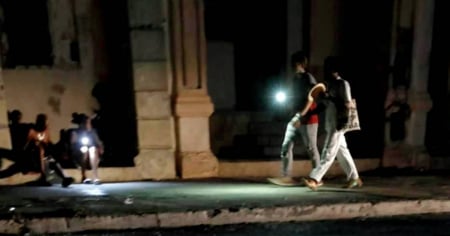
Meanwhile, the blackouts in Cuba continue relentlessly: this Monday the country's energy deficit reached a peak of 1,730 MW at 9:50 PM, according to the Electric Union (UNE), which caused disruptions throughout the 24 hours of the day and extended into the early hours of Tuesday.
The deficit was exacerbated by the unexpected shutdown of unit 3 at the Cienfuegos Thermal Power Plant (CTE), which, combined with the planned shutdown of the Guiteras Power Plant in Matanzas, pushed the figures above projections and caused an even more severe collapse of the National Electric System (SEN).
Frequently Asked Questions about the Antonio Guiteras Thermoelectric Power Plant and the Energy Crisis in Cuba
What role does the Antonio Guiteras Thermal Power Plant play in the Cuban electrical system?
The Antonio Guiteras Thermoelectric Power Plant is considered the largest electricity generator in Cuba, playing a vital role in the supply of electricity in the western region of the country. Its operation is crucial to alleviate the severe energy crisis that Cuba faces, especially during times of prolonged blackouts and collapses of the National Electric System (SEN).
Why does the Antonio Guiteras Thermal Power Plant require frequent maintenance?
The plant has been in operation for over 37 years, significantly beyond its estimated lifespan of 30 years, which has led to considerable wear on its equipment and structures. Frequent maintenance is necessary due to the deterioration of the infrastructure and ongoing technical issues, especially with the boiler, which has caused multiple disconnections from the SEN and limits its generation capacity.
What are the main problems facing the Cuban electrical system?
The Cuban electrical system faces serious problems due to outdated infrastructure and lack of investment. Generating plants, such as the Antonio Guiteras, require constant maintenance, and there is a significant dependence on fossil fuels. Frequent breakdowns and resource shortages have led to prolonged blackouts and a persistent energy crisis in the country.
How has the energy crisis impacted the daily lives of Cubans?
The energy crisis has significantly affected the daily life of Cubans, with blackouts lasting up to 20 hours a day. The lack of electricity interrupts economic activities, impacts essential services, and generates strong discontent among the population, which is voicing its frustration over the absence of concrete solutions from the government.
What measures has the Cuban government taken to address the energy crisis?
The government has attempted to justify the crisis with "technical problems" and has mentioned efforts to increase the contribution of renewable energy. However, the measures have been insufficient and the situation highlights the deterioration of the energy system, with aging plants and a lack of adequate investment to modernize the infrastructure. The response has been slow and has been unable to provide a stable solution, either in the short term or the long term.
Filed under: