The High Representative of the European Union for Foreign Affairs and Security, Kaja Kallas, defended this Tuesday in the European Parliament the continuation of the political dialogue and cooperation agreement with the Cuban regime, despite reports of human rights violations and calls for its suspension.
During a debate held on May 6 in Strasbourg, Kallas dismissed the arguments of conservative and far-right MEPs advocating for the activation of the safeguard clause of the agreement in place since 2016. “We didn't have the agreement before 2016 and there was no democracy then either. So it doesn't matter whether there is an agreement or not,” she stated.
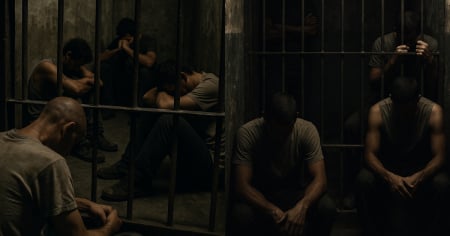
Kallas stated that the agreement does not, by itself, guarantee a democratic change on the island, but it provides a necessary framework for dialogue to address sensitive issues such as the situation of political prisoners. Referring to the imprisoned opponents, José Daniel Ferrer and Félix Navarro, he questioned: “Will suspending the agreement free Daniel Ferrer and Félix Navarro? I think we all know the answer.”
The head of European diplomacy also questioned whether the Union can limit its interactions to only established democracies: “Do we have the possibility to engage only with perfect democracies? Well, we do not. And that is precisely why we have these dialogues, to talk about those very difficult issues.”
In response to accusations regarding alleged funding to the Cuban government, Kallas stated: “We do not support the regime. We are not channeling our funds through the Cuban government. We have partners in Cuba, European projects with United Nations agencies and NGOs. What we support is the ecological transition and the modernization of the economy.”
Kallas's statements came amid growing pressure from Cuban civil society and members of the European Parliament to suspend the agreement with Havana.
On May 4th, independent feminist groups requested the EU to activate the suspension clause of the agreement. In a public letter, they stated: “The country is dying and languishing,” and pointed out that “the Cuban government has just revoked the extrapenal license of José Daniel Ferrer and Félix Navarro, two honorable individuals who refuse to submit to arbitrary power.”
Days earlier, the European Parliament had expressed its “deep concern” over the imprisonment of both opposition members and demanded their immediate release. In the statement, it also condemned the use of minors in repudiation acts organized by the regime.
Moreover, on April 4, the Eurochamber approved an amendment to its annual foreign policy report in which it described Cuban medical brigades as a form of “modern slavery”, emphasizing that it is a mechanism of exploitation that violates the fundamental rights of Cuban professionals.
Kallas acknowledged that the agreement "has not yet produced the exchange rate we desire," although he highlighted some advancements such as the "progressive provisions in the 2019 Constitution," the approval of a new family law, and the growth of the private sector.
He also warned about the current geopolitical context, reminding that the Cuban president, Miguel Díaz-Canel, will attend the Victory Day events in Moscow on May 9. "Cuba maintains historical ties with Russia," he noted, although he emphasized that "it has abstained in six UN votes regarding the Russian aggression in Ukraine."
The question today is how we engage with Cuba. We must do so based on our values and our interests,” he stated. “The agreement remains the European Union's best tool to promote our values, defend our interests, and support reforms.”
Frequently Asked Questions about the Cooperation Agreement between the European Union and Cuba
Why does the European Union support the cooperation agreement with Cuba despite criticisms?
The European Union maintains that the agreement provides a necessary framework for dialogue to address issues such as human rights and the situation of political prisoners in Cuba. Although the agreement does not guarantee democratic change, it is deemed essential for engagement and the promotion of reforms on the island.
What have Cuban feminist collectives requested from the European Union regarding the agreement with Cuba?
Independent Cuban feminist groups have requested the European Union to activate the suspension clause of the cooperation agreement with Cuba. They argue that the Cuban regime systematically violates human rights and lacks a Comprehensive Law on gender violence, which severely impacts women on the island.
How does the European Union respond to accusations of financing the Cuban government?
The European Union denies directly financing the Cuban regime. Instead, it claims that its funds are channeled through United Nations agencies and NGOs to support projects such as ecological transition and economic modernization, ensuring that resources do not go through the Cuban government.
What is the position of the European Parliament regarding the imprisonment of Cuban dissidents such as José Daniel Ferrer and Félix Navarro?
The European Parliament has expressed its deep concern over the imprisonment of Cuban dissidents José Daniel Ferrer and Félix Navarro. It demands their immediate and unconditional release and condemns the use of minors in acts of repudiation organized by the Cuban regime.
Filed under: