
Related videos:
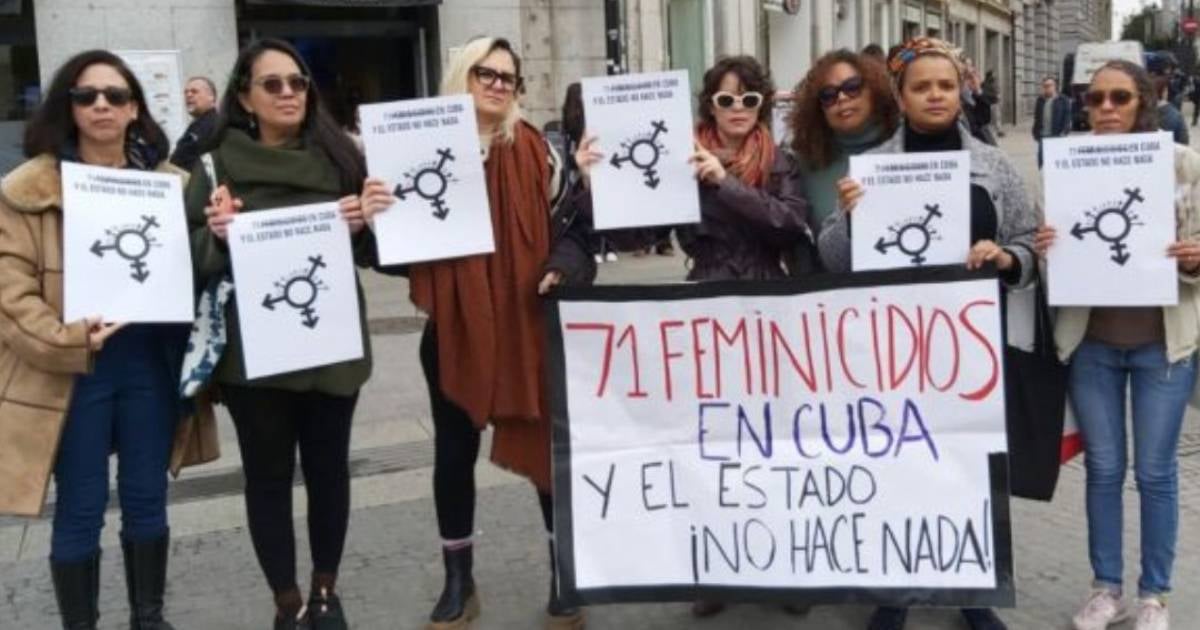
Cuban independent feminist collectives urged the European Union to put an end to the Political Dialogue and Cooperation Agreement with the island's regime.
“We urge the European Parliament and the High Representative to consider activating the suspension clause of the Political Dialogue and Cooperation Agreement with the Cuban government during the debate that will take place on May 6 in the Eurochamber,” is stated in the letter that was reproduced by Martí Noticias.
“In Cuba, we are confronted with the trivialization of evil and its normalization. Denying the inherent rights of every human being is a serious crime, and it should be recognized and fought against firmly,” they add.
Among the ten organizations that endorse the document are the Women's Network of Cuba, the magazine Alas Tensas and its Gender Observatory OGAT, Citizens and Freedom, Christian Democratic Women, Roots of Hope, and the Council for Democratic Transition in Cuba.
The signatories argue that the Havana regime disregards the integrity of women, as evidenced by the fact that Cuba is the only country in the Western Hemisphere without a Comprehensive Law on gender violence.
In the letter, the struggle of independent feminist collectives in Cuba for the approval of a law of this nature is recounted, and how, in 2019, the Cuban Alliance for Inclusion and the Feminine Network of Cuba launched the #Unidas por Nuestros Derechos campaign and unsuccessfully presented a proposal for a Comprehensive Law Against Gender Violence in Cuba to the Human Rights Subcommittee of the European Parliament.
"The country is dying and languishing, and in the meantime, the Cuban government has just revoked the extrapenal license of José Daniel Ferrer and Félix Navarro, two honorable individuals who are not willing to submit to arbitrary power," states the document, which also mentions the case of Zoila Esther Chávez, mother of the political prisoner José Gabriel Barrenechea.
"Cuban mothers have had to pay a price that is far too high and unjust. How much longer? Is it foolishness and/or wickedness? You will decide. Evil leaders and regimes do exist," they emphasized.
On Wednesday, the European Parliament expressed its “deep concern” regarding the imprisonment of Cuban opponents José Daniel Ferrer and Félix Navarro, both recognized human rights activists on the island.
The arrest occurred just weeks after Ferrer provided testimony before the Human Rights Subcommittee of the European Parliament, where he denounced abuses and torture suffered in Cuban prisons.
In a statement, the president of the subcommittee, MEP Mounir Satouri (Greens, France), demanded the immediate and unconditional release of both dissidents, as well as guarantees regarding their physical integrity and official confirmation of their whereabouts.
"We reiterate our call to the Cuban authorities to respect fundamental rights and ensure that all citizens can express themselves without fear of reprisals, even when it comes to dissenting opinions," emphasized Satouri.
The European Union has warned that it will continue to closely monitor the situation on the island and will use "all available mechanisms" under the EU-Cuba Political Dialogue and Cooperation Agreement.
"The EU reiterates its solidarity with those who peacefully work for a freer, more democratic, and inclusive Cuba," concluded the official statement from the European Parliament.
In Cuba, machista violence has claimed the lives of 12 women so far in 2025, as confirmed by these organizations.
Frequently Asked Questions about the Political Situation and Human Rights in Cuba
Why are Cuban feminists calling for an end to the agreement with the European Union?
Cuban feminists request the European Union to terminate the Political Dialogue and Cooperation Agreement with Cuba due to the violations of human rights by the Cuban regime. They denounce the lack of a Comprehensive Gender Violence Law in the country, which reflects the regime's disregard for the integrity of women.
What actions have feminist organizations taken to combat gender violence in Cuba?
Feminist organizations in Cuba have launched campaigns such as #UnidasPorNuestrosDerechos, seeking the approval of a Comprehensive Law against Gender Violence. They have submitted proposals to the European Parliament and continue to document cases of feminicides despite a lack of government transparency.
What is the current situation of the dissidents José Daniel Ferrer and Félix Navarro?
José Daniel Ferrer and Félix Navarro, recognized human rights activists, were imprisoned again following the revocation of their parole. The European Parliament has expressed its deep concern regarding their situation, demanding their immediate release and guarantees of their physical integrity.
What impact does repression in Cuba have on the families of political prisoners?
Repression in Cuba severely affects the families of political prisoners, leaving them in vulnerable conditions. An example is the case of Zoila Esther Chávez, mother of the inmate José Gabriel Barrenechea, who is facing a critical health situation without the support of her son.
Filed under: